
Data Collection Services · Pan-India
Pan-India
Data Collection
Services
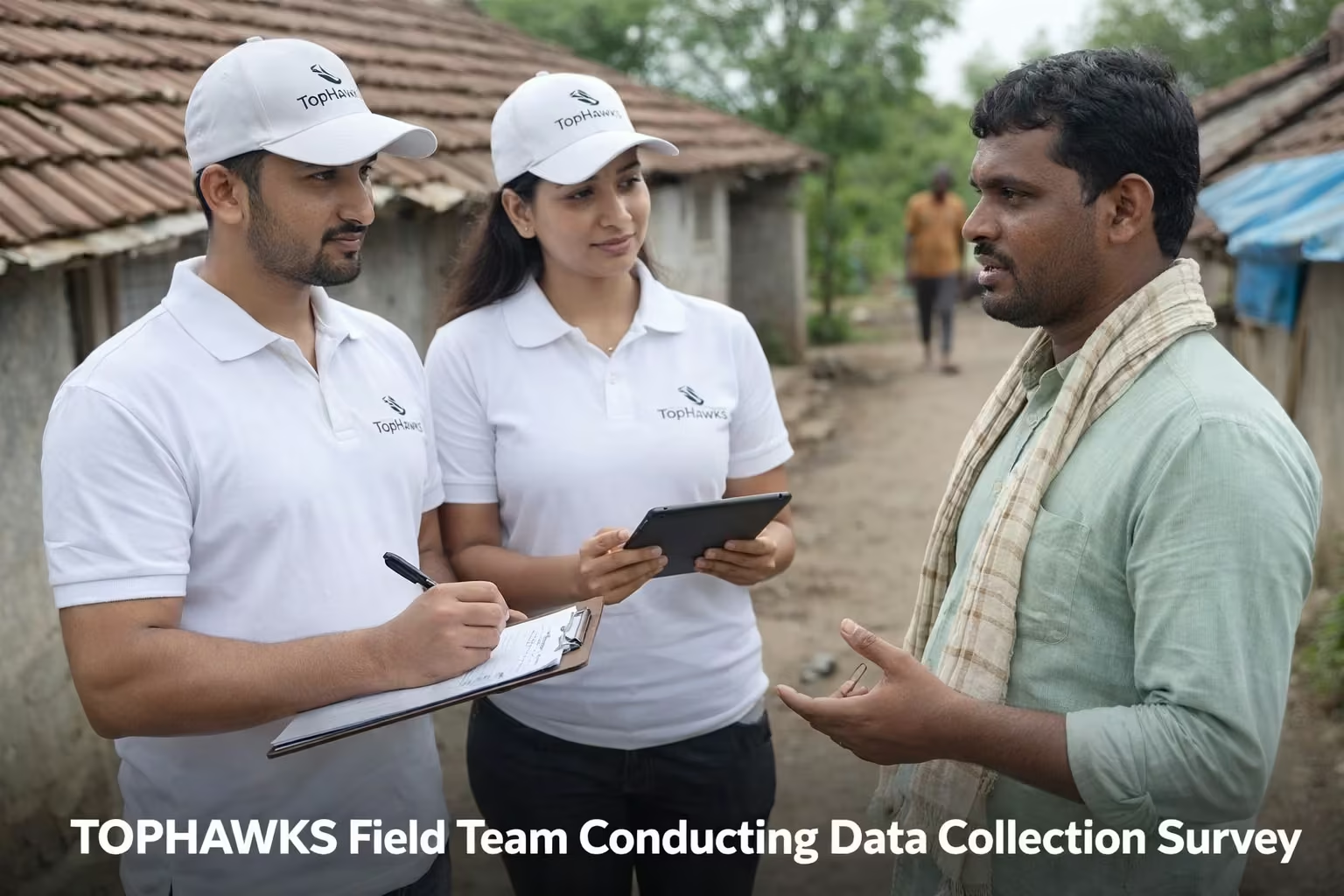
Data is the new oil — and we help you extract it right. TopHawks is an outsourced data collection partner supporting field data collection: from consumer surveys and competitor mapping to medical records and web data, across every Indian geography.
Brands TopHawks Works With
From FMCG and consumer electronics to pharma, healthcare, e-commerce and financial services, TopHawks works with brands across industries.




Data Collection Benefits
We all know how information about our product from customers helps us in improving. When we know the best practices used by our competitors, it helps us make our product better. Brand feedback tells us about the things our customers like — and the things they don't. These are imperative insights every brand should have to gain an edge over its competitors. Having on-field data collected enables you to analyse your business and make changes for betterment.
- Customer Intelligence Understand buyer behaviour, preferences, and pain points through structured field surveys and in-depth interviews at scale.
- Competitor Benchmarking Know what your competition is doing in pricing, product positioning, and distribution — before they outmanoeuvre you.
- Brand Feedback & Sentiment Collect authentic feedback on brand perception, product quality, and customer satisfaction at retail and institutional levels.
- On-Field Data for Business Decisions On-field data supports business analysis and decisions.
- Market Segmentation Intelligence Identify high-potential geographies, target audiences, and white-space opportunities with precision segmentation data.
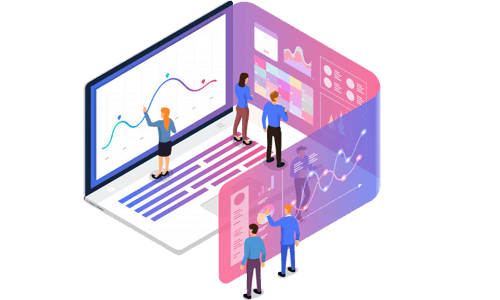
expertise across India
Methodologies of Data Collection
Data collection is divided on the basis of "who collected the data." There are primarily two types of data collection. Businesses require in-depth drill-down tools for their consumer behaviour analysis — and TopHawks provides both.
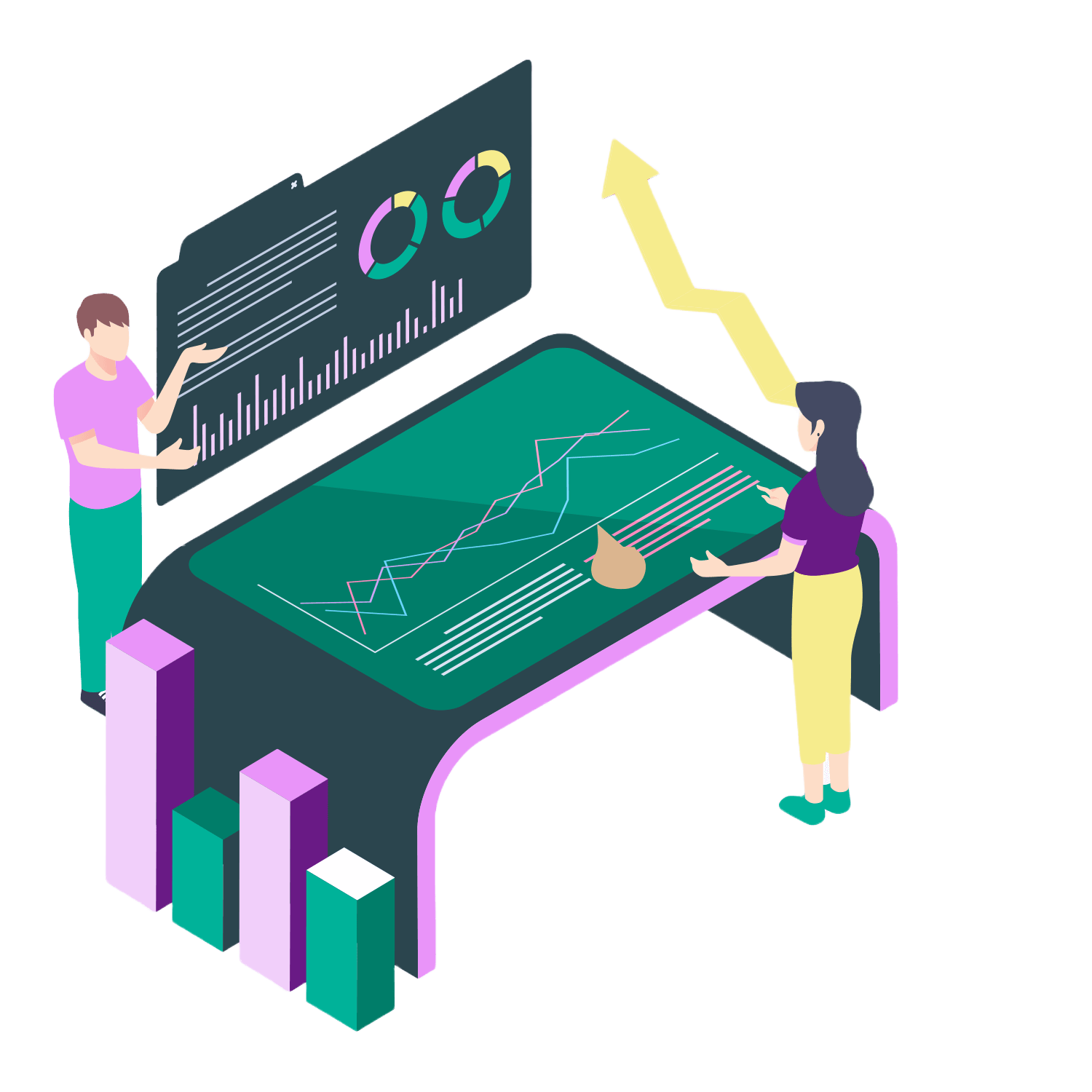
Primary Data Collection
If it is directly collected by the end-user from original sources, it is called Primary Data Collection. Example: data collected by a student for his project report; or a brand conducting consumer interviews directly.
- Consumer surveys and structured face-to-face interviews
- Focus group discussions (FGDs)
- On-ground field observation studies
- Customer satisfaction interviews at point of sale
- Product testing and direct feedback capture

Secondary Data Collection
Secondary data is information that already exists, collected earlier by someone else or for another purpose, such as published reports, census and government statistics, or industry databases. Businesses use it to benchmark, validate and add context to primary research.
- Published reports and census or government statistics
- Industry and company records
- Market share and distribution mapping
- Web data aggregation and digital monitoring
- Medical records and healthcare data compilation
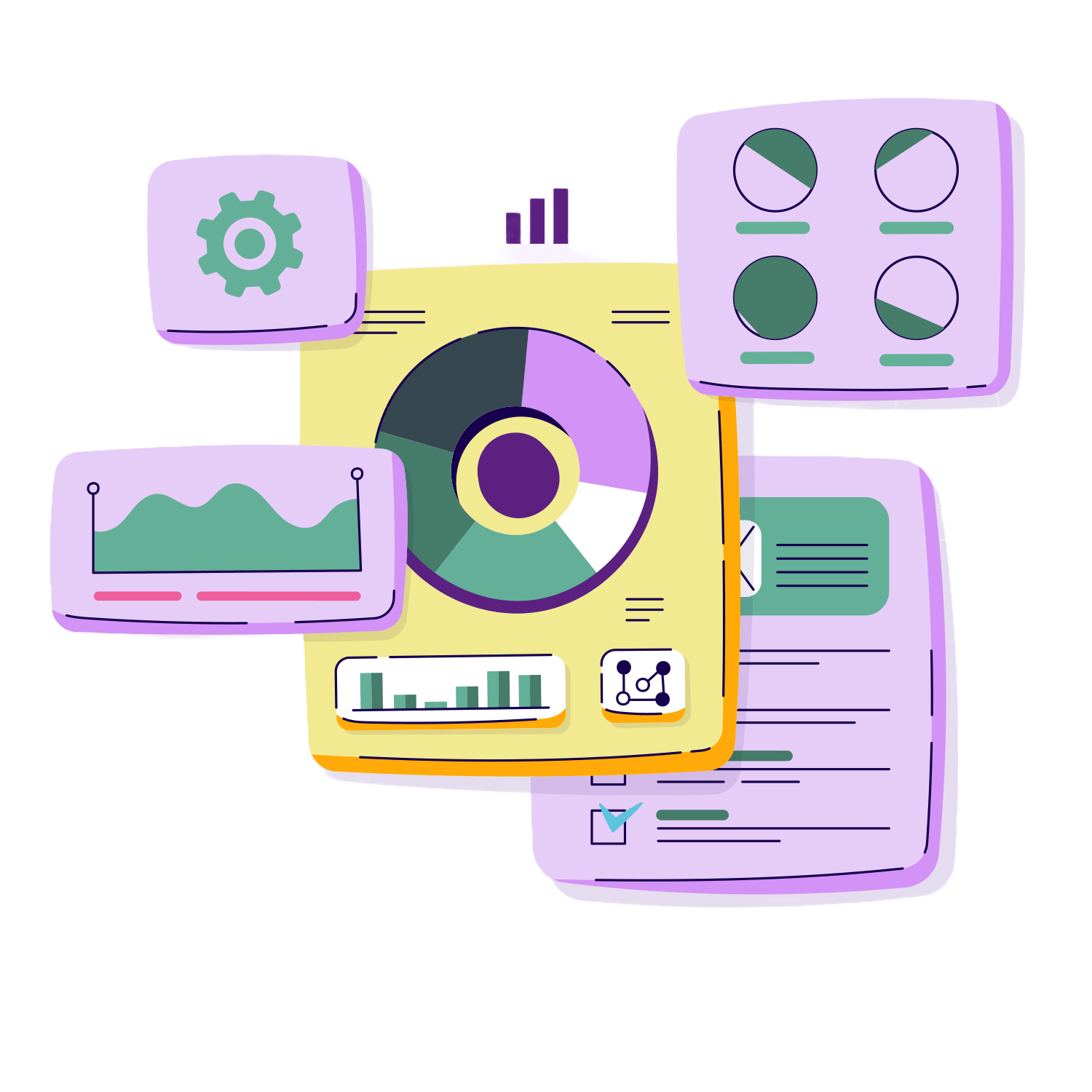
Tech-Driven Field Execution
Tech-driven data collection is where technology is integrated into field execution to support accuracy and transparency. Businesses use this approach to eliminate manual errors, track field activities, and maintain high data integrity across large-scale operations.
- GPS-tagged field data capture and location validation
- Mobile-based survey tools (CAPI) for structured data entry
- Reporting and KPI dashboards, scoped per project
Expertise in Fields for Outsourced Data Collection
From feasibility studies to medical records — our field teams and technology platform cover nine major research domains, pan-India.

Feasibility Data Collection
On-ground feasibility studies for new product launches, market entry assessments, and geographic expansion decisions.

Pricing, Review & Customer Satisfaction
Structured surveys capturing pricing benchmarks, product reviews, and CSAT scores across retail formats and geographies.
Product Data Collection
SKU-level product audits, availability tracking, planogram compliance, and on-shelf performance data from retail outlets.
Medical Reports & Hospital Data
Structured medical data collection for pharmaceutical companies, healthcare analytics firms, and hospital management systems.

Competitor Intelligence
Systematic collection of competitor pricing, product positioning, in-store presence, and distribution data across all channels.
Web Data Collection
Structured digital data aggregation for e-commerce monitoring, price intelligence, and online brand sentiment tracking.
Market Research Data
Consumer behaviour analysis, market segmentation studies, and product positioning insights for informed brand strategy.

Survey-Based Data Collection
CAPI, PAPI, and digital survey administration — structured to capture statistically reliable data from target demographics.

On-Ground Field Collection
Pan-India field teams deployed for door-to-door surveys, institutional interviews, and remote-location data collection projects.
Why Choose Tophawks as Data Collection Company for India
At TopHawks, with the support of our excellent technical and widespread Field teams, we manage to get you data from the remotest location possible. The work covers planning and strategy, documentation, technology mapping, field surveys and report submissions. Technology, resources, strategy and 11+ years of experience are available in one place.
Our Data Collection Process
A structured five-stage workflow from briefing to report delivery.
Requirement Briefing
We understand your research objectives, target audience, geography, and deliverable format in detail.
Methodology Design
We design the right data collection approach — survey tools, field protocols, sampling plan, and technology setup.
Field Deployment
Trained field teams execute the study across target locations with GPS-tagged data capture.
Quality Validation
Define the quality checks for collected data when scoping the study.
Report Delivery
Structured reports with actionable insights, in dashboard or static formats.
What to Agree on Field Data Quality
Field data fails quietly: curbstoning, duplicate respondents, sampling drift. Agree on checks for all three before fieldwork begins, and write them into the project plan.
Sampling and Quotas in Writing
Document the sampling frame, selection method, quota definitions and substitution rules before the first interview, so selection does not depend on enumerator judgement.
CAPI and Point-of-Entry Validation
Computer-assisted interviewing can enforce skip logic and range checks during the interview. Decide whether GPS coordinates and timestamps are required on each record.
Enumerator Briefing and Testing
Agree how language-matched enumerators will be briefed and tested on your questionnaire before deployment, and how rejected interviews are handled.
Consent and Privacy
Confirm that informed consent is recorded before the first question, that personal identifiers are kept separate from responses, and the storage and retention terms.
Duplicate and Fabrication Detection
Ask how duplicates and fabricated interviews will be detected, for example through completion times and respondent-level deduplication, and how flags will be reported to you.
Back-Checks and QC Reporting
Agree the back-check sample and method, and whether the delivery should include a QC report with rejections and resolutions, alongside raw data, cleaned data and the cleaning log.
CAPI, CATI, PAPI and Online: Which Collection Mode Fits Your Study?
No single mode suits every study. The choice depends on who you need to reach, how complex the questionnaire is and what evidence you need that the interview happened.
Swipe sideways on small screens to see every column.
| Mode | How it works | Strengths | Limits |
|---|---|---|---|
| CAPI (tablet-based face to face) | Enumerator interviews in person on a tablet with built-in skip logic and checks | Reaches people without reliable internet; supports GPS, time stamps and photo evidence; handles longer questionnaires | Higher cost per interview than remote modes; needs field supervision |
| CATI (telephone) | Trained callers interview by phone using a script | Fast and economical for dispersed samples; easy to monitor and record where permitted | Limited to people reachable by phone; shorter questionnaires work best |
| PAPI (paper) | Enumerators record answers on paper forms | Works where devices are impractical | Data entry delay and error risk; weaker evidence of visit location and timing |
| Online or app-based | Respondents answer through a link or app | Low cost and quick for connected audiences | Skews toward connected, willing respondents; weaker for rural or low-literacy groups |
Many studies mix modes, for example CAPI in the field plus CATI for follow-up checks. Ask the vendor to explain how results from different modes will be compared.
Data Protection in Field Research: Consent, Purpose and Handling
Primary data often involves personal information. Indian data protection law may apply to how respondent data is collected and handled. The practices below are good habits for any field study. They are general information, not legal advice, so have your counsel confirm what applies to your project.
Clear consent at the start
Respondents are told who is collecting the data, why, and how it will be used, before the interview begins. Consent is recorded.
Collect only what the study needs
Questions that capture personal details are included only when the research objective requires them.
Controlled access
Respondent data is available only to people working on the project, through accounts that can be traced.
Defined retention and deletion
Set retention periods and deletion steps in the project plan, including what happens at project close.
Anonymised reporting where possible
Reports show aggregated results unless the client and respondent have agreed to identifiable data.
Enumerator briefing
Field teams are trained on confidentiality, respectful conduct and what to do if a respondent declines or withdraws.
How to Write a Data Collection Brief That Gets an Accurate Quote
Most delays and cost overruns trace back to an unclear brief. Giving the vendor the following up front produces a tighter proposal and fewer changes later.
- The decision the data will inform. A study with a clear purpose gets a shorter questionnaire and cleaner results.
- The target respondent. Who qualifies, and who does not? Add age, location, product usage or role screens.
- Geography and sample. Cities or districts, urban and rural mix, and the sample size per segment.
- Questionnaire and languages. Share a draft, and list the languages needed in the field.
- Evidence and quality rules. State what proof of interview you need, such as GPS, time stamps or recordings where consent allows.
- Deliverables and format. Raw data, cleaned data, tables, charts or a written report, and the file formats you use.
- Timeline and approvals. Pilot dates, review points and who signs off on the final data.
What Drives the Cost and Timeline of a Field Data Collection Project
Quotes differ because the underlying studies differ. These factors move the price and the schedule the most.
Sample size and incidence
A larger sample takes longer, and a narrow target audience means more screening to find each qualified respondent.
Geography
Remote locations and many small centres need more travel and supervision than a few dense urban clusters.
Questionnaire length and complexity
Longer interviews cost more per completed response and tire respondents, which can lower data quality.
Quality checks
Back-checks, audio audits and re-contacts add effort and protect the data.
Languages
Each additional language needs translated tools, briefed enumerators and a review of the translations.
Reporting depth
Raw data, tabulated results and an analysed report are different scopes with different effort.
Ask for a quote that separates fieldwork, quality control, data processing and reporting, so you can see what each part costs and adjust the scope.
Five Questions to Ask Any Data Collection Agency
These questions help you tell an agency that controls its field network from one that resells it.
- Who are the enumerators, and how are they trained and supervised?
- What proof comes with each completed interview? Ask what is captured and who reviews it.
- What share of interviews is back-checked, and how? A clear, documented rate is a good sign.
- How is respondent data protected and deleted?
- Can you show a sample dataset and a sample report?
How to Evaluate a Data Collection Partner Before You Commit
Choosing a data collection company involves more than comparing quotations. The right partner must be able to reach the intended respondents, execute the agreed methodology and provide data in a format your team can use. Before appointing a vendor, assess its field coverage, operational capabilities, quality controls and reporting process against your project requirements.
Start by defining the business decision the research will support. A consumer behaviour study, a retail availability audit and a competitor pricing exercise require different collection protocols. The vendor should be able to explain how its proposed approach fits the objective rather than offering the same process for every assignment.
Next, examine how the vendor manages field execution. Ask how field representatives are briefed, how location-specific assignments are coordinated and how supervisors review submissions. If the study requires physical visits, establish what evidence will demonstrate that each visit took place.
Finally, agree on deliverables before work starts. Specify the required data fields, file formats, quality checks, reporting frequency and approval process. These details make it easier to evaluate proposals consistently and reduce disagreements during delivery.
Use the following criteria when comparing providers.
Swipe sideways on small screens to see every column.
| Evaluation criterion | What to establish | Why it matters |
|---|---|---|
| Geographic coverage | Whether the required cities, towns and rural locations can be served | Determines field feasibility |
| Research methodology | Whether the proposed method matches the research objective | Improves relevance of collected data |
| Field execution | How representatives are briefed, deployed and supervised | Supports consistent implementation |
| Data verification | Which validation checks and evidence are available | Helps identify incomplete or unreliable records |
| Data handling | How access, retention and deletion requirements will be managed | Clarifies responsibilities for respondent information |
| Reporting | What datasets, summaries and supporting documentation will be delivered | Makes the output usable by the business |
| Project coordination | Who manages changes, escalations and approvals | Reduces operational ambiguity |
TopHawks supports outsourced field data collection across India, with a network spanning 246+ cities in 27+ states. Share your project objectives and coverage requirements to establish a suitable scope before field deployment.
From Research Brief to Final Dataset: A Step-by-Step Workflow
A successful field research project begins with a clear brief, not with immediate deployment. Defining the objective, respondent criteria, collection method and quality requirements first helps the project team execute consistently across locations.
Step 1: Define the decision and research questions.
Identify what the business needs to learn. For example, a retail study might investigate product availability, shelf visibility or competitor pricing. Translate the objective into specific questions that field representatives can answer consistently.
Step 2: Establish the target audience and coverage.
Define eligible respondents, outlet types, institutions or other sources. List the required locations and specify how the sample should be distributed across them. Where quotas or respondent screening apply, document the rules before fieldwork starts.
Step 3: Prepare the collection instrument.
Develop the questionnaire, audit form or observation checklist. Confirm the required languages, response options, skip logic and evidence fields. Test the instrument for clarity and completeness before wider deployment.
Step 4: Coordinate field execution.
Brief the field team on the research objective, assignment instructions, respondent approach and submission requirements. Establish how progress will be monitored and how questions or unexpected field conditions will be escalated.
Step 5: Validate the collected information.
Check records for missing fields, inconsistent responses, duplicates and departures from the agreed collection rules. Where the project requires location evidence or supervisory review, include those checks in the validation process.
Step 6: Deliver the agreed outputs.
Prepare the dataset and supporting reports in the formats defined during scoping. Resolve identified data issues, document relevant limitations and confirm that the final files meet the agreed requirements.
| Project stage | Key output |
|---|---|
| Research definition | Approved objectives and questions |
| Coverage planning | Target audience and geographic plan |
| Instrument preparation | Questionnaire or structured collection form |
| Field deployment | Submitted field records |
| Quality validation | Reviewed dataset and issue log, where agreed |
| Final delivery | Dataset and agreed reporting outputs |
TopHawks can coordinate outsourced data collection across multiple Indian locations. The exact workflow, evidence requirements and deliverables should be established in the project plan so that every participant understands what must be collected and how completion will be assessed.
Data Collection KPIs: What to Measure and What to Include in Reports
A data collection project should be evaluated on more than the number of completed interviews or visits. Volume indicates how much work has been submitted, but it does not establish whether the information is complete, consistent or suitable for the intended analysis.
Define the reporting measures before fieldwork begins. The right indicators depend on the project type, collection method, sample design and business objective. A household survey may require different quality checks from a retail audit or a competitor pricing study.
For a multi-location project, reporting should also distinguish between overall progress and performance in individual locations. A strong overall completion figure can conceal gaps in particular cities, respondent groups or outlet categories. Location-level reporting helps the project team identify where follow-up action may be necessary.
Agree on how each measure will be calculated, who reviews it and what action follows when it falls outside the project's acceptance criteria. This creates a consistent basis for managing field execution and approving deliverables.
Swipe sideways on small screens to see every column.
| KPI or reporting measure | What it tells you | What to review |
|---|---|---|
| Assignment completion | How much of the planned fieldwork has been completed | Completed assignments against the approved plan |
| Coverage by location | Whether required areas are represented | Location-wise progress and outstanding assignments |
| Response completeness | Whether required fields have been filled | Missing answers and incomplete records |
| Validation failure rate | How often submitted records fail defined checks | Common errors and corrective actions |
| Duplicate records | Whether records appear to repeat the same respondent or assignment | Duplicate flags and their resolution |
| Verification outcomes | Whether selected records pass the agreed verification process | Checks completed, issues found and resolutions |
| Turnaround time | Whether submissions meet agreed milestones | Delays, dependencies and pending approvals |
| Reporting readiness | Whether data is ready for analysis and acceptance | Cleaning status, outstanding issues and final file checks |
These measures should be interpreted together. A high completion rate accompanied by missing data or unresolved verification issues may indicate that further review is needed.
For TopHawks projects, clients should agree on the applicable KPIs, reporting cadence and acceptance criteria during scoping. This makes reporting a practical management tool rather than a summary produced only at the end of the assignment.
Common Data Collection Mistakes That Weaken Research Results
Data quality problems often begin before the first interview or field visit. An unclear objective, loosely defined sample or inconsistent instructions can produce a large dataset that still fails to answer the business question.
The first mistake is collecting information without a defined decision in mind. If the research team does not know what the business needs to establish, the questionnaire can become unnecessarily long or include fields that do not support analysis. Define the decision and the essential information required before writing the instrument.
The second mistake is leaving the target audience open to interpretation. Instructions such as "visit relevant outlets" or "speak to typical consumers" can lead to inconsistent selection. Document eligibility criteria, location requirements, quotas and substitution rules wherever they apply.
The third mistake is treating completed records as verified records. A submitted form may contain missing answers, contradictory responses or information that does not meet the agreed requirements. Build validation into the workflow and establish how flagged records will be investigated.
The fourth mistake is postponing decisions about data format and reporting. If the vendor and client use different field names, category definitions or file structures, the delivered information may require avoidable rework. Agree on the data dictionary, file format and reporting structure in advance.
The fifth mistake is overlooking respondent privacy. Collecting unnecessary personal details or failing to communicate the purpose of a study can create avoidable risks. Limit collection to what the research needs and agree on access, retention and deletion arrangements.
Use this pre-launch checklist before authorising fieldwork:
Confirm the research objective and intended business decision.
Approve the questionnaire and required languages.
Define respondent eligibility and location coverage.
Document collection instructions and evidence requirements.
Agree on validation rules and procedures for rejected records.
Confirm reporting formats, milestones and acceptance criteria.
Establish consent, access and data-retention requirements.
A documented plan gives the client and data collection partner a shared basis for execution, verification and final approval.
Frequently Asked Questions
Everything you need to know about outsourcing data collection to TopHawks — from methodology and data integrity to geographies and timelines.
Ask us anything →We Are Here for You, and We Are Wearing Our Thinking Caps
Whether you need a one-time field survey or an ongoing pan-India data collection programme — our team will help scope the right solution.

Tell Us About Your Data Requirement
Fill in the form below to share your data requirement.