
Visual Merchandising Services in India.
Consistent execution at the point of purchase.
TopHawks is a pan-India visual merchandising agency providing end-to-end solutions covering Point-of-Sale Material (PoSM) design, production, deployment, and maintenance. From in-store displays and retail fixtures to Glow Sign Boards, TopHawks coordinates execution across retail formats and locations throughout India.

What Is Visual Merchandising?
Visual merchandising is the strategic presentation of a brand and its products within a retail environment to attract the intended audience and communicate value at the point of purchase. Effective execution can strengthen brand recall, encourage impulse buying, and support dealer loyalty while making better use of existing retail visibility.
TopHawks delivers visual merchandising as an end-to-end field-execution service, connecting creative planning with physical implementation and ongoing maintenance. Our teams coordinate artwork, in-store fixture design, Point-of-Sale Materials (PoSM), supply chain operations, pan-India deployment, and store-level execution reporting.
- Artwork and window displays — Our creative design teams translate brand guidelines into retail-ready visual communication for windows, product displays, and in-store environments.
- PoSM production — Production partners support the delivery of Point-of-Sale Materials suited to different retail formats, display requirements, and store tiers.
- Supply chain coordination — Coordinated dispatch and distribution help ensure that the right PoSM reaches the right store at the required time.
- End-to-end execution — Space identification, site measurement, printing coordination, installation, and deployment are managed through a single execution framework.

Why Choose TopHawks for Visual Merchandising Services in India?
Visual merchandising requires more than creative concepts and production capacity. It takes coordinated field execution, store-level accountability, and verifiable reporting. TopHawks is an execution agency that manages the process from the design brief to deployment and store-level compliance documentation, using an in-house reporting app to capture photos, geolocation, and timestamps.
Our in-house reporting app records field execution through photos, geolocation, and timestamps. This provides brands with documented visibility into store visits, deployment activity, and execution status across cities.
Our teams address the visual elements that shape the retail environment, including fixtures, signage, PoSM, SIS, wall panels, trans lights, and window displays. Coordinating these elements helps maintain alignment with brand guidelines at the point of purchase.
Reporting templates, store-level journey plans and compliance dashboards are scoped per brief to suit programme workflows and reporting needs.

What Visual Merchandising Services Does TopHawks Offer in India?
TopHawks delivers end-to-end visual merchandising services India-wide, helping brands maintain consistent retail presentation across stores, dealer networks, and market locations. As a field-execution agency, we manage four core areas under one accountable execution partner: store design, Point of Sale Material (PoSM) design and production, in-store fixture maintenance, and Glow Sign Board (GSB) installation. From initial planning and production coordination to on-ground deployment, quality checks, and photo-verified reporting, our teams help brands execute retail standards consistently across locations.
Service images below are illustrative generated scenes, not photographs of client projects.
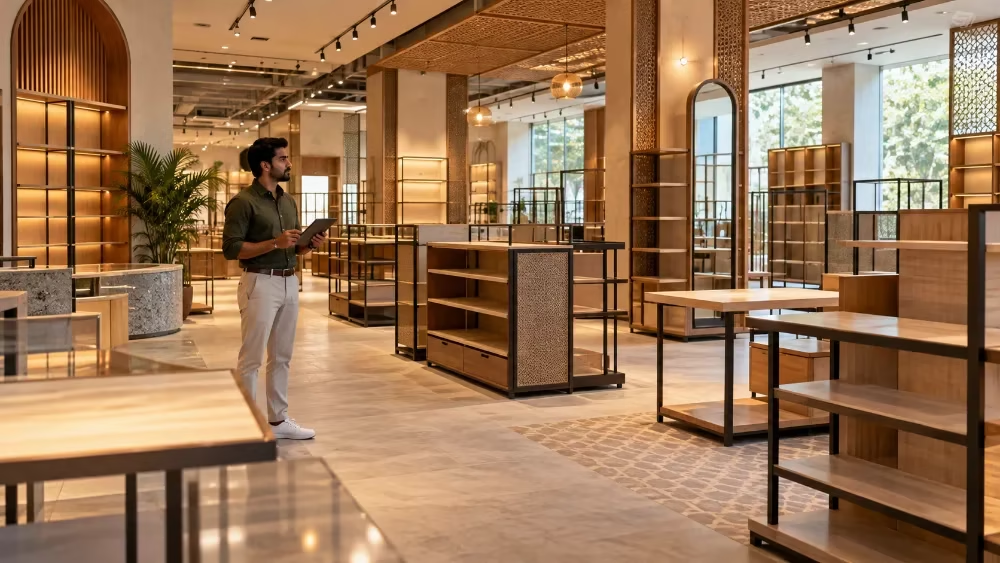
Create a more coherent in-store brand experience with retail layouts, fixture configurations, and visual themes aligned with your products and brand identity. TopHawks supports store design planning that guides the customer journey from entry to checkout, with a focus on product visibility, effective space utilisation, and consistent presentation across retail locations.
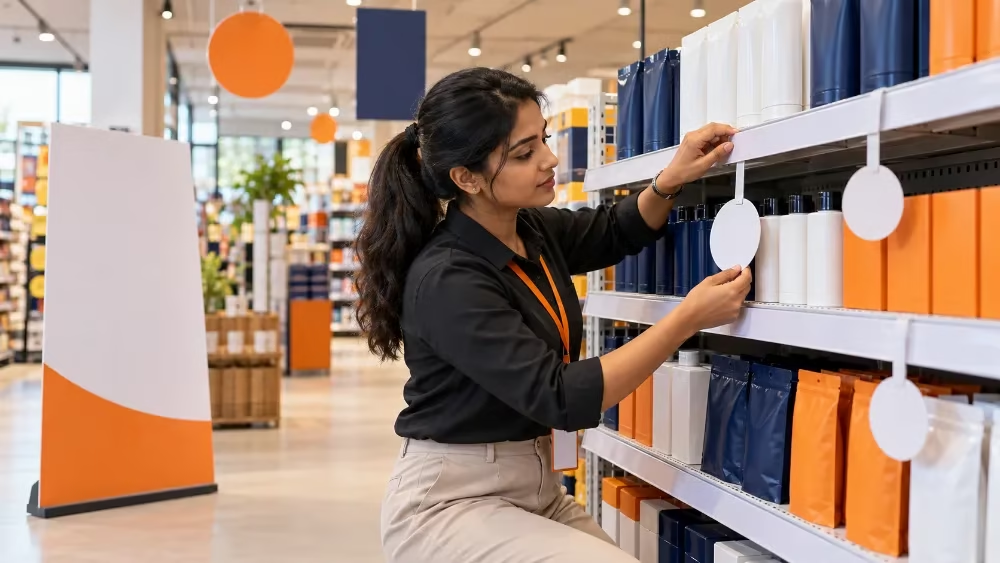
Translate brand guidelines into retail-ready Point of Sale Materials (PoSM), from dummy boxes and shelf branding to wobblers, danglers, and trans lights. TopHawks coordinates production through its production partners, focusing on consistent specifications, on-brand presentation, quality checks, and supply chain traceability across retail execution requirements.

Keep Shop-in-Shop (SIS) fixtures, wall panels, trans lights, and other in-store branding elements presentable through planned field maintenance. TopHawks helps brands identify fixture damage, wear, and presentation issues through periodic store visits, condition checks, and photo proof, supporting consistent brand visibility and better-informed maintenance decisions.
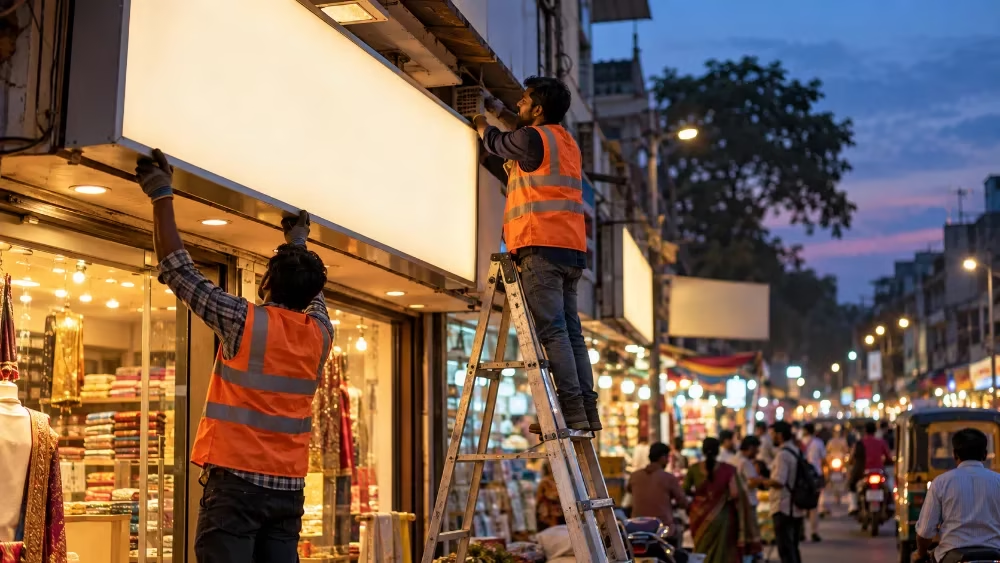
Deploy Glow Sign Boards (GSBs) through coordinated, Pan-India field execution, with turnaround times confirmed per programme scope and geography. TopHawks manages dealer enrollment, space acquisition, installation coordination, and ongoing signage hygiene audits to help brands maintain outdoor visibility and consistent execution across dealer networks.
How Does TopHawks Manage In-Store Fixture Maintenance and Audits?
In-store fixtures shape how shoppers experience a brand at the point of purchase. Damaged, misaligned, or poorly maintained Shop-in-Shop (SIS) units can undermine brand presentation and reduce the visibility of products and promotional messaging. TopHawks manages the fixture maintenance lifecycle, from initial site recce and asset database creation to scheduled maintenance, condition assessments, and status appraisals. Our field-execution approach combines on-site checks with photo documentation to give brand teams clearer visibility into fixture condition across retail locations.
Fixture Recce, Database Creation & Design
- Conduct in-store fixture and asset recce to create and update store-level databases. Accurate measurements and current asset records help brands plan fixture replacements, trans lights, and in-store branding requirements while reducing the risk of costly remakes caused by outdated store data.
- Align fixture design with the product, brand identity, retail environment, and target customer profile. TopHawks works with experienced designers to support retail fixture and SIS unit designs that attract attention and maintain a consistent brand presentation at retail outlets.
- Plan periodic fixture maintenance to preserve the condition and usable life of retail display assets, protect fixture investments, and sustain brand visibility at the point of purchase.
Onsite Maintenance & Quality Audits
- Coordinate onsite maintenance for SIS fixtures, in-store fixtures, wall fixtures, wall panels, trans lights, and other retail branding assets, supported by documented condition reports and before-and-after photography.
- Assess fixture condition, product presentation, brand visibility, and share of shelf through structured retail store checks. Documented observations help brand teams evaluate execution against their merchandising requirements and identify issues requiring corrective action.
- Conduct fixture availability audits, SIS status audits, and comprehensive fixture hygiene audits across store tiers and retail formats to establish a clearer picture of asset condition and maintenance requirements.
A periodic fixture hygiene recce programme establishes a planned journey for store visits and recurring condition checks. TopHawks shares visual reports with clients after store visits, creating a documented feedback loop between field teams and brand stakeholders to support follow-up, maintenance planning, and retail execution oversight.
How Does TopHawks Manage Glow Sign Board (GSB) and Retail Signage Deployment in India?
Glow Sign Boards (GSBs) are often the first physical brand touchpoint customers encounter before entering a retail outlet. Strategic placement, consistent branding and ongoing maintenance help strengthen brand visibility, support customer recall and reinforce dealer relationships. TopHawks delivers structured signage deployment as part of its visual merchandising services India, coordinating location selection, dealer enrolment, installation and ongoing signage hygiene across retail markets.
TopHawks identifies and secures suitable GSB locations outside retail outlets through a structured dealer enrolment process. Location selection considers storefront visibility, street-facing exposure, outlet classification and the surrounding retail environment to help brands establish a prominent, consistent presence at the point of sale.
TopHawks coordinates pan-India GSB deployment through its field execution infrastructure, with turnaround times confirmed per programme scope and geography. Structured coordination between deployment teams and dealers helps maintain execution visibility across geographically distributed retail markets.
Outdoor signage is continually exposed to dust, pollution and adverse weather, which can affect its appearance and the way customers perceive a brand. TopHawks supports structured GSB hygiene and maintenance programmes, with field-level audit trails that help clients monitor signage condition, identify maintenance requirements and maintain visibility across their retail networks.
Where illuminated signage is impractical or outlet density does not justify GSB investment, TopHawks deploys Non-Lit Boards (NLBs) as a cost-effective alternative. This approach helps brands extend physical retail visibility into rural markets and lower-density sales territories while aligning signage formats with local operating conditions and outlet requirements.
Location-led execution, backed by field evidence. Effective signage deployment depends on selecting the right outlet and the right placement, not simply installing more boards. TopHawks combines outlet classification, competitor visibility data and footfall mapping to inform GSB location selection. Its in-house reporting app captures field evidence through photos, geolocation and timestamps, helping clients review deployment activity and maintain visibility into execution across locations.
How Planogram Compliance Is Measured and Maintained
Installation establishes the display; consistent execution keeps it compliant. TopHawks' recurring store-execution programmes help brands assess planogram adherence, product availability, share of shelf and retail display condition through structured field visits. Photo evidence, geo-verified check-ins and closure tracking help distinguish verified execution from reported activity and give teams a clearer basis for corrective action.
Assess shelf position, product facing counts and share of shelf against defined merchandising requirements. Field photographs provide supporting evidence for each scored item, enabling head-office teams to review compliance results and re-score disputed visits against the same visual records.
Record SKU-level availability, out-of-stock flags, expiry checks and first-in, first-out (FIFO) compliance during store visits. Configure assessments around the commercial priorities of each product category to help teams identify stock-related issues and gaps in shelf execution.
Structure field coverage around store value and execution priorities, with weekly or fortnightly visits for high-value stores and monthly visits for long-tail stores. Geo-verified check-ins provide evidence of store coverage, while field teams address issues on the spot where they are authorised to do so.
Capture store-level photographs with geolocation and timestamps through the TopHawks in-house reporting app. Photographs are reviewed as part of reporting.
Escalate commercially significant findings, including persistent stock-outs, lost display positions and scheme non-execution, to the relevant territory sales owner. Assign deadlines and track actions through to closure so field findings support follow-up and resolution rather than remaining isolated in a report or presentation.
How Does a Visual Merchandising Programme Work from Brief to Store?
Effective visual merchandising services India-wide require more than attractive displays. They demand coordinated planning, accurate site measurements, production control, store-level installation and ongoing compliance checks. Gaps between these stages can lead to incorrect fixtures, delayed kits and installations that go unverified. As a field-execution agency, TopHawks provides a single accountable execution approach across the programme, with reporting that helps brands track what happened at each store.
| Step | What Happens | What to Agree Up Front |
|---|---|---|
| 1. Brief and store universe | Define programme objectives, store formats, the target store list, brand guidelines and budget before execution begins. | Store tiers, priority cities, approval responsibilities and final sign-off authority. |
| 2. Recce and measurement | Survey store environments, measure available space and fixtures, and identify site-specific installation constraints. | Which stores require a survey, what measurements are needed and how site findings will be documented. |
| 3. Design and approval | Develop layouts, artwork and fixture specifications that align with approved brand guidelines and actual store conditions. | Number of design rounds, approval turnaround times and the process for resolving specification changes. |
| 4. Production and quality check | Produce point-of-sale materials (PoSM) and fixtures, then check them against the approved design and specifications. | Material standards, prototype or sample approval and acceptance criteria before bulk production. |
| 5. Dispatch coordination | Pick, pack and route campaign kits according to the store list and rollout schedule. | Dispatch schedule, store-wise kit allocation, delivery confirmation and proof of receipt. |
| 6. Installation | Deploy field teams to install approved materials, capture store photographs and record location and time evidence. | Installation standards, required photo angles, completion criteria and the evidence checklist for each store. |
| 7. Maintenance and audit | Conduct recurring visits to repair or replace damaged materials, verify display compliance and document deviations from the approved plan. | Visit cadence by store tier, escalation responsibilities and the reporting format for ongoing audits. |
Project timelines depend on store location, approval cycles and production type. Before launch, agree on the expected duration of each phase, its dependencies and the event that starts the timeline. For nationwide visual merchandising services, clarify how delivery, installation and reporting schedules account for remote locations.
Which PoSM and Retail Fixtures Should You Choose for Each Store Format?
Point-of-sale materials (PoSM) and retail fixtures serve different purposes across the customer journey. The right choice depends on store format, available space, campaign duration, environmental conditions and how frequently the message or product assortment changes. Match each material to its intended use before approving production.
| Item | Best For | What to Consider |
|---|---|---|
| Shelf strips and wobblers | Highlighting prices, offers and product messages at the point of purchase. | These are typically short-life materials; plan replacements around campaign and promotional changes. |
| Wall panels and back walls | Establishing brand presence and product visibility inside larger retail stores. | Accurate site measurements, suitable mounting surfaces and secure installation are essential. |
| Standalone display units (SIS) | Showcasing products in stores with sufficient dedicated floor space. | Assess footfall, available floor area, replenishment access and storage requirements. |
| Window displays and trans lights | Building street-facing visibility and attracting potential walk-in customers. | Plan for seasonal refreshes, visibility under different lighting conditions and ongoing lighting maintenance. |
| Glow sign boards (GSB) | Improving outdoor brand visibility and maintaining dealer identity across retail locations. | Check site permissions, electrical safety, applicable local rules and maintenance access before installation. |
| Branded fixtures and counters | Creating a dedicated branded experience for premium categories and shop-in-shop formats. | Account for higher costs, installation requirements, cleaning and ongoing repairs. |
Why Is Ongoing Maintenance Essential After Visual Merchandising Installation?
Installation is the start of an ongoing retail execution programme, not its final milestone. Displays can become damaged, products can be rearranged and competitors can occupy intended brand space. Without regular store visits and documented corrective action, even a correctly installed display can drift from the approved plan. A structured maintenance programme helps keep fixtures presentable, campaign materials current and execution issues visible to the account team.
Log damaged, faded or missing materials with store-level photographs. Arrange repairs or replacements using stock held for the programme, where available, and document the corrective action.
Use recurring store visits to verify that displays still match the approved plan. Capture time-stamped photographic evidence for each store to support compliance reviews and follow-up.
Coordinate campaign refreshes and seasonal changeovers against the same approved store list. Track planned and completed activities so that each changeover can be reviewed rather than assumed.
Flag stores with recurring compliance issues to the account owner for a clear decision, such as dealer follow-up, corrective action or relocation where appropriate. Keep the issue and its resolution visible in programme reporting.
How to Measure Whether Visual Merchandising Is Working
Effective measurement separates execution quality from commercial outcomes. Installation coverage and display compliance show whether planned activities were completed and standards maintained. Sales performance is more complex to attribute because pricing, product availability, promotions and other variables can change at the same time. Use a defined measurement framework to evaluate execution consistently and interpret commercial results with appropriate context.
| Measure | What It Shows | How to Use It |
|---|---|---|
| Installation coverage | The proportion of planned stores where installation was completed and supported by photo evidence. | Compare completed installations with the approved store list to assess rollout coverage and identify outstanding locations. |
| Display compliance | The proportion of stores where the display matches the approved plan and execution standards. | Track deviations over time, prioritise corrective visits and evaluate whether maintenance is keeping displays on standard. |
| Stock availability at the display | Whether the products featured in the display are available at the store. | Distinguish display execution issues from product availability constraints when reviewing performance. |
| Sales in display vs comparable non-display stores | The directional sales difference between stores with displays and comparable stores without them. | Use matched store groups, a defined time window and available context on pricing, stock and promotions. Interpret the difference as directional evidence rather than automatic proof of causation. |
Agree on the measurement framework before the programme begins, including store selection, reporting periods, completion criteria and data sources. Every headline figure should be traceable to a defined set of stores and dates. Store-level photographic evidence, geolocation and timestamps from TopHawks' in-house reporting app help make execution reporting more transparent and easier to review.
Questions to Ask Before Appointing a Visual Merchandising Agency
Not every agency provides the same level of execution support. Some focus primarily on design, while others coordinate production, logistics, installation and ongoing field audits. When evaluating a visual merchandising agency in India, assess its ability to manage the complete execution chain, document store-level activity and maintain accountability after installation.
- Who owns each step? Confirm who is responsible for design, production, logistics and installation. Where multiple teams are involved, establish a single accountable lead for coordination and escalation.
- How is installation verified? Ask how store visits are documented and whether photographs include geolocation and timestamps. Understand how evidence is reviewed before completion is reflected in the report.
- How are timelines defined? Request phase-wise timelines and clarify what starts and stops the clock. Check how approval dependencies, production schedules and remote locations are handled.
- What happens after installation? Review the proposed maintenance cadence, replacement-stock arrangements, compliance checks and escalation process for recurring execution issues.
- Can you review the reporting before appointment? Request a sample dashboard and store report. Check whether they make planned versus completed activity, photographic evidence, location, timestamps and outstanding exceptions easy to review.
How to Choose the Right Visual Merchandising Programme for Your Retail Network
Effective visual merchandising services in India start with a clearly defined retail objective, not simply a choice of display materials. Brands entering new markets may require store recce, fixture planning and initial deployment. Established retail networks may need stronger display compliance, fixture maintenance or consistent, verifiable reporting across existing outlets.
As a retail execution agency, TopHawks supports visual merchandising programmes spanning store design, Point of Sale Materials (PoSM) production, signage installation, fixture audits and recurring maintenance. The appropriate service mix depends on your store network, retail formats, brand guidelines, campaign requirements and operational priorities.
Use the following decision framework to match your retail requirements with the right execution services and establish the controls needed before rollout.
Visual merchandising service selection framework for retail brands
| Business requirement | Service to consider | What to establish before rollout |
|---|---|---|
| New retail launch | Store design and fixture planning | Store formats, available space and brand guidelines |
| Campaign visibility | PoSM design and production | Approved artwork, material specifications and campaign duration |
| Consistent execution across cities | Deployment and compliance reporting | Store list, priority locations and installation standards |
| Damaged or poorly maintained fixtures | Fixture maintenance and hygiene audits | Asset inventory, condition criteria and repair responsibilities |
| Outdoor dealer visibility | Glow Sign Board (GSB) or Non-Lit Board (NLB) deployment | Location suitability, available space and installation requirements |
| Ongoing display compliance | Recurring store visits and audits | Visit frequency, evidence requirements and escalation process |
Define ownership, rollout priorities and acceptance criteria
Before appointing an agency, determine which activities should be managed together and which require separate specialist support. Assign clear responsibility for design approvals, production quality, store access, installation acceptance and ongoing maintenance. A documented responsibility matrix helps prevent gaps between production, logistics and field execution.
Distinguish between rollout milestones and ongoing performance objectives. Completing an installation confirms a deployment milestone; maintaining a compliant display requires scheduled inspections, documented evidence and corrective action when standards are not met.
For a large or geographically diverse retail network, consider beginning with a clearly defined group of stores. Use the initial execution to validate measurements, material suitability, installation instructions and reporting requirements before extending the programme to additional locations. This provides an opportunity to resolve practical issues before they affect a wider rollout.
How to Build a Store-Level Visual Merchandising Execution Plan
A store-level visual merchandising execution plan connects the approved brand requirement to production, distribution, installation and ongoing compliance. Every participating store needs a defined requirement, an approved specification and a consistent method of verifying completion. Without these controls, installation updates may not provide enough evidence to confirm that the correct materials were installed or that the display meets the required standard.
TopHawks coordinates activities across store measurement, production, field deployment and maintenance. The following six-step framework helps retail and trade marketing teams turn visual merchandising plans into a structured, verifiable field execution process.
Step 1: Define the store universe
Create a master store list identifying every location included in the programme. Record the retail format, city, outlet priority and relevant contact or access requirements. Where store information is incomplete or physical conditions are uncertain, arrange a recce before finalising fixture dimensions and installation specifications.
Step 2: Approve the execution specification
Document the required display, approved artwork, dimensions, materials, placement and installation standards. Include reference images or approved designs wherever applicable. Establish who can authorise changes when actual store conditions differ from the original plan, and record the approved revisions to maintain consistency across locations.
Step 3: Align production and distribution
Confirm the final specifications before production begins. Coordinate storage, packing and dispatch with the rollout sequence so that the correct materials reach the intended locations. Define how shortages, damaged materials and dispatch delays will be recorded, communicated and resolved before they disrupt field deployment.
Step 4: Verify installation at the store
Define the installation checklist before field deployment. Specify the required asset, placement, condition and photographic evidence, including any mandatory views needed to assess compliance. TopHawks uses an in-house reporting app to capture field photographs alongside geolocation and timestamps, supporting location-specific execution records and review of reported activity.
Step 5: Review exceptions and close gaps
Distinguish verified completions from incomplete visits, store-access issues, material shortages and quality failures. Record the reason for each exception, assign a responsible owner and establish a follow-up date. Where additional evidence or corrective work is required, keep the issue open until the agreed closure criteria have been met.
Step 6: Maintain the display
Schedule recurring inspections according to store priority, fixture requirements and the likelihood of displays deteriorating or changing. Record repair requirements, replacements and compliance findings so that maintenance decisions can be based on observed store conditions rather than assumptions.
What a complete execution record should contain
The final output should be a store-level execution record connecting the approved requirement with the actual installation, supporting evidence and any outstanding corrective action. At a minimum, align records with the relevant store, assigned task, completion status, photographs, geolocation, timestamps and exception details where applicable.
This structured approach helps brand teams distinguish reported activity from verified execution, identify recurring operational issues and maintain a consistent standard across their retail network.
Visual Merchandising KPIs: What Brand Teams Should Monitor
Visual merchandising KPIs should help brand teams answer three operational questions: Was the planned work completed? Does the display meet the required standard? Is the programme contributing to its intended retail objective?
Each question requires a different set of measures. Deployment records establish execution coverage, compliance checks assess display quality, and commercial measures help evaluate business performance. Treating these as interchangeable can obscure the difference between incomplete execution, poor display standards and commercial factors outside the agency's direct control.
TopHawks supports field reporting through an in-house reporting app that captures photographs, geolocation and timestamps. Client portal reporting is scoped per brief, allowing information to be organised around agreed store classifications, visit plans and compliance checks.
The following KPIs provide a practical starting point for building a visual merchandising measurement framework.
Core visual merchandising KPIs, definitions and operational uses
| KPI | How to define it | What it helps identify |
|---|---|---|
| Installation coverage | Completed planned installations divided by planned installations | Gaps between the rollout plan and actual deployment |
| Photo-verified completion | Completed installations with the required evidence divided by reported completions | Missing or insufficient proof of execution |
| Display compliance | Stores meeting the agreed display checklist divided by stores inspected | Non-compliant placements and inconsistent execution |
| Fixture condition | Inspected fixtures classified by agreed condition criteria | Repair, replacement and maintenance requirements |
| Stock availability at display | Inspected stores where the featured product is available | Whether display visibility is supported by product availability |
| Issue closure | Reported issues resolved and verified divided by issues due for resolution | Whether field findings lead to corrective action |
| Repeat non-compliance | Stores failing the same requirement across successive inspections | Persistent problems requiring escalation or a revised plan |
| Sales in display stores | Sales over a defined period for the selected store group | Directional evidence of commercial performance |
Establish reporting rules before the first visit
Define the numerator, denominator, reporting period, eligible store population and required evidence for every KPI. Specify how inaccessible stores, cancelled visits, incomplete photographs and repeat inspections will be treated. Consistent definitions make reports easier to interpret and reduce the risk of comparing results calculated on different bases.
For commercial measures, compare appropriate store groups over a defined period and account for factors such as stock availability, pricing and promotions. These factors can influence sales independently of visual merchandising, so sales movement alone should not be treated as proof that a display caused a particular outcome.
Turn field reporting into corrective action
A useful visual merchandising report should do more than show what passed or failed. It should identify affected stores, describe the exception, name the responsible owner and indicate the next action. Review recurring failures alongside installation coverage, photo evidence and fixture condition to determine whether the underlying issue requires better instructions, revised materials, additional training or maintenance.
With clearly defined KPIs and consistent field evidence, brand teams can assess execution quality, prioritise follow-up visits and make more informed decisions about the next phase of their retail programme.
How to Evaluate a Visual Merchandising Agency Before Signing a Contract
Selecting a visual merchandising agency in India requires more than comparing creative portfolios or production quotations. The agency must translate approved designs into physical retail execution, coordinate materials and field teams, and provide verifiable evidence that work has been completed according to the agreed specifications.
For brands operating across multiple Indian markets, operational consistency is essential. A vendor may produce an effective display concept but still encounter difficulties with store measurements, distribution, installation quality, compliance reporting or maintenance. Evaluate the complete execution chain, from initial recce and production through field deployment and post-installation support, before committing to a programme.
Use the following vendor evaluation checklist to assess operational capability, reporting transparency and accountability against your actual retail requirements.
Visual merchandising agency evaluation checklist for retail and brand teams
| Evaluation area | Questions to ask | Evidence to request |
|---|---|---|
| Geographic coverage | Can the vendor support the required cities and store locations? | Proposed coverage plan and deployment approach |
| Design and measurement | How are store conditions checked before specifications are finalised? | Sample recce record and approved design specification |
| Production quality | How are materials checked against approved artwork and specifications? | Sample materials and quality acceptance checklist |
| Logistics | How are materials stored, packed and dispatched to the correct stores? | Dispatch process and delivery confirmation format |
| Field execution | How is each installation verified? | Sample store report with photographs and timestamps |
| Technology and reporting | Can reports reflect the brand's store classifications and requirements? | Demonstration of reporting and portal functionality |
| Maintenance | What happens when a fixture is damaged or a display becomes non-compliant? | Maintenance schedule and issue-resolution workflow |
| Accountability | Who owns approvals, delays, defects and unresolved issues? | Responsibility matrix and escalation process |
Agree on scope, deliverables and acceptance criteria
The statement of work should specify which services are included, who supplies materials, how store access is arranged and which party approves design changes. Define installation completion criteria, evidence requirements and the process for accepting or rejecting work that does not meet the agreed standard.
For recurring visual merchandising programmes, specify visit frequency, inspection criteria, reporting timelines and the workflow for resolving repeated failures. For signage projects, clarify how location approval, space acquisition, installation and maintenance will be coordinated.
Assess how the agency handles operational exceptions
Ask the vendor to explain how it will manage exceptions, not just the standard execution process. Remote locations, inaccurate store data, unavailable materials and unsuitable installation surfaces can affect delivery. Establish how these issues will be documented, escalated and resolved, and how the client will be kept informed.
Request sample execution reports and review whether the supporting evidence is sufficient to verify the work. Check that reporting distinguishes completed installations from incomplete visits and unresolved quality issues, and that responsibility for corrective action is clearly assigned.
Evaluate TopHawks against your retail execution requirements
TopHawks has operated since 2015 and reports a network covering 246+ cities across 27+ states, supported by 26,500+ field representatives. Its visual merchandising services include design, PoSM production, deployment, fixture maintenance and reporting. Evaluate this stated operating footprint against your actual store list, service scope and reporting needs before finalising the engagement.
For a more informed assessment, align your store universe, rollout priorities, acceptance criteria and reporting requirements before discussing the scope of work. This makes it easier to determine whether an agency's field network, production capabilities and reporting processes match the operational demands of your retail programme.
Visual Merchandising Services India — FAQs
Get practical answers to common questions about visual merchandising services in India, from PoSM production and retail fixture audits to pan-India installation, store-level compliance and field reporting. These answers reflect the operational requirements brand managers, retail heads and marketing directors need to consider when planning and managing in-store execution.
1. Fixture Availability Audits: Confirm whether approved fixtures are present at each retail location in accordance with the brand's planogram and execution requirements.
2. SIS Status Audits: Assess Shop-in-Shop installations for branding, lighting, product display, physical condition and adherence to approved specifications.
3. General Fixture Hygiene Audits: Review the cleanliness, damage and maintenance requirements of branded in-store assets.
Documenting these checks at store level helps brand teams identify missing fixtures, non-compliant installations and maintenance needs, then prioritise the appropriate follow-up action.
What Other Retail Execution Services Does TopHawks Offer in India?
Plan Your Visual Merchandising Programme with TopHawks
From a single-city pilot to a pan-India rollout, TopHawks delivers visual merchandising services across India, covering Point of Sale Material (PoSM) production, Glow Sign Board (GSB) deployment and in-store fixture maintenance. As a field-execution agency, TopHawks combines on-ground implementation with an in-house reporting app that captures photos, geolocation and timestamps, giving your team verifiable visibility into retail execution.
TRUSTED BY AIRTEL · DAIKIN · A.O. SMITH · BOEHRINGER · 800+ BRANDS ACROSS INDIA