
How Product Sampling Works in India: Formats, Costs and How to Measure Results
Free samples are one of the oldest ways to get a new product tried, and one of the easiest to waste money on. Here is how sampling works in India, which formats suit which products, what drives the cost and how to prove it worked.
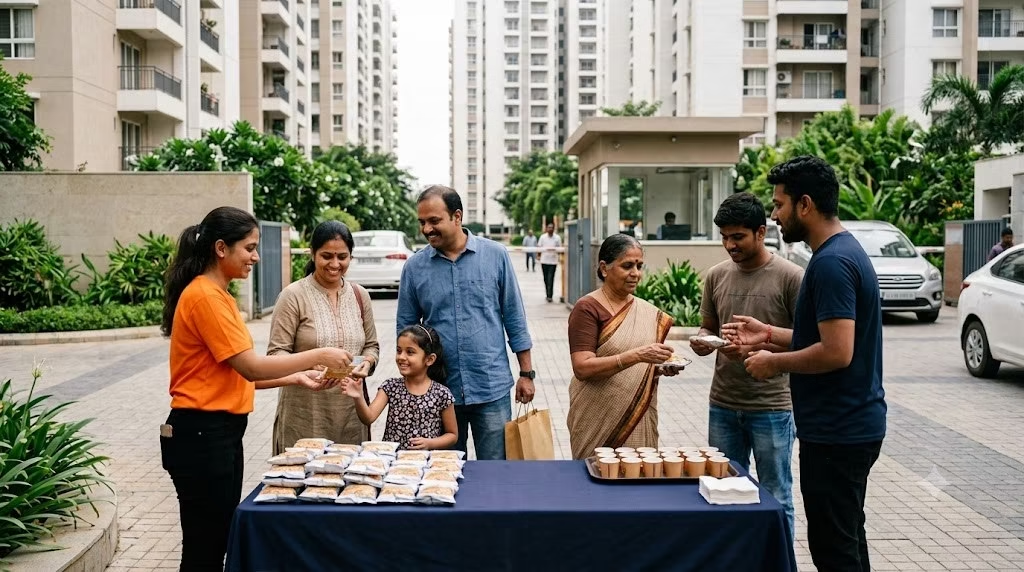
Quick Answer: How Does Product Sampling Work in India?
Short answer: Product sampling puts a product in a target customer’s hands so they try it before buying. In India the main formats are housing society (RWA) sampling, in-store sampling and demos, mall and event kiosks, and sampling with deliveries or partner brands. It works best for repeat-purchase products where one try can change habits: snacks, beverages, personal care and home care. Indicative costs run from ₹6–₹25 per sample for simple distribution to ₹10,000–₹30,000 per society per day for a managed RWA activation. Measure results with consented opt-ins, unique coupons and sales in sampled areas compared with similar unsampled ones.
Product Sampling in India: Key Takeaways
Pick the format by where buyers are
Families are best reached in housing societies, impulse buyers in stores, young urban buyers in malls and colleges, and online shoppers through deliveries.
Sample the right people, not the most people
Screening for your target customer beats handing samples to every passer-by.
Distribution comes first
A customer who likes the sample but cannot find the product nearby is a lost sale.
Measure, or it did not happen
Opt-ins, coupons, sales lift over 4–8 weeks and geotagged proof turn sampling from spend into evidence.
What Are the Main Product Sampling Formats in India?
Field formats let you choose exactly who receives a sample and capture feedback on the spot. Delivery sampling reaches more people cheaply but gives less control.
| Format | How it works | Best for |
|---|---|---|
| Housing society (RWA) sampling | Stalls at gates, clubhouses or weekend events, or door-to-door with RWA permission | Household, food and beverage, kids and family brands |
| In-store sampling and demos | Promoters offer tastings or demos next to the shelf | New launches that need trial at the point of purchase |
| Mall and event kiosks | Branded kiosks at malls, colleges, gyms, offices and events | Youth, premium and lifestyle brands |
| Delivery and partner sampling | Samples added to e-commerce or partner-brand deliveries | D2C brands targeting online shoppers |
Which Products Suit Sampling?
Sampling pays back when a single try can create a repeat buyer.
Repeat purchases
Snacks, beverages, personal care and home care, where one trial can start a habit.
Sensory products
Products whose taste, smell or feel is the main selling point.
New categories
Products people hesitate to buy without trying.
New city launches
Building awareness where nobody knows the brand yet.
Poor fit: one-off purchases
Expensive or rarely bought products rarely recover sampling costs.
Poor fit: slow results
Products that need weeks of use before customers notice a difference.
How Do You Measure Whether Sampling Worked?
Decide what success means before the campaign starts, then track it.
Set the goal first
Trial, first purchase, repeat purchase or store pickup each need a different measure.
Capture consented opt-ins
A QR code or WhatsApp opt-in lets you follow up and count repeat buyers, in line with India’s Digital Personal Data Protection Act, 2023.
Use unique coupon codes
A code per location shows which societies or stores converted.
Compare sampled and unsampled areas
Track nearby-shop sales in sampled catchments against similar areas for 4–8 weeks.
Verify execution
Geotagged, time-stamped photos and daily counts per team stop “ghost” sampling.
Review cost per qualified trial
Divide total cost by samples given to people who match your target profile.
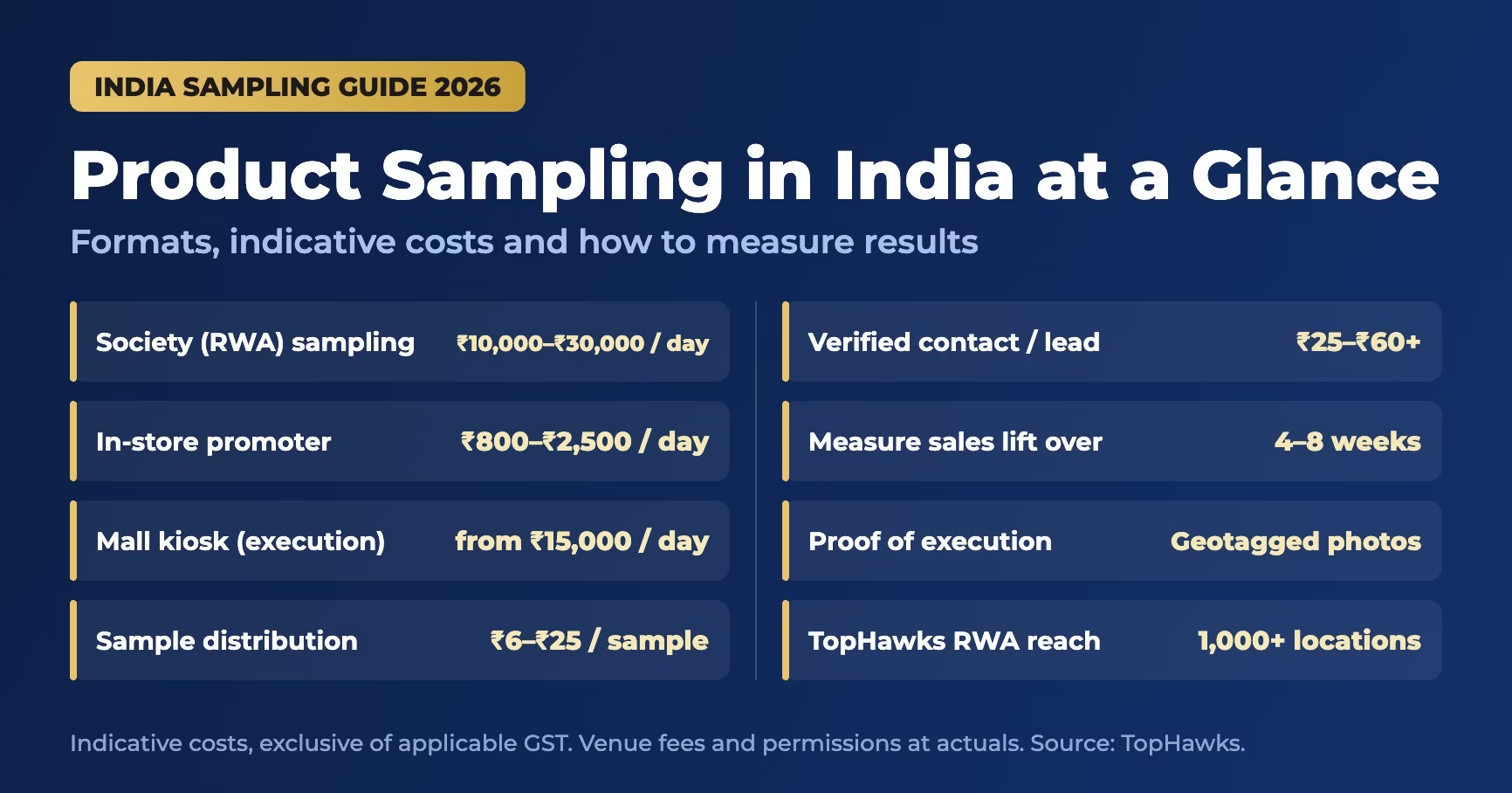
Product Sampling in India at a Glance
Indicative costs by format, exclusive of applicable GST.
- Sample distribution₹6–₹25 / sample
- In-store promoter₹800–₹2,500 / day
- Society (RWA) sampling₹10,000–₹30,000 / day
- Mall kiosk (execution)from ₹15,000 / day
What Drives the Cost of a Sampling Campaign?
Sampling is usually priced per day of field activity or per sample delivered. The main drivers are:
- The samples: product cost, special sample packs and logistics to each city.
- People: promoters at about ₹800–₹2,500 a day, supervisors, training and travel.
- Permissions and space: society fees, store demo charges or mall kiosk rental.
- Materials: stalls, standees, uniforms and leaflets.
- Tracking and reporting: geotagged photos, consumer data capture and daily reports.
For full rate tables, read our BTL activation cost guide.
Illustrative Sampling Budget
Example: 20 housing society sampling days
This is an illustrative calculation, not a quote, before the cost of the samples themselves.
Permissions, fabrication and logistics are billed separately as applicable, plus GST. Compare plans on cost per qualified trial, not cost per day.
What Are the Most Common Sampling Mistakes?
Sampling the wrong people
Handing samples to everyone at a busy mall inflates numbers but rarely builds buyers. Screen for your target customer.
No product on nearby shelves
Plan distribution first. Trial with nowhere to buy is wasted spend.
No proof of execution
Without geotagged photos and counts you are paying on trust. Ask for live reporting.
No follow-up
Without consented opt-ins or coupons you cannot reach triers again or measure repeat purchase.
Judging on cost per day
The cheapest day rate is not the cheapest campaign if it reaches the wrong people.
Frequently Asked Questions About Product Sampling in India
What is product sampling in marketing?
Product sampling means giving free samples of a product to target customers so they can try it before buying. It is used to drive trial for new products, launches in new cities and categories where taste, feel or results are the main selling point.
Which sampling format works best in India?
It depends on where your buyers are. Housing society sampling suits household and family products, in-store sampling suits new launches that need trial next to the shelf, mall and event kiosks suit youth and lifestyle brands, and delivery sampling suits D2C brands with online customers.
How much does product sampling cost in India?
Indicatively, simple sample distribution costs about ₹6 to ₹25 per sample, in-store promoters ₹800 to ₹2,500 a day, managed society activations ₹10,000 to ₹30,000 per society per day, and mall kiosks from about ₹15,000 a day for execution, exclusive of applicable GST.
How do you measure the results of a sampling campaign?
Set the goal first, capture consented opt-ins through QR codes or WhatsApp, use unique coupon codes per location, compare sales in sampled and similar unsampled areas over four to eight weeks, and verify execution with geotagged, time-stamped photos.
Is RWA or society sampling allowed?
Yes, with permission from the housing society or resident welfare association, which usually sets the dates, location and any fee. A good activation partner arranges these permissions in advance.
How many housing societies has TopHawks activated?
TopHawks has run housing society (RWA) activations and branding at 1,000+ locations across India.
Plan a Sampling Campaign with TopHawks
Want trial that turns into repeat buyers?
TopHawks runs sampling in societies, stores and malls with screened target audiences, consented data capture, geotagged proof and live reporting. Share your product, cities and dates for a campaign plan.
Call or WhatsApp +91 98102 99632 · enterprise@tophawks.com