
Merchant Onboarding Agency in India: Merchant Acquisition, Seller Onboarding and Activation Services
TopHawks provides field teams for merchant acquisition, merchant onboarding services, marketplace seller onboarding, QR/POS/EDC rollout support, retailer registration and merchant activation across 246+ cities in India. Depending on the client mandate, programmes can include market mapping, local workforce deployment, merchant visits, assisted registration, documentation support, product education, equipment rollout coordination and activation follow-through. Field execution is supported by TopHawks One, which provides GPS beat tracking, geo-fenced attendance, time-stamped geotagged photos captured in-app and daily KPI dashboards.
Proven seller onboarding experience: In the Amazon ATES programme, TopHawks delivered 7,000+ verified sellers onboarded, executed across 135 cities, met 100% of the programme’s compliance criteria, and recorded zero post-activation rejections under the programme’s reported criteria.
For a payments company, success may mean a merchant completing a qualifying transaction. For an e-commerce marketplace, it may mean an approved seller account, an eligible product listing or a first sale. For a consumer brand, it may mean an approved retailer completing an initial order. These outcomes require different field activities, different approval systems and different methods of verification.
TopHawks supports the physical field-execution component of these programmes. Merchant eligibility, regulated approvals, technology dependencies, acceptance milestones, reporting arrangements and commercial responsibilities are defined for each client engagement.
Planning a programme? Share your target cities, merchant categories, registration workflow and required commercial outcome to discuss a field-execution proposal: https://tophawks.com/contact-us/
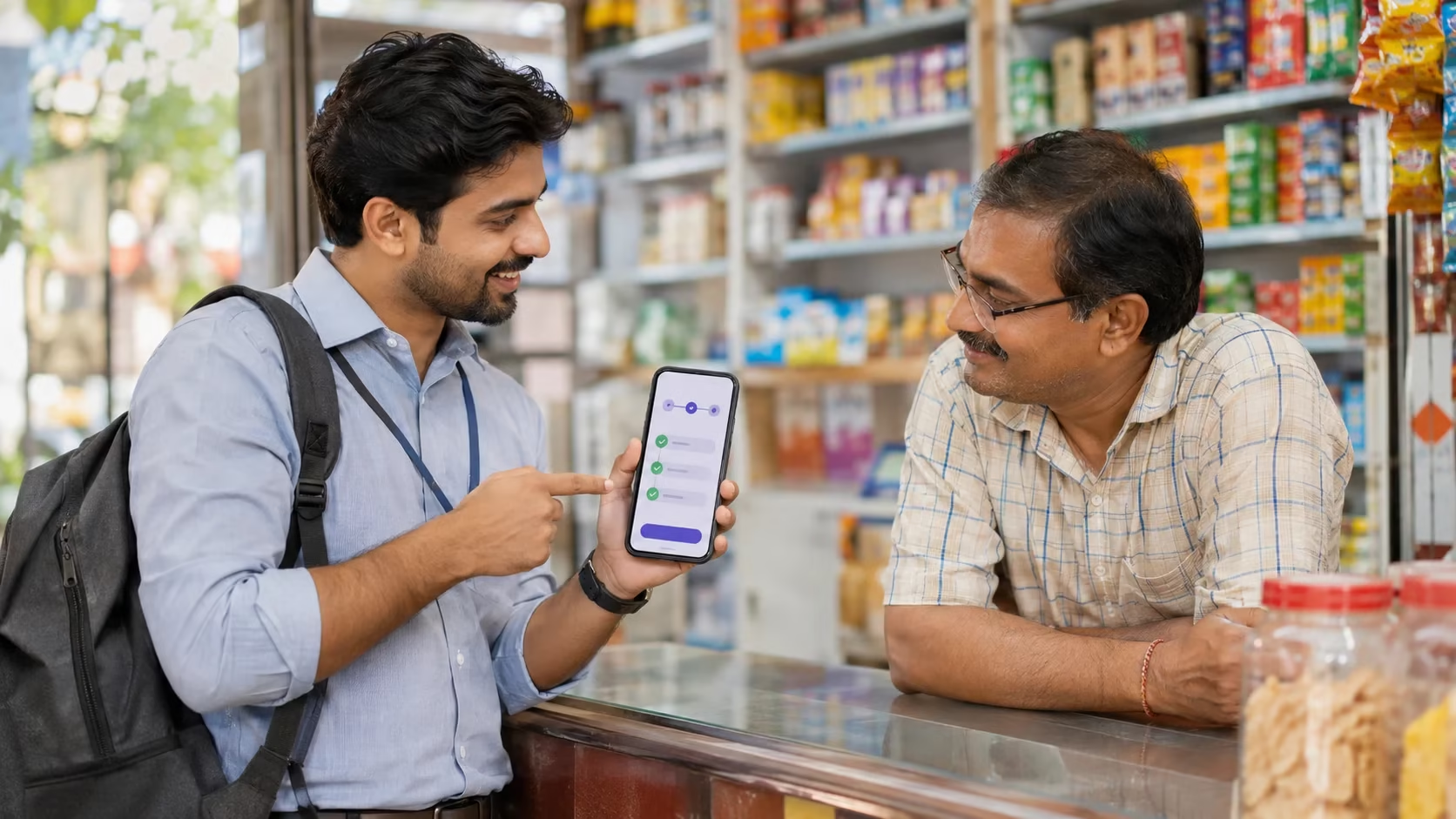
What Is Merchant Onboarding?
Merchant onboarding is the process of identifying, registering, verifying, approving and enabling a business to participate in a payment network, marketplace, distribution system or commercial programme. The process can begin with prospect discovery and continue through eligibility screening, application submission, document review, account approval, operational readiness and activation.
Merchant onboarding does not end automatically when a form is submitted. A business can be registered but ineligible, approved but unable to use a product, or technically enabled but commercially inactive. These outcomes must remain distinguishable in programme reporting.
Merchant Onboarding Examples by Business Type
| Business programme | Typical onboarding objective | Possible activation milestone |
|---|---|---|
| QR payment acceptance | Register an eligible merchant and enable authorised QR acceptance | First qualifying completed transaction |
| POS/EDC merchant acquisition | Complete approved merchant onboarding and device-readiness requirements | Provider-confirmed operational or first-use milestone |
| E-commerce marketplace | Acquire and approve eligible sellers | Approved listing, first order or first sale, according to programme rules |
| Retailer ordering network | Register approved outlets for a digital ordering programme | First qualifying order |
| Distribution partner programme | Register and approve eligible commercial partners | Completion of the agreed initial commercial activity |
| Merchant loyalty programme | Enrol eligible businesses and explain participation requirements | First qualifying participation event |
Essential distinction: Registration, approval, installation, operational readiness and activation are separate events. A first transaction, first order and first sale are not interchangeable. The client must define the exact success event before field execution begins.
Merchant Acquisition vs Merchant Onboarding vs Merchant Activation
Merchant acquisition secures an eligible business’s participation; merchant onboarding completes the required application and approval journey; merchant activation confirms that the merchant has achieved the agreed usage or commercial milestone. Agencies and clients should use these definitions consistently when setting targets, reviewing performance and reconciling invoices.
| Stage | What the field team or programme does | Measurable output | Evidence source |
|---|---|---|---|
| Merchant discovery | Identifies prospective businesses within target markets | Unique prospects identified | Approved prospect or market records |
| Merchant qualification | Checks businesses against eligibility criteria | Eligible prospects | Client-defined eligibility record |
| Merchant acquisition | Explains the proposition and secures an eligible sign-up | Accepted eligible sign-ups | Approved registration workflow |
| Merchant onboarding | Assists with required registration, documentation and approval steps | Completed and approved applications | Responsible client’s application system |
| Equipment deployment | Supports authorised QR placement or POS/EDC rollout | Accepted placement or deployment | Field evidence and provider acceptance where required |
| Merchant training | Explains the approved product and operating process | Training or readiness milestone completed | Agreed training record |
| Merchant activation | Supports achievement of the defined usage milestone | Verified activated merchants | Client-authorised system of record |
| Merchant re-engagement | Follows up with approved merchants who remain inactive | Resolved blockers or verified activation | Agreed exception and activation records |
A client can purchase one stage or design a programme spanning several stages. A seller-acquisition campaign, for example, should not automatically be priced or evaluated as a first-sale activation campaign. Likewise, payment acceptance equipment placement should not be counted as successful transaction activation unless that is expressly the agreed milestone.
Merchant Onboarding Services Offered by TopHawks
TopHawks can structure a field-execution mandate around prospect discovery, staffing, merchant registration, documentation assistance, QR/POS/EDC support, marketplace seller onboarding, retailer onboarding, merchant education and activation follow-through. The following are service capabilities and potential scope components, not a representation that every activity is included in every contract.
1. Merchant Discovery, Market Mapping and Territory Planning
Merchant discovery determines which businesses should be approached, where they are located and how field effort should be allocated. Before deployment, the client and execution team should establish the target merchant profile and whether outreach will use an existing lead list, independent market prospecting or both.
- Merchant categories: Identify eligible retailers, restaurants, service establishments, wholesalers, suppliers or other relevant business types.
- Target geography: Define cities, districts, local markets, commercial streets and any exclusion zones.
- Lead ownership: Establish whether prospect data originates from the client, field discovery or another authorised source.
- Existing accounts: Define how already-onboarded merchants, previously rejected accounts and duplicate prospects are treated.
- Territory planning: Allocate field beats using the expected merchant opportunity and required visit workflow.
- Coverage evidence: Define what counts as a completed visit, merchant contact or surveyed location.
Buyer consideration: A client-supplied merchant list and independent prospect discovery are materially different assignments. Pricing, workforce productivity and conversion comparisons should account for that difference.
2. Merchant Onboarding Field Recruitment and Staffing
Field hiring specifications should reflect the actual task. Merchant acquisition executives require persuasive communication and local-market knowledge; documentation-focused personnel require application accuracy; device-rollout teams may require additional technical orientation.
TopHawks has a 3,75,000 candidate database and has deployed 26,500+ field reps across company programmes.
Depending on the assignment, a deployment structure may include acquisition executives, registration personnel, merchant trainers, field coordinators and supervisors.
- City-wise role and headcount planning.
- Candidate screening against language, mobility and workflow requirements.
- Product and programme-specific induction.
- Application and documentation process training.
- Field reporting and evidence-capture orientation.
- Supervisor and escalation responsibility definition.
- Attendance, payroll and applicable statutory workforce administration.
- Replacement, reassignment and deployment changes as contractually agreed.
Relevant deployment evidence: In the OYO and Flipkart vendor onboarding programmes, 50+ field staff across 8 cities each were deployed in 2-4 weeks. Those historical deployment periods are programme-specific and do not establish a guaranteed timeline for future assignments.
3. In-Person Merchant Visits and Assisted Registration
Field-assisted registration is useful when a merchant requires a face-to-face product explanation, eligibility clarification or help completing the approved application process.
A typical scoped visit can involve introducing the programme, checking merchant eligibility, explaining authorised terms, answering operational questions and assisting the business owner through the designated registration interface.
- Explain the product and participation requirements using client-approved material.
- Identify the business owner or authorised representative.
- Check relevant eligibility and exclusion conditions.
- Assist with application fields and authorised declarations.
- Record merchant consent using the approved process.
- Identify missing information or incomplete steps.
- Document the appropriate visit and application status.
- Arrange the next action where additional assistance is authorised.
Practical control: A merchant who expresses interest, starts registration or submits incomplete documents must not be recorded as approved simply because a field visit took place.
4. Merchant Documentation and Physical KYC Assistance
Merchant documentation assistance helps eligible businesses understand and complete the information requirements established by the client or responsible regulated entity. It can reduce avoidable errors caused by unclear instructions, missing fields or incomplete submissions.
Depending on the approved workflow, field personnel may help merchants identify required documents, complete application fields, submit information through authorised systems and resolve requests for missing information.
TopHawks One supports time-stamped geotagged photos captured in-app for appropriate field evidence where included in the workflow.
Regulatory boundary: Assisting with documentation or checking completeness does not constitute independent KYC approval. Identity verification, regulated risk decisions, final account approval and merchant acceptance remain with the responsible client, financial institution, payment provider or authorised entity.
Clients should specify which information may be collected, where it may be submitted, who may access it, which documents must not be photographed and how incomplete or rejected applications are handled. Sensitive information must remain within approved processes.
5. QR Code Merchant Onboarding Services
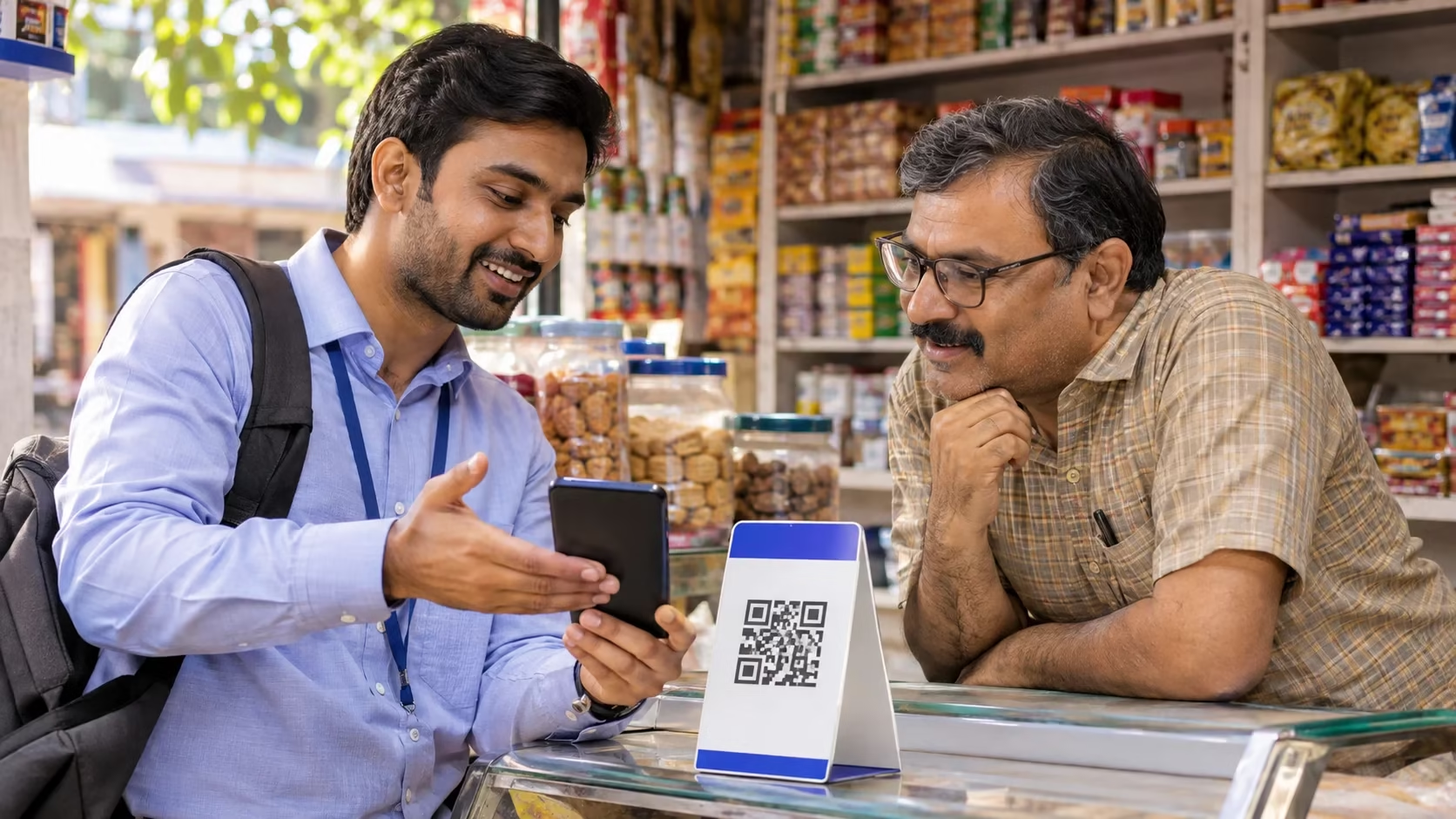
QR code merchant onboarding supports eligible businesses through the registration, placement, education and activation stages of a payment acceptance programme. It should not be measured solely by the number of QR displays distributed or placed.
- Identify eligible merchant locations.
- Assist with client-authorised merchant registration.
- Explain the approved QR acceptance product.
- Support authorised QR placement and visibility.
- Record agreed evidence of QR placement.
- Demonstrate the approved acceptance journey where authorised.
- Explain merchant support and issue-escalation channels.
- Follow up on pending activation requirements where included.
- Record activation only against the programme’s defined success event.
Recommended acceptance logic: Maintain separate counts for eligible merchants, registration submissions, approved accounts, QR placements, operationally ready merchants and verified transaction activations. A QR code visible at a counter is evidence of placement, not proof of a completed payment.
6. POS and EDC Merchant Onboarding and Device Rollout Support
POS and EDC onboarding typically requires coordination across merchant registration, device availability, installation readiness, merchant training and provider confirmation. Field personnel may support the physical stages, but their scope must be distinguished from specialist payment-technology responsibilities.
- Confirm merchant address and device-deployment readiness.
- Coordinate authorised device allocation or delivery.
- Support installation visits within the agreed responsibility boundary.
- Record device placement or delivery evidence where required.
- Orient merchants on approved operational procedures.
- Explain where to report connectivity or terminal problems.
- Escalate technical faults to the appropriate provider.
- Follow up on first-use requirements where included.
- Reconcile field completion with the responsible provider’s acceptance status.
Scope exclusions to resolve: Device ownership, hardware custody, terminal configuration, technical certification, payment processing, maintenance, settlement and merchant support ownership must be assigned expressly. They should not be presumed to form part of ordinary field staffing services.
7. Marketplace Seller Acquisition and Seller Onboarding
Seller onboarding services help marketplaces identify eligible businesses, explain participation requirements and support the journey from prospect discovery to approved seller readiness. Marketplace programmes differ from payment acceptance because catalogue preparation, seller portal education and fulfilment readiness may be important.
- Identify sellers matching the marketplace’s approved categories.
- Explain eligibility, selling requirements and client-approved terms.
- Assist with account registration and documentation.
- Support profile completion and required account information.
- Guide sellers through approved catalogue or listing instructions.
- Explain the relevant seller portal workflow.
- Help sellers understand order handling and support routes.
- Track incomplete, pending, approved and rejected registration stages.
- Follow up on agreed seller activation milestones.
Confirmed programme evidence: Amazon ATES: 7,000+ verified sellers onboarded, executed across 135 cities, met 100% of the programme’s compliance criteria, zero post-activation rejections under the programme’s reported criteria.
These results relate specifically to that programme. Seller registration, seller approval, catalogue publication and first-sale activation must still be defined independently for any new mandate.
8. Fintech and BFSI Merchant or Partner Onboarding
Fintech and BFSI merchant onboarding programmes may require local field teams for prospect identification, application assistance, product explanation and authorised follow-up. These assignments need particularly clear boundaries between field execution and regulated decision-making.
Potential assignments include merchant acceptance acquisition, fintech partner registration, approved distribution-network expansion and other client-authorised field onboarding activities.
- Identify eligible businesses or prospective partners.
- Explain approved product features and participation requirements.
- Guide merchants through designated application processes.
- Assist with authorised documentation and field evidence.
- Escalate eligibility or compliance-related questions.
- Track submitted, pending, incomplete and rejected applications.
- Support approved operational readiness or activation tasks.
Compliance boundary: Field personnel do not independently approve regulated accounts, determine creditworthiness, guarantee financial-product eligibility, perform reserved banking functions or assume the responsible provider’s regulatory obligations.
9. Retailer Registration and Trade Partner Activation
Retailer onboarding connects eligible outlets to a brand, distributor, ordering platform, loyalty programme or other approved commercial network. The objective should be to create usable retailer participation, not merely a larger unverified outlet database.
Depending on the scope, field teams can identify outlets, explain programme terms, assist with retailer registration, support authorised application installation, conduct product orientation and follow up on the agreed initial activity.
Important reporting distinction: An outlet record, an approved retailer account and a retailer completing a qualifying order are different outcomes. Multi-outlet business ownership, inactive outlets and duplicate records need defined treatment.
10. Merchant Product Education and Training
Merchant training helps businesses understand how to use the service after registration. It is particularly valuable when merchants must adopt a new app, acceptance method, ordering process or seller portal.
Training topics may include the approved transaction flow, basic product operations, seller account navigation, order handling, settlement-information access, customer support procedures and escalation channels.
Training content should be approved by the client and adapted to the merchant’s language and familiarity with the product. Completion of training should be recorded separately from commercial activation whenever the programme requires both milestones.
11. Merchant Activation and First-Use Follow-Through
Merchant activation means that an approved merchant has achieved the exact post-registration event defined as successful usage by the client. The event might be a completed payment, an approved first order, a live product listing or another authorised commercial milestone.
| Programme type | Possible activation definition | Authoritative verification |
|---|---|---|
| QR payment programme | First qualifying completed transaction | Responsible payment provider’s transaction record |
| POS/EDC programme | Agreed device-readiness or first-use milestone | Terminal provider or authorised system status |
| Marketplace seller programme | Approved listing, first order or first sale | Marketplace system of record |
| Retail ordering programme | First qualifying order | Client ordering-system record |
| Trade partner programme | Completion of initial qualifying activity | Client-approved programme record |
Field activities may include approved merchant demonstrations, explanation of next steps, reminders, assistance with outstanding requirements and escalation of technical blockers.
Verification rule: Field photographs can support proof of presence or placement but cannot independently prove that a payment settled, an order was accepted or a genuine sale occurred. Commercial activation should be confirmed by the relevant system of record.
12. Dormant Merchant Re-Engagement
Re-engagement programmes target merchants who have already registered or received approval but have not achieved the agreed activation event. The purpose is to identify the actual blocker and determine whether an authorised intervention is worthwhile.
Useful exception categories include incomplete documents, pending approval, unavailable equipment, technical failure, insufficient product understanding, merchant refusal and merchants no longer operating or eligible.
Each record should have an agreed status, responsible owner and next action. Revisit frequency, allowable field activities and billable outcomes must be specified rather than assumed to be included in the initial onboarding fee.
How TopHawks Runs a Merchant Onboarding Programme
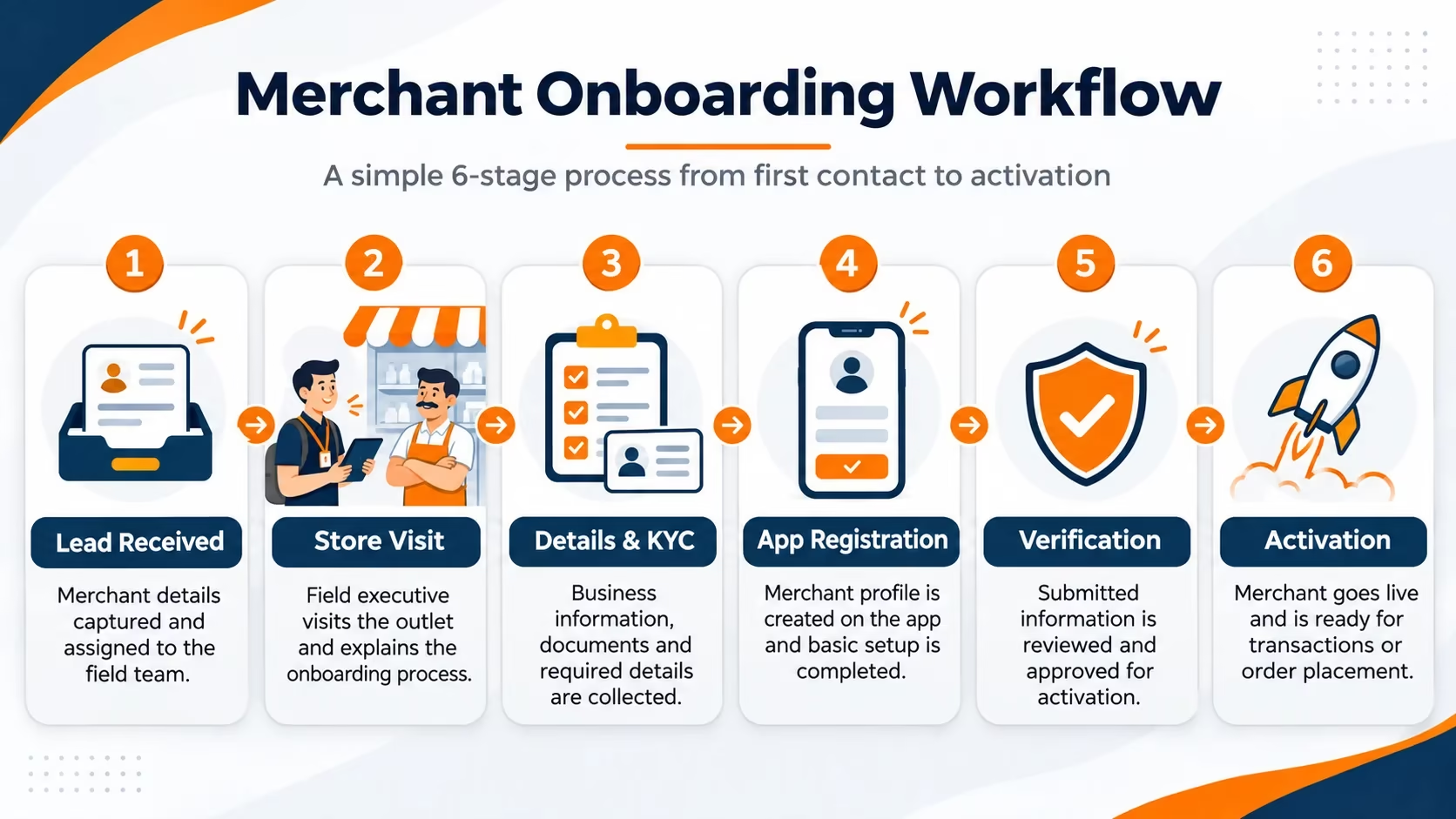
A merchant onboarding programme should progress through defined commercial objectives, eligibility rules, territory preparation, workforce deployment, registration, approval, operational readiness, activation verification and exception resolution. The sequence below is a recommended delivery framework. Actual processes and responsibilities depend on the agreed client mandate.
Stage 1: Agree the Business Objective and Acceptance Criteria
Define whether the required outcome is an eligible lead, registration, approved merchant, deployed device or activated account. Establish which events will be measured, which require client approval and which will trigger commercial reconciliation.
Stage 2: Define Merchant Eligibility and Exclusion Rules
Document eligible merchant categories, permitted locations, duplicate definitions, existing-account treatment and disqualifying conditions. Include rules for businesses operating multiple outlets and for applicants previously rejected by the client.
Stage 3: Map Markets and Allocate Field Beats
Identify priority cities, local markets, merchant clusters and available lead sources. Determine which areas require field prospecting and which can be covered through client-supplied merchant records.
Stage 4: Recruit, Train and Prepare Field Personnel
Match workforce roles to product complexity, language needs and registration tasks. Train personnel on the approved proposition, application workflow, merchant eligibility, evidence requirements, escalation routes and prohibited commitments.
Stage 5: Define Reporting and Evidence Requirements
Agree the required attendance, visit, registration and exception records. TopHawks One supports GPS beat tracking, geo-fenced attendance, time-stamped geotagged photos captured in-app and daily KPI dashboards.
Any additional integrations, custom merchant-status processes or client-specific validation requirements must be assessed and agreed separately.
Stage 6: Conduct Outreach and Assisted Registration
Field personnel engage eligible merchants, explain the programme and support the authorised registration process. Uninterested, unavailable, ineligible and incomplete merchants should receive distinct dispositions.
Stage 7: Submit Applications and Resolve Documentation Exceptions
Application information is submitted through authorised channels. Pending documents, rejected records and approval queries are assigned to the responsible party. The client or authorised provider retains final acceptance authority.
Stage 8: Support Product Readiness and Merchant Training
Where included, support QR placement, POS/EDC rollout coordination, portal orientation or other client-approved readiness tasks. Record equipment deployment, training completion and approval as separate milestones.
Stage 9: Confirm Activation from the Client’s System
Reconcile approved merchants against the defined activation event. Where the programme uses first transactions, orders or sales, the corresponding authoritative event must be supplied or confirmed by the responsible platform.
Stage 10: Review Exceptions, Reconcile Outcomes and Improve Execution
Review incomplete applications, rejection reasons, duplicate submissions, merchant objections, field attendance, territory gaps and activation blockers. Assign corrective action to the party capable of resolving each issue.
Programme deliverable: The buyer should be able to distinguish field work completed, applications submitted, accounts approved, merchants operationally ready and merchants verified as activated.
Merchant Onboarding in Tier 2 and Tier 3 India
Tier 2 and Tier 3 merchant onboarding requires a territory-specific approach to merchant discovery, local-language communication, documentation assistance, training and physical field coverage. Market structure and infrastructure differ by location, so metropolitan acquisition assumptions should not automatically be applied to smaller commercial centres.
Practical Planning Considerations
| Operating consideration | Potential field challenge | Recommended programme response |
|---|---|---|
| Retail market distribution | Eligible outlets may be spread across multiple trading clusters | Map target markets before finalising beats |
| Local language | Product explanations may require region-specific communication | Match hiring and training to merchant language needs |
| Digital familiarity | Some merchants may need assisted application completion | Define training and demonstration requirements |
| Merchant availability | Owners may be unavailable during certain trading periods | Plan visit windows around actual market conditions |
| Documentation | Applications may require additional explanation or follow-up | Use an approved missing-information workflow |
| Equipment readiness | Connectivity, device supply or provider support may affect deployment | Assign responsibility for technical dependencies |
| Repeat visits | Some applications cannot be completed during initial contact | Define permitted and commercially covered follow-up activity |
These are considerations for programme design rather than assertions that every non-metropolitan market has the same conditions.
TopHawks supports field execution across 246+ cities in India. The Amazon ATES programme was executed across 135 cities. New market feasibility must be reviewed against the requested geography, merchant population, workforce availability, workflow complexity and commercial structure.
TopHawks One: Merchant Onboarding Field Visibility and KPI Reporting
TopHawks One supports the operational visibility layer of field programmes through GPS beat tracking, geo-fenced attendance, time-stamped geotagged photos captured in-app and daily KPI dashboards. These capabilities help clients review field execution, but do not independently replace merchant approval or transaction records held by the responsible client.
| Confirmed capability | Operational value | Evidence limitation |
|---|---|---|
| GPS beat tracking | Supports visibility into field movement and territory execution | Does not establish merchant acceptance |
| Geo-fenced attendance | Supports location-based attendance verification | Does not establish application approval |
| Time-stamped geotagged photos captured in-app | Supports review of authorised physical field evidence | Does not establish a completed transaction or sale |
| Daily KPI dashboards | Supports periodic monitoring of operational performance indicators | Does not independently validate client-system commercial outcomes |
Recommended Merchant Lifecycle Statuses
For programmes requiring end-to-end merchant-level reporting, the following status vocabulary can form the basis of a client-specific workflow. It is a proposed taxonomy, not a claim that all statuses are standard built-in TopHawks One features.
- Prospect identified.
- Contact attempted.
- Merchant contacted.
- Eligibility pending.
- Eligible or excluded.
- Registration initiated.
- Documentation incomplete.
- Application submitted.
- Client approval pending.
- Approved or rejected.
- Product or device readiness pending.
- Operationally ready.
- Activation pending.
- Activated against the agreed event.
- Closed with a recorded reason.
Statuses should have defined owners, allowed transitions and timestamps where required. A pending approval should not be converted into a rejection merely because a reporting cycle has ended, and an unresolved merchant should not disappear from the operational queue without an agreed closure reason.
What a Client Dashboard Should Show
A useful dashboard separates field execution from merchant outcomes. The proposed client reporting design may include the following views, subject to technical feasibility and agreed scope.
| Reporting view | Questions answered | Primary information source |
|---|---|---|
| Leadership overview | Which markets are progressing and how many merchants have reached the target milestone? | Agreed field and client outcome data |
| Field operations | Which territories were covered and where are visits or applications pending? | Field activity and attendance records |
| Application quality | Which submissions are incomplete, rejected or disputed? | Client application decisions and exception records |
| Activation | Which approved merchants have achieved verified commercial usage? | Authoritative client transaction, order or programme records |
| Management action | Which blockers need intervention and who owns resolution? | Agreed exception-management workflow |
Client access arrangements, custom dashboards, automated reconciliation and external system integrations must be confirmed in the solution scope. The table is a recommended reporting specification, not a declaration that every view is available as a standard feature.
Merchant Verification, Duplicate Prevention and Quality Control
Merchant onboarding quality control must verify two different things: whether field activity actually occurred and whether the resulting merchant account satisfies the client’s eligibility, approval and activation requirements. GPS evidence alone cannot establish both.
Field Activity Evidence
TopHawks One supports GPS beat tracking, geo-fenced attendance and time-stamped geotagged photos captured in-app. These records can help reviewers examine where and when field activity was reported.
Programme-specific controls should define which activities require evidence, who reviews exceptions and how disputed records are investigated. Evidence requirements must respect merchant consent and applicable information-handling rules.
Merchant Uniqueness and Duplicate Rules
Clients should specify how merchant records are distinguished before work begins. Depending on the programme, the business entity, individual outlet, location, authorised merchant identifier or approved account may represent the billable unit.
- Check new submissions against authorised existing-merchant data.
- Define how multiple outlets owned by the same business are treated.
- Separate repeated applications from genuinely new accounts.
- Classify duplicate, rejected, ineligible and incomplete records.
- Identify which merchant identifiers may lawfully and operationally be used.
- Define who resolves disputed matches.
- Record the disposition of rejected or corrected submissions.
Automated duplicate detection, suspicious-activity alerts, travel-anomaly detection and other advanced fraud controls must be evaluated as programme requirements rather than assumed to be universally available platform functions.
Three-Way Outcome Reconciliation
A recommended reconciliation structure compares the agency’s field-activity record, the client’s application and approval record, and the authoritative activation event where applicable.
| Record | What it establishes | Typical discrepancy to investigate |
|---|---|---|
| Field execution record | Reported merchant interaction or assigned field activity | Visit evidence missing or disputed |
| Client application record | Registration submission and approval outcome | Submitted application absent, incomplete or rejected |
| Client activation record | Programme-defined usage event | Approved merchant not yet activated |
Reconciliation should preserve the reason for each discrepancy and the responsible stakeholder. A rejected account, disputed visit and technically inactive approved account require different corrective actions.
Merchant Onboarding Case Studies and Verified Programme Experience
TopHawks’ relevant programme evidence includes the Amazon ATES seller onboarding programme and multi-city vendor onboarding deployments for OYO and Flipkart. The outcomes below are specific to those programmes and should not be treated as universal service guarantees.
Amazon ATES: Marketplace Seller Onboarding Across 135 Cities
Client programme: Amazon ATES.
Service category: Marketplace seller onboarding and associated field execution.
Confirmed outcome: 7,000+ verified sellers onboarded, executed across 135 cities, met 100% of the programme’s compliance criteria, zero post-activation rejections under the programme’s reported criteria.
Why it matters to a buyer: This programme provides evidence of geographically distributed seller onboarding involving defined compliance requirements and reported seller acceptance outcomes.
The compliance and rejection outcomes apply to the programme’s reported criteria. They do not guarantee approval rates, regulatory outcomes or the absence of rejections in another marketplace programme.
For a comparable mandate, buyers should establish the intended seller profile, seller-account requirements, documentation responsibilities, acceptance rules and agreed activation milestone.
OYO: Multi-City Vendor Onboarding Deployment
Client programme: OYO vendor onboarding.
Confirmed deployment: 50+ field staff across 8 cities each, deployed in 2-4 weeks.
Why it matters to a buyer: The deployment provides historical evidence relevant to coordinated field workforce mobilisation across multiple markets.
It does not establish a standard deployment SLA, guaranteed recruitment speed or a particular merchant activation outcome for future engagements.
Flipkart: Multi-City Vendor Onboarding Deployment
Client programme: Flipkart vendor onboarding.
Confirmed deployment: 50+ field staff across 8 cities each, deployed in 2-4 weeks.
Why it matters to a buyer: The programme provides another historical example of field-team deployment for geographically distributed vendor onboarding.
The deployment timeline belongs to the cited programme and does not establish the staffing structure or timeline for a new assignment.
Company-Wide Operating Experience
- 800+ brands served.
- 246+ cities.
- 3,75,000 candidate database.
- 26,500+ field reps deployed.
- 88,500+ agents paid lifetime.
Metric definitions: The figures above describe different dimensions of company-wide experience. The number of field reps deployed is distinct from the number of agents paid lifetime. Neither figure should be represented as the number of merchants onboarded. Programme-specific Amazon, OYO and Flipkart outcomes must remain separate from company-wide operating metrics.
Field-Based vs Digital vs Hybrid Merchant Acquisition
The best merchant acquisition model depends on the product, merchant profile and tasks required for approval and activation. Digital onboarding can work for self-service-ready merchants, while field assistance may be appropriate where physical discovery, education, documentation or equipment deployment is needed. Hybrid models combine these approaches.
| Evaluation factor | Digital-first | Field-assisted | Hybrid |
|---|---|---|---|
| Prospect generation | Online campaigns and inbound demand | Local merchant prospecting | Digital leads with selective physical outreach |
| Product explanation | Remote content and support | Face-to-face interaction | Remote-first with field assistance where needed |
| Documentation | Merchant self-service | Assisted application completion | Self-service with exception handling |
| QR/POS/EDC placement | Requires a separate physical process | Can be included in an authorised field scope | Digital approval followed by coordinated deployment |
| Activation follow-up | Remote communication | Physical assistance where included | Follow-up selected according to merchant need |
| Best-fit condition | Simple, independently completed journeys | Multi-step or physically dependent journeys | Mixed merchant profiles and conversion barriers |
Buyer recommendation: Use field deployment to address an identified barrier to registration, approval or activation. More physical visits do not automatically produce more commercially useful merchants.
In-House vs Outsourced Merchant Onboarding Agency vs Gig-Based Network
In-house teams, managed onboarding agencies and gig-based networks differ in workforce control, supervision, training responsibilities and operating structure. The appropriate choice depends on task complexity, geographical coverage and the level of control required over the merchant experience.
| Decision factor | In-house team | Managed agency | Gig or task-based network |
|---|---|---|---|
| Recruitment | Internal responsibility | Defined in agency scope | Provider-specific sourcing approach |
| Training | Internally managed | Allocated between client and agency | Depends on task and provider model |
| Supervision | Direct internal management | Can form part of managed delivery | Varies by network and arrangement |
| Workforce administration | Internal responsibility | Can be included in staffing contract | Depends on engagement structure |
| Product complexity | Suitable for dedicated internal expertise | Suitable for structured supervised activities | Requires evaluation for training-intensive work |
| Field evidence | Requires internal tools and processes | Based on agreed provider capability | Based on network verification model |
| Commercial structure | Internal operating expenditure | Contracted services and responsibilities | Provider-specific task or outcome arrangement |
A simple physical verification task and a complex merchant onboarding programme should not automatically use the same workforce model. Where the process involves technical explanation, application corrections and merchant activation, buyers should specifically evaluate training, supervision and continuity.
How to Compare Merchant Onboarding Agencies in India
Evaluate merchant onboarding agencies against the same merchant journey, acceptance criteria, geographical requirements and evidence standards. This provides a more meaningful comparison than general statements about field force size or national presence.
Buyers evaluating TopHawks alongside Channelplay, Anaxee, Taskmo, Fulcrum, MIMO, PickMyWork, VacoBinary and Cygnus should request evidence for the proposed delivery model. The following framework does not attribute unverified capabilities, prices, rankings or shortcomings to any named competitor.
| Evaluation criterion | Question for the agency | Evidence to request |
|---|---|---|
| Relevant experience | Have you executed a comparable merchant or seller programme? | Authorised case study with defined outcomes |
| Geographic feasibility | Can you serve the exact target markets? | Location-specific deployment plan |
| Field sourcing | How will the required personnel be recruited? | Role profile and sourcing proposal |
| Supervision | Who manages field performance and escalations? | Responsibility and reporting matrix |
| Merchant eligibility | How are duplicates and ineligible accounts handled? | Written qualification rules |
| Application workflow | Who collects, submits and approves information? | Workflow and authority matrix |
| Activation | What exactly proves commercial success? | Activation definition and data source |
| Technology | What field evidence and reporting are available? | Demonstration using an appropriate sample workflow |
| Quality control | Who investigates rejected or disputed records? | Proposed exception and reconciliation process |
| Merchant experience | How are teams trained to communicate correctly? | Training plan and approved communication process |
| Workforce compliance | Who handles relevant labour and statutory obligations? | Applicable compliance documentation |
| Commercial clarity | Which activities or outcomes are billable? | Quotation and acceptance rules |
| Pilot design | What will be tested before expansion? | Documented pilot criteria |
| Change control | How are product or eligibility changes introduced? | Change-request and responsibility process |
| Exit arrangements | How will open merchant records be handed over? | Handover and data-treatment requirements |
Recommended procurement test: Give each shortlisted agency the same example merchant journey: an eligible merchant submits incomplete documents, receives approval after correction, faces an equipment delay and remains inactive after installation. Ask how the agency would report each stage, assign responsibility, verify completion and determine what is billable.
This scenario reveals more about operational maturity than a presentation containing only hiring numbers, photographs or broad coverage claims.
How to Measure Merchant Onboarding Performance
Merchant onboarding performance should be measured through a funnel that separates prospect qualification, registration completion, client approval, operational readiness and verified activation. Field attendance and merchant visits are useful operating indicators, but are not substitutes for accepted commercial outcomes.
Core KPIs and Calculation Definitions
| KPI | Recommended definition | Decision supported |
|---|---|---|
| Merchant outreach | Unique merchant contacts under agreed counting rules | Field coverage and engagement |
| Eligibility rate | Eligible merchants divided by evaluated merchants | Prospect targeting quality |
| Registration completion rate | Completed registrations divided by initiated registrations | Application friction |
| Application approval rate | Approved applications divided by applications with final decisions | Submission and eligibility quality |
| Duplicate submission rate | Duplicate submissions divided by submitted records | Record-quality control |
| Rework rate | Submissions requiring correction divided by the agreed submission population | Documentation and process quality |
| Activation rate | Activated merchants divided by the agreed eligible denominator | Conversion into the target usage milestone |
| Time to approval | Elapsed time from the agreed application milestone to client approval | Approval process delay |
| Time to activation | Elapsed time from the defined starting event to verified activation | Onboarding-to-usage delay |
| Cost per approved merchant | Agreed programme cost divided by approved merchants | Cost of accepted account acquisition |
| Cost per activated merchant | Agreed programme cost divided by verified activated merchants | Cost of reaching the commercial milestone |
| Territory coverage | Covered eligible target locations divided by planned locations | Market execution |
Each metric requires a documented reporting period, numerator, denominator, merchant uniqueness rule and authoritative source. A comparison using registrations as the activation denominator is not equivalent to one using approved merchants.
Recommended Funnel Reporting Structure
Report the progression from unique prospects to eligible merchants, initiated registrations, completed applications, approved accounts, operational readiness and verified activation. Show losses or pending records at each stage rather than collapsing them into an overall conversion percentage.
Where required, distinguish merchants awaiting a client action from those awaiting field action. This is important because a programme can have strong field execution while approval or activation remains blocked by another stakeholder.
Why Cost per Activated Merchant Matters
Cost per activated merchant can provide a more commercially meaningful comparison than cost per registration when the programme objective is genuine product usage. However, the analysis must include the same cost categories, time window, activation definition and attribution rules across vendors.
Low activation may result from weak merchant qualification, incomplete applications, approval delays, unavailable equipment, poor training, technical issues or limited merchant interest in the product. The underlying cause must be identified before performance responsibility is allocated.
How to Design a Merchant Onboarding Pilot Before Scaling
A merchant onboarding pilot should test whether the selected merchant population, field workflow, approval process and activation model can deliver the intended outcome at an economically acceptable cost. It should lead to an explicit expand, redesign or stop decision.
Recommended Pilot Framework
- State the hypothesis. Specify the market opportunity or operating assumption being tested.
- Choose representative geography. Select locations relevant to the intended rollout.
- Define eligibility. Establish merchant categories, exclusions and uniqueness rules.
- Define the success event. Identify whether the pilot measures eligible registrations, approvals, deployments or activation.
- Allocate responsibilities. Identify which party controls training, approvals, devices, technical support and reporting.
- Prepare field execution. Agree staffing roles, scripts, application processes and evidence requirements.
- Record exceptions. Capture reasons for merchant refusal, missing information, rejection and inactivity.
- Reconcile outcomes. Compare field submissions with authoritative client records.
- Evaluate the economics. Review costs against the agreed commercially useful outcome.
- Make the scale decision. Proceed, revise or stop according to the pre-agreed criteria.
Questions a Pilot Must Answer
- Is there a sufficient addressable population of eligible merchants?
- Can field personnel explain the proposition and complete the workflow accurately?
- Which application fields or documents cause the greatest friction?
- Does the client approval system support the intended volume and process?
- Are activation barriers related to merchants, field execution, product readiness or client systems?
- Does the cost per accepted or activated merchant support the commercial objective?
- Can the proposed staffing and supervision model be expanded responsibly?
Pilot decision rule: Do not approve expansion solely because visit or registration counts are high. Use reconciled outcomes and documented operating lessons.
How Much Do Merchant Onboarding Services Cost in India?
Merchant onboarding costs in India depend on geography, field staffing, merchant sourcing, documentation complexity, equipment requirements, approval dependencies, activation criteria, quality controls and follow-up responsibilities. No universal price applies across simple prospecting, assisted seller onboarding and multi-stage payment acceptance programmes.
Common Procurement and Billing Structures
| Commercial model | Typical billing unit | Issue to define before contracting |
|---|---|---|
| Dedicated field manpower | Agreed workforce and management services | Covered roles, attendance, supervision and related costs |
| Per qualifying visit | Accepted field activity | Visit definition, evidence and duplicate treatment |
| Per eligible registration | Accepted eligible sign-up | Eligibility, duplicates and application completeness |
| Per approved merchant | Approved merchant account | Approval timing and rejection responsibilities |
| Per activated merchant | Verified qualifying activation event | Authority for event confirmation and attribution |
| Hybrid structure | Agreed fixed and variable components | Cost coverage, outcome acceptance and exceptions |
These are general industry procurement structures. They are not a representation that TopHawks offers every model, accepts pure outcome risk or has published fixed commercial rates.
What Changes the Cost of a Merchant Onboarding Programme?
- Prospect source: Whether the client supplies valid leads or the agency must discover merchants independently.
- Geographic concentration: Whether eligible merchants are concentrated in a few markets or dispersed across territories.
- Merchant qualification: The difficulty of identifying genuinely eligible businesses.
- Documentation: The number and complexity of required application steps.
- Product training: Whether merchants require demonstrations or operating instruction.
- Physical equipment: QR materials, POS/EDC devices or other rollout dependencies.
- Activation event: Whether success is an accepted registration or a later commercial event.
- Quality requirements: Evidence, review, correction and reconciliation obligations.
- Revisits: Whether repeat visits, rejected applications or dormant merchants require additional work.
- Client dependencies: Approval turnaround, system access, equipment availability and technical support.
For a meaningful proposal, provide the target geography, merchant categories, approximate opportunity, field tasks, application workflow, acceptance rules, activation milestone, reporting needs and intended programme duration.
Procurement principle: Compare the full cost of accepted or activated merchants against the same scope and measurement rules. A lower price per field visit does not necessarily mean a lower cost per commercially useful merchant.
Common Reasons Merchant Onboarding Programmes Underperform
Merchant onboarding programmes underperform when the process rewards the wrong milestone, eligibility rules are ambiguous, ownership is unclear or activation depends on unresolved client-side requirements. The operational controls below address common failure modes.
| Failure mode | Commercial consequence | Recommended control |
|---|---|---|
| Counting raw registrations as success | Large submission volume but weak approved outcomes | Report registration, approval and activation separately |
| Unclear merchant eligibility | Ineligible prospects consume field effort | Use authoritative qualification and exclusion rules |
| Duplicate submissions | Inflated progress and billing disputes | Define merchant uniqueness and reconciliation |
| Incomplete documentation | Applications remain pending or are rejected | Assign ownership for document exceptions |
| Insufficient field training | Interest does not convert into completed onboarding | Train on the actual application and exception workflow |
| Equipment placement counted as activation | Reported success exceeds actual product usage | Require the agreed client-system activation event |
| Client dependencies are ignored | Unresolved approvals or technical issues distort agency KPIs | Separate responsibility and blocker categories |
| Repeat visits lack a defined purpose | Field cost rises without resolving the blocker | Use reason-based revisit decisions |
| Expansion precedes pilot reconciliation | Operational defects multiply across markets | Require a documented expansion decision |
The objective is not to eliminate every rejected or inactive record. It is to make each unsuccessful outcome understandable, attributable and actionable.
Merchant Data, Workforce Compliance and Programme Governance
A merchant onboarding contract should clearly allocate workforce administration, merchant data handling, application approvals, device responsibilities, field evidence, escalation and commercial reconciliation. These are separate obligations and should not be combined into a generic statement that an agency handles all compliance.
Workforce Compliance
TopHawks supports CLRA-licensed deployment with PF/ESI/LWF statutory wage handling for relevant workforce arrangements.
The parties should establish the employing entity, covered personnel, supervision responsibilities, applicable statutory handling, attendance requirements and contractual allocation of duties.
Merchant Information and Document Handling
Merchant onboarding may involve business records and personal information. Approved collection channels, access permissions, document submission methods, retention responsibilities, correction requests and end-of-programme treatment should be determined before work begins.
Client credentials, sensitive documents and merchant information must be handled only through authorised systems and processes. Specific security certifications, encryption standards, hosting locations or retention commitments should not be assumed without separately verified documentation.
Regulated Approvals and Commercial Authority
The responsible client, bank, payment provider, marketplace or other authorised entity retains final approval authority and applicable regulatory responsibilities. TopHawks field personnel should not make independent promises about regulated eligibility, lending decisions, merchant acceptance, transaction settlement or guaranteed activation.
Responsibility and Escalation Matrix
| Workstream | Responsibility to specify | Required decision |
|---|---|---|
| Merchant prospecting | Client, agency or jointly assigned | Lead ownership and eligibility rules |
| Field workforce | Contractually allocated staffing and supervision | Hiring, payroll, attendance and replacement terms |
| Merchant documents | Collection and approval responsibilities separated | Authorised handling and escalation |
| Merchant approval | Responsible client or authorised entity | Acceptance and rejection criteria |
| Equipment | Named owner for logistics and technical functions | Delivery, custody and acceptance |
| Activation | Client-defined verification authority | Success event and source of truth |
| Reconciliation | Named commercial and operational owners | Dispute resolution and billable outcomes |
| Data handover | Contractually specified parties | Open records, access and closure treatment |
Compliance distinction: CLRA-licensed deployment and PF/ESI/LWF statutory wage handling relate to workforce arrangements. They do not constitute approval to provide regulated financial services or independently perform merchant KYC acceptance.
Merchant Onboarding Agency Selection Checklist
Before appointing a merchant onboarding agency, establish the deliverable, target merchant, geography, evidence requirement and commercial acceptance rule. This checklist can be used by procurement, product, sales operations and compliance teams.
- Merchant profile: Define eligible business categories and exclusions.
- Merchant uniqueness: Decide whether the business entity, outlet or account is the unit of acquisition.
- Geography: Confirm the target cities, markets and priority areas.
- Prospect source: Define client-provided leads versus independent discovery.
- Registration workflow: Document each required application step.
- Approval: Identify the responsible authority and acceptance record.
- Activation: Define the exact qualifying commercial event.
- Field scope: Specify allowed visits, documentation tasks, demonstrations and revisits.
- Equipment: Allocate QR/POS/EDC ownership and technical duties.
- Workforce: Agree recruitment, supervision, administration and applicable compliance responsibilities.
- Technology: Confirm field reporting, evidence and integration requirements.
- Quality control: Define duplicate, rejected and disputed submission handling.
- Commercial acceptance: Define what triggers billing and how exceptions are treated.
- Pilot: Document success and expansion decision criteria.
- Handover: Specify treatment of open merchant applications and programme records.
What to Include in a Merchant Onboarding RFP
A merchant onboarding request for proposal should give competing agencies the same operational assumptions so pricing and delivery proposals can be compared fairly. The RFP should separate required outputs from optional activities and identify which commercial events the client can verify.
| RFP component | Information to provide | Why it matters |
|---|---|---|
| Business objective | Acquisition, onboarding, deployment, activation or combination | Defines the outcome being purchased |
| Merchant profile | Eligible categories, exclusions and uniqueness rules | Controls lead quality |
| Geography | State, city, district and market priorities | Determines coverage requirements |
| Target volume | Desired qualifying merchant outcome | Supports workforce planning |
| Application process | Registration fields, documentation and approval stages | Defines task complexity |
| Equipment requirements | QR, POS, EDC or other physical components | Allocates technical dependencies |
| Merchant training | Approved scripts, material and operational instructions | Defines education requirements |
| Field evidence | Visit, attendance, photo and other records needed | Supports validation |
| Activation | Qualifying event and authoritative source | Prevents disputed outcomes |
| Quality | Rejection, rework, duplicate and dispute rules | Defines acceptance and corrective action |
| Technology | Applications, client-system access and required integrations | Clarifies feasibility and dependencies |
| Workforce | Roles, supervision and compliance allocation | Defines delivery responsibilities |
| Reporting | KPIs, required views, exports and review expectations | Establishes transparency |
| Commercial | Quotation model, payment trigger and exclusions | Supports comparable proposals |
| Pilot | Test market and expansion conditions | Creates a measurable initial decision |
| Handover | Open applications, records and end-of-engagement responsibilities | Reduces transition risk |
Useful RFP requirement: Ask each vendor to submit a sample merchant lifecycle, a responsibility matrix, an exception-handling example and an illustrative reconciliation report. This enables assessment of how the proposed service would actually operate.
Why Consider TopHawks for Merchant Onboarding in India?
TopHawks combines relevant seller and vendor onboarding programme experience, company-wide field workforce resources, TopHawks One field reporting capabilities and workforce administration for applicable deployments. The suitability of those resources for a specific programme should be evaluated against the client’s locations, tasks and acceptance requirements.
Relevant Seller and Vendor Onboarding Experience
Amazon ATES provides confirmed seller onboarding evidence, while the OYO and Flipkart examples demonstrate historical multi-city vendor onboarding field-team deployment. Programme-specific results should be evaluated in their original context rather than generalised into future performance guarantees.
Field Workforce Resources
TopHawks has served 800+ brands, operates across 246+ cities and maintains a 3,75,000 candidate database. Company-wide experience includes 26,500+ field reps deployed and 88,500+ agents paid lifetime.
Operational Field Visibility
TopHawks One supports GPS beat tracking, geo-fenced attendance, time-stamped geotagged photos captured in-app and daily KPI dashboards. These tools provide a foundation for field activity review, while client-defined approval and activation outcomes require the appropriate authoritative records.
Workforce Administration
CLRA-licensed deployment with PF/ESI/LWF statutory wage handling supports the workforce-compliance component of relevant staffing engagements.
Scope Designed Around the Actual Outcome
Merchant prospecting, QR placement, marketplace seller approval and first-use activation require different operating processes. TopHawks can discuss an execution structure based on the client’s merchant profile, geography, approval workflow and measurable objective.
How to evaluate a merchant onboarding agency: a buyer’s scorecard
Procurement teams comparing merchant onboarding agencies in India – whether Channelplay, Anaxee, Taskmo, Fulcrum, MIMO, PickMyWork or TopHawks – should score every bidder on the same ten questions. Ask each agency to answer in writing:
- Verification proof. What evidence accompanies every onboarded merchant – geo-fenced attendance, time-stamped geotagged photos captured in-app, GPS beat logs – and can we sample raw records, not summaries?
- Activation accountability. Is the programme priced and reported on sign-ups or on a defined activation milestone? What activation rate did your last three comparable programmes achieve, and over what period?
- City-level depth. Name the exact cities you can staff in the first 30 days and the ones that need lead time. “Pan-India” without a city list is not an answer.
- Team model. Are field executives on your rolls, on contract staffing under CLRA licensing, or gig aggregators? Who carries PF, ESI and statutory wage responsibility?
- Training and certification. Who trains executives on our product, how is competence tested before deployment, and what happens when an executive fails a mystery check?
- Duplicate and fraud controls. How do you detect the same merchant onboarded twice, GPS spoofing, gallery-uploaded photos and ghost visits?
- Reporting access. Do we get a live dashboard (TopHawks programmes run on TopHawks One with daily KPI dashboards) or weekly Excel summaries?
- Escalation and re-work. When a merchant is rejected post-onboarding, who re-visits, at whose cost, within what time?
- Compliance boundaries. Who is responsible for regulated KYC approval – the agency’s field checks or our compliance team? (Correct answer: field completeness checks support, but never replace, client or regulated-entity approval.)
- Exit terms. If the pilot misses agreed KPIs, what do we owe and what do we walk away with – data, devices, merchant relationships?
An agency that answers all ten specifically is operationally real. One that answers with brand language is reselling field capacity it does not control.
Designing a merchant onboarding pilot that proves the model
A well-designed pilot answers one question: can this agency activate merchants profitably in my target geography? Structure it so the answer is unambiguous.
Pick representative geography, not easy geography
Choose two or three cities that reflect the real rollout mix – typically one metro or Tier 1 catchment and one or two Tier 2/3 markets. A pilot run only in South Delhi or Indiranagar proves nothing about Patna or Coimbatore.
Define activation before day one
Agree the activation milestone in writing: first transaction within N days of installation, first order above a value threshold, or marketplace first sale – the definition changes unit economics, so fix it before pricing. Define the measurement window and the dashboard both sides will treat as the single source of truth.
Size for statistical meaning
Enough merchants per city to separate agency performance from market noise; small samples flatter everyone. Your agency should propose the split across executives and beats transparently – visits per executive per day, eligible merchants per beat, expected approval and activation rates at each funnel stage.
Pre-agree the scale-up gates
Write down the numbers that trigger national rollout, continuation or exit: activation rate, cost per activated merchant, rejection and revisit rates, dashboard adoption by your own team. Pilots without pre-agreed gates drift into permanent pilots.
What field onboarding in India actually involves
Merchant onboarding outside India’s top cities is an operational discipline, not a marketing one. The realities that decide whether a programme works:
- Vernacular first contact. A shop owner’s trust decision happens in the local language in the first two minutes. Field executives must be recruited for vernacular fluency and local market knowledge, not bussed in from the nearest metro.
- Documentation variance. Merchants arrive with every combination of PAN, GST, Udyam, shop-and-establishment and bank documents – and frequently none complete. The field process must capture what exists, flag what is missing and keep the application moving instead of rejecting on the doorstep.
- Connectivity and device constraints. App-based capture must work on low-end Android devices and degraded networks, queue submissions offline and sync without losing geo-tags or timestamps.
- Beat economics. Field cost per activation is decided by beat design: merchant density per route, visit time per merchant, revisit rates. Programmes that ignore beat planning burn field budgets in transit.
- Seasonal and market-day rhythms. Wholesale markets, weekly haats and festival calendars change merchant availability. Beat plans that ignore them report false “merchant not interested” outcomes.
- Post-installation drop-off. A merchant who accepts a QR code on day one may never transact. Activation follow-through – the day-3 and day-7 revisit discipline – is where onboarding programmes succeed or fail.
TopHawks programmes are built around these realities: local vernacular-fluent executives from a 3,75,000-strong candidate database, app-based capture with geo-fenced attendance and time-stamped geotagged photos, beat planning from market mapping, and revisit cycles tracked on TopHawks One.
Related resources
- FinTech merchant acquisition in Tier 2 and Tier 3 India – how field teams drive financial inclusion beyond the metros.
- BFSI and fintech field execution services – programmes for banks, NBFCs and payment companies.
- Amazon ATES seller onboarding case study – 7,000+ verified sellers across 135 cities.
- OYO and Flipkart vendor onboarding case study – 50+ field staff across 8 cities each.
Frequently Asked Questions About Merchant Onboarding Services
The following answers distinguish established TopHawks capabilities from programme-specific requirements that must be confirmed before engagement.
What does a merchant onboarding agency do?
A merchant onboarding agency helps businesses acquire, register and activate eligible merchants for a commercial platform or programme. Activities can include market mapping, field visits, assisted registration, documentation support, QR/POS/EDC rollout assistance, merchant training and activation follow-through. TopHawks provides field-execution services according to the agreed client mandate.
What is the difference between merchant acquisition and merchant activation?
Merchant acquisition is the process of securing an eligible merchant’s participation or sign-up. Merchant onboarding covers the subsequent registration, documentation and approval steps. Merchant activation means achieving a defined usage milestone, such as a qualifying first transaction, first order or first sale. These outcomes should be measured separately.
What is the difference between merchant onboarding and seller onboarding?
Merchant onboarding commonly describes registration and enablement for payment acceptance, fintech services or commercial partner networks. Seller onboarding usually refers to registering a business on a marketplace and completing the applicable seller-account, documentation and listing requirements. The processes can overlap, but the approval and activation milestones differ.
Which industries can use TopHawks merchant onboarding services?
Relevant programme categories include payments and fintech, e-commerce marketplaces, BFSI partner networks, consumer brands, retailers and other businesses requiring physical merchant or partner acquisition. The appropriate scope depends on the client’s product, eligibility rules, regulatory responsibilities and activation requirements.
How many cities can TopHawks cover?
TopHawks operates across 246+ cities in India and has a 3,75,000 candidate database. The Amazon ATES programme was executed across 135 cities. Coverage and deployment feasibility for a new programme depend on its exact locations and staffing requirements.
How long does it take toHow is merchant KYC handled in the field?
Field personnel can assist with client-authorised document collection, application completion and submission through the approved workflow. TopHawks One supports time-stamped geotagged photos captured in-app. Final identity verification, KYC approval and regulated acceptance decisions remain with the responsible client or authorised entity.
How is field merchant onboarding verified?
TopHawks One supports GPS beat tracking, geo-fenced attendance, time-stamped geotagged photos captured in-app and daily KPI dashboards. These capabilities support verification of field activity. Merchant eligibility, approval and activation must also be confirmed through the relevant client-defined process and authoritative records.
Can TopHawks support QR, POS and EDC merchant onboarding?
QR placement, POS/EDC rollout assistance, merchant education and activation support can be included in a merchant onboarding scope. Exact responsibilities for installation, technical configuration, equipment custody, transaction processing and maintenance must be agreed with the client and responsible providers.
Does TopHawks only register merchants, or also help activate them?
Activation assistance can be included in the agreed merchant onboarding programme. Depending on the mandate, this may involve merchant training, authorised demonstrations, assistance with pending steps and follow-up. The activation event must be defined by the client and verified through the appropriate system of record.
Which workforce compliance requirements does TopHawks cover?
TopHawks supports CLRA-licensed deployment with PF/ESI/LWF statutory wage handling for relevant workforce arrangements. Programme-specific financial, merchant and data-compliance responsibilities remain subject to the client’s requirements and applicable law.
What metrics should a merchant acquisition agency report?
Useful measures include eligible merchants, registration completions, applications submitted, client approvals, rejections, duplicates, activation rate, time to activation and cost per agreed outcome. Metrics should use documented definitions, consistent reporting periods and authoritative data sources.
Who gives final approval to a merchant or seller account?
Final approval remains with the responsible client, marketplace, bank, payment provider or other authorised entity. A field onboarding agency may assist with registration and documentation but should not independently guarantee eligibility, regulated KYC approval, payment settlement or account activation.
Can TopHawks support merchant onboarding in Tier 2 and Tier 3 cities?
TopHawks supports field execution across 246+ cities in India. The Amazon ATES programme was executed across 135 cities. For a new Tier 2 or Tier 3 mandate, coverage, staffing, languages, merchant categories, product requirements and commercial viability should be assessed location by location.
Can merchant onboarding results be monitored through a dashboard?
TopHawks One provides GPS beat tracking, geo-fenced attendance, time-stamped geotagged photos captured in-app and daily KPI dashboards. The specific client views, additional reports, integrations, merchant-status workflows and access arrangements should be agreed as part of the programme scope.
What information is needed to request a merchant onboarding proposal?
Provide your target geography, merchant categories, approximate volume, required registration and documentation steps, deployment or device requirements, activation definition, desired timeline and reporting expectations. This information helps TopHawks assess the field workflow, workforce requirements and suitable execution approach.
Talk to TopHawks About Your Merchant Onboarding Programme
Need a merchant onboarding agency in India for merchant acquisition, seller onboarding, QR/POS/EDC deployment support or retailer activation? Share your programme requirements so the relevant field activities, staffing approach, reporting framework and commercial acceptance criteria can be evaluated.
To begin, provide your target cities, merchant categories, approximate programme volume, application workflow and required activation milestone. Include the expected timeline and relevant documentation or equipment requirements.
TopHawks can review the information and discuss an appropriate execution structure or a measurable pilot where suitable.
Request a merchant onboarding proposal: https://tophawks.com/contact-us/
About TopHawks
TopHawks is operated by Translucent Pixel Otter Private Limited and provides field-execution and staffing services for business programmes in India.
Legal entity: Translucent Pixel Otter Private Limited
CIN: U74999JH2017PTC010082
GSTIN: 09AAGCT2924B1ZK
Office: B-53 Wave City Center Sector 65 Noida
Office: D-5 Logix Infotech Park Sector 59 Noida
Website: https://tophawks.com/