Gig Economy in India: Growth, Impact on Staffing Solutions, and What It Means for Employers (2026)
Quick Answer
The gig economy in India is a labour market where individuals take on temporary, project-based, or freelance work — often through digital platforms — instead of traditional full-time employment. It is growing at a CAGR of 17–22% and is projected to reach $455 billion in value, driven by three key factors: affordable smartphones, expanded internet access, and the government's Digital India initiative. The gig economy is expected to create 1.3 million new jobs in India, primarily in transportation and logistics. For staffing solutions, it offers greater workforce flexibility, access to specialised talent, and a larger talent pool — but also introduces challenges around worker control, quality consistency, and labour law compliance. TopHawks provides flexible staffing and workforce deployment services across 15+ Indian cities for FMCG, retail, telecom, and hospitality businesses.
Worldwide, the gig economy has been expanding quickly, and India is no exception. The phrase “gig economy” describes a labour market where occupations are temporary contracts or freelance work rather than full-time employment. The growth of digital platforms like ride-hailing applications, food delivery apps, and freelance websites has led to a flourishing gig economy in India.
The growth of the gig economy in India, its effects on staffing solutions , and the difficulties that both employers and employees encounter in this new work paradigm will all be covered in this article.
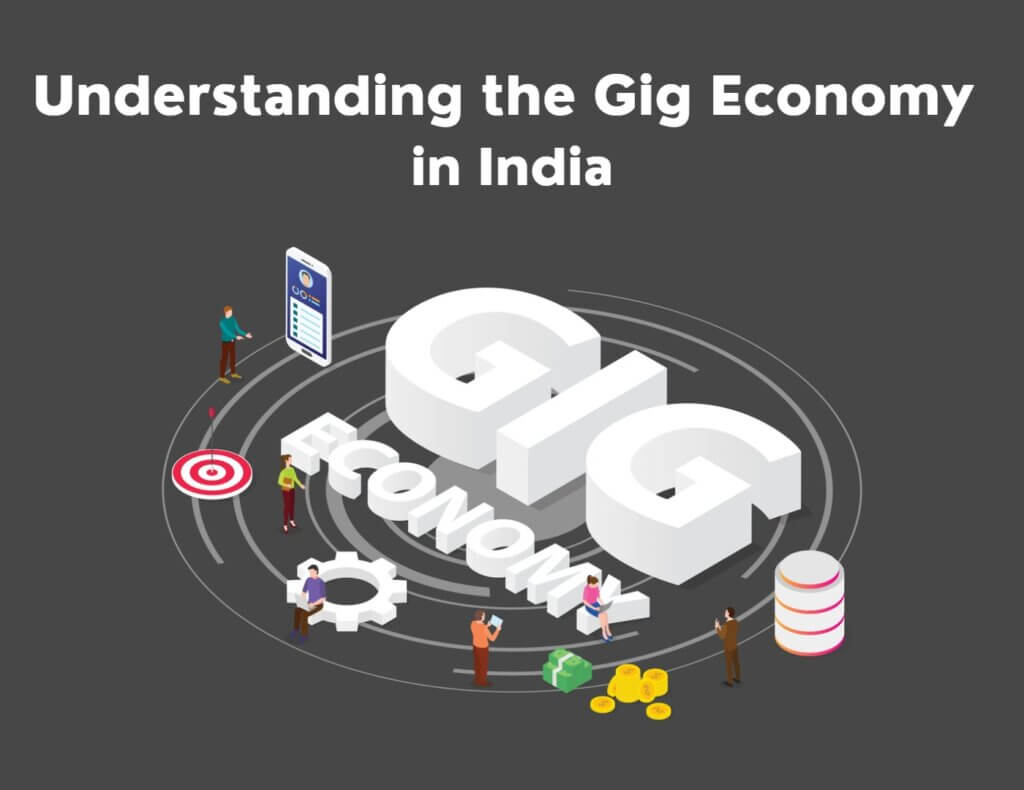
I. Understanding the Gig Economy in India
A. Definition of the gig economy
The “gig economy” is a type of job market where people do temporary or freelance work, which is often made easier by online platforms.
B. Factors driving the growth of the gig economy in India
There are many factors contributing to the growth of the Gig economy in India, including the availability of affordable smartphones, increased internet access, and the government’s Digital India initiative.
C. Information about India’s gig economy’s size.
The impact of the gig economy, which is a developing sector of the Indian economy, is demonstrated by a number of significant statistics.
According to a Nasscom analysis, the Indian gig economy will expand at a compound annual growth rate (CAGR) of 17% and reach $455 billion in value by 2023.
The study also highlights how the gig economy fosters entrepreneurship, boosts productivity, and generates employment, all of which contribute to the expansion of the Indian economy.
The gig economy is expected to create 1.3 million new jobs in India by 2023, the majority of which will be in the transportation and logistics sector.
A different KPMG report says that India’s gig economy is worth $1.5 billion right now and is expected to grow at a CAGR of 22% until it is worth $455 billion by 2023. The main reasons for this rise are the growth of digital platforms and the rising desire for flexible work arrangements.
As India’s gig economy has grown, it has also given rise to a number of business ideas and companies. In the past few years, for instance, a number of businesses have appeared to offer services to gig workers, such as health insurance, financial services, and legal support.
The size of the gig economy in India shows that it is a big and growing part of the country’s economy.
Employers and legislators must act to protect gig workers and give them access to the same benefits and protections as traditional employees as the gig economy continues to expand.
2. The Gig Economy’s Effect on Staffing Solutions
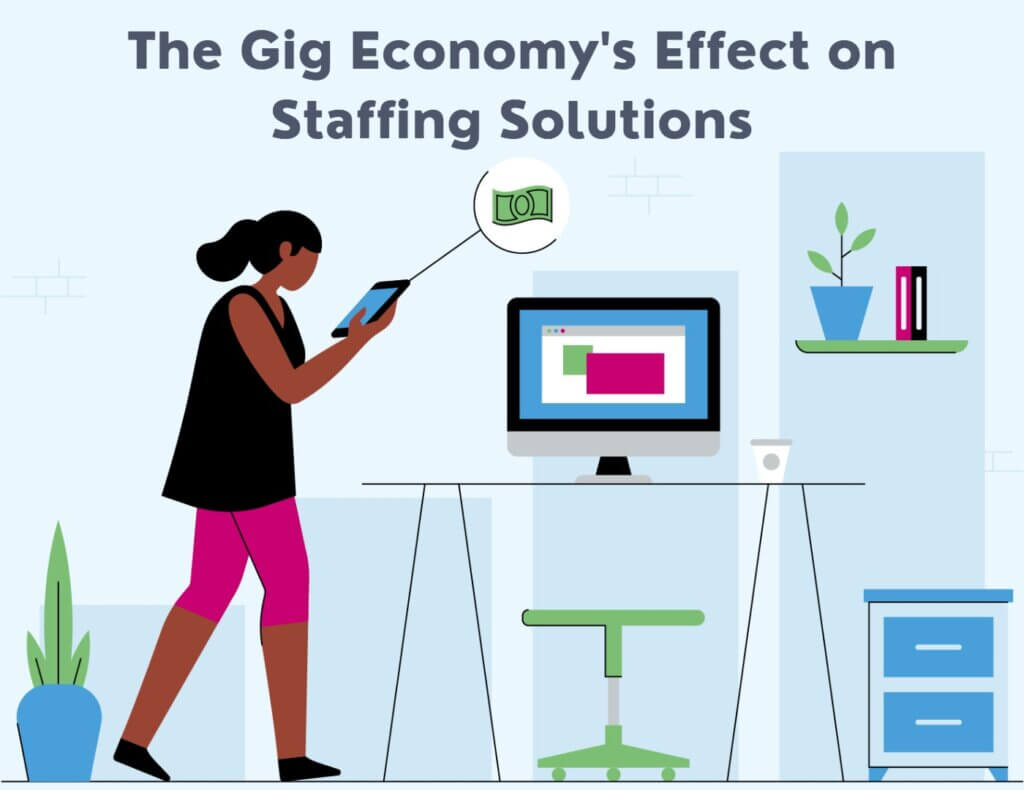
Staffing solutions have been significantly impacted by the growth of the gig economy in India, including both the advantages and difficulties it brings for organizations. This section will examine how the gig economy has affected staffing options in India.
Gig Economy Advantages for Staffing Solutions — At a Glance
| # | Advantage | What It Provides | What It Means for Your Business |
|---|---|---|---|
| 1 | Workforce Flexibility | Fill short-term or project-based roles quickly without long-term contracts or commitments | Scale headcount up during peak demand (festive season, product launches) and down immediately after — without the cost of redundancies or notice periods |
| 2 | Access to Specialised Talent | Hire people with specific skills or domain knowledge for the exact duration needed — without a full-time hire | Particularly valuable for niche requirements: data annotators, field auditors, trained promoters, or category-specific sales specialists |
| 3 | Larger, More Diverse Talent Pool | Access workers across geographies and demographics via digital platforms — including tier-2 and tier-3 Indian cities | Expand market coverage without setting up local offices; reach underserved markets with locally sourced gig workers who understand regional dynamics |
Gig Economy Challenges for Staffing Solutions — At a Glance
| # | Challenge | The Problem | How to Manage It |
|---|---|---|---|
| 1 | Limited Worker Control | Gig workers are self-employed — businesses cannot control their schedules, processes, or output quality the same way as permanent employees | Use a staffing partner like TopHawks that recruits, trains, and manages gig workers on your behalf — maintaining quality standards without direct employment |
| 2 | Legal & Regulatory Complexity | Gig workers are classified as independent contractors — creating complex tax, labour law, and compliance obligations for businesses that engage them at scale | Engage a third-party staffing agency that handles PF, ESIC, compliance, contracts, and payroll processing — removing the regulatory burden from the client business |
| 3 | Talent Retention Risk | As more skilled workers choose gig work over traditional employment, attracting and retaining the best talent becomes harder for businesses without a flexible work offer | Adopt a hybrid model — core permanent team for strategic roles, gig/outsourced workforce for volume and project-based needs — balancing stability with flexibility |
A. The gig economy’s advantages for staffing solutions
The enhanced flexibility it offers for organizations is one of the key advantages of the gig economy for staffing solutions. With the gig economy, businesses can quickly and easily fill short-term or project-based roles without having to worry about long-term contracts or commitments. This lets companies hire more or less workers as needed and respond faster to changing market conditions.
The increased accessibility to specialized talents and experience is another advantage of the gig economy for staffing solutions.
Businesses don’t need to hire full-time employees when they can quickly identify and hire people with certain skills or knowledge thanks to the gig economy.
This could be very helpful for businesses in niche markets or those that need specialized knowledge or experience.
Businesses may access a bigger pool of workers thanks to the gig economy, both in terms of geography and demography.
Businesses may access a global talent pool and obtain a wide range of skill sets and view thanks to digital platforms that link companies with people from around the world.
B. The gig economy’s difficulties for staffing solutions
There are some good things about the gig economy for companies, but there are also some bad things.
The lack of control that firms have over gig workers is one of the major issues.
It can be challenging for businesses to guarantee consistency and quality in their products or services because gig workers are frequently self-employed and businesses do not have the same level of control over their work schedules, work processes, or work quality as they do with traditional employees.
The legal and regulatory concerns that the gig economy brings for staffing solutions are another difficulty.
Businesses have to deal with complicated tax and labour laws because gig workers are considered independent contractors instead of employees.
This could mean that companies that hire a lot of gig workers will have to pay more and deal with more paperwork.
C. How the gig economy is affecting conventional employment paradigms
Traditional ways of getting a job in India have changed a lot because of the rise of the gig economy. Businesses may find it more challenging to attract and keep competent personnel as more people choose to pursue gig labour rather than traditional employment. As a result, there can be a change in the kinds of jobs that are accessible, with more roles turning out to be project-based or temporary in nature.
Ultimately, there are advantages and disadvantages to the gig economy for Indian workforce options. While it gives organizations more flexibility and access to specialised abilities, it also creates problems with worker control and compliance with laws and regulations. As the gig economy grows and changes, businesses will need to make changes to their staffing solutions in order to manage their workers well and stay competitive in the market.
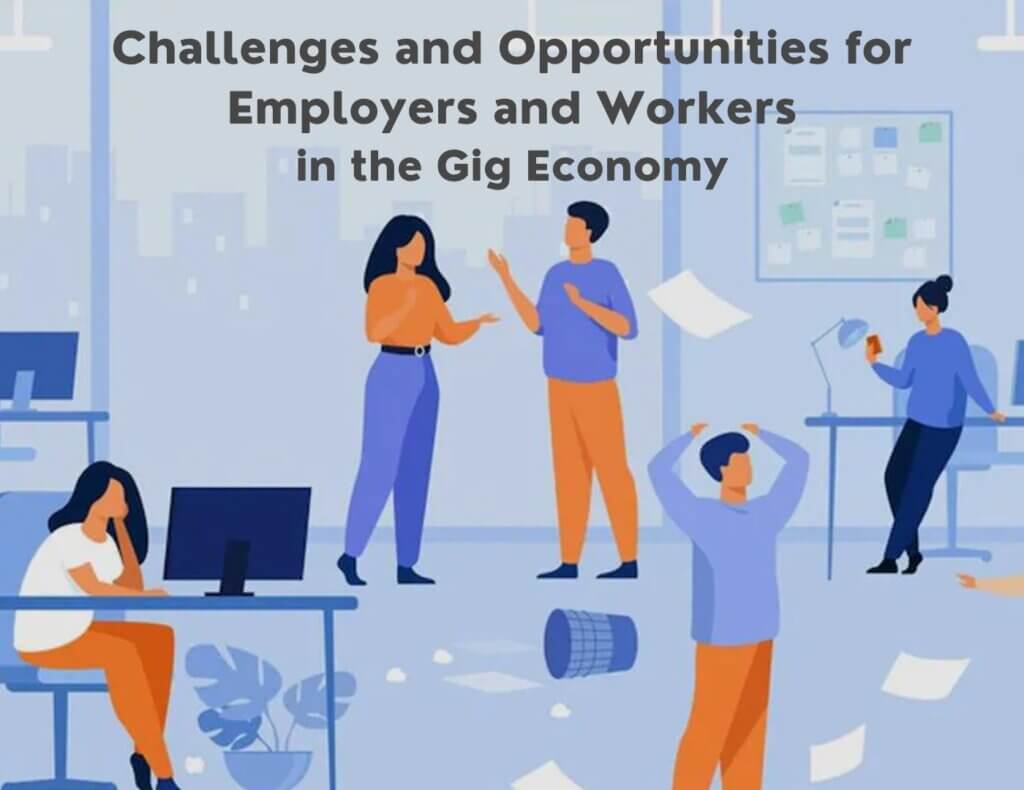
III. Challenges and Opportunities for Employers and Workers in the Gig Economy
A. Challenges faced by employers in the gig economy
Employers in the gig economy face several challenges, including managing a geographically dispersed workforce, ensuring compliance with labour laws and regulations, and providing benefits to gig workers. It can also be hard to keep quality control and make sure that all workers are doing the same thing.
B. Opportunities for employers in the gig economy
Employers can get a lot out of the gig economy, such as more flexibility, lower costs, and access to a bigger pool of talent. Employers can quickly scale up or down their workforce with gig workers and get access to specialized skills for each project.
C. Challenges faced by gig workers in the gig economy
Gig workers face several challenges, including income instability, a lack of benefits, and limited job security. They often have to work long hours to make ends meet and may struggle to access affordable healthcare or retirement savings plans.
D. Opportunities for gig workers in the gig economy
Despite the challenges, the gig economy also presents opportunities for Gig workers. They can enjoy greater flexibility, autonomy, and control over their work, as well as the opportunity to work on a variety of projects and gain experience in different industries. They also have the potential to earn more than they would in a traditional employment model, especially if they have specialized skills or are in high demand.
IV. The Future of the Gig Economy in India
A. Predictions for the growth of the gig economy in India
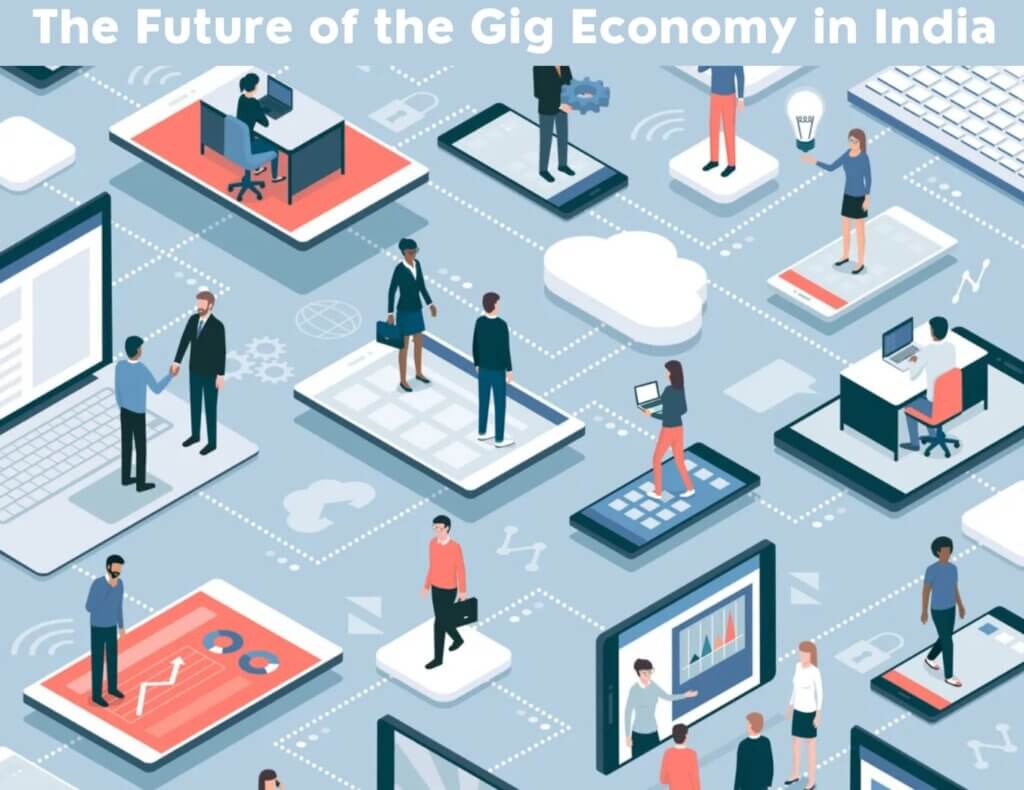
Experts say that India’s gig economy will continue to grow quickly in the coming years, thanks to things like more people having access to the internet, a growing middle class, and more people wanting flexible work arrangements. The COVID-19 pandemic has also sped up the rise of remote and gig work, which is likely to help the gig economy grow even more.
B. Potential government regulations for the gig economy
As the gig economy continues to grow in India, there are increasing calls for government regulations to protect the rights of gig workers and ensure compliance with labour laws. Some experts have said that the government could create a new group of workers called “independent workers” who would be eligible for certain benefits and protections.
C. Impact of the gig economy on the future of work in India
The growth of the gig economy in India is likely to have a big effect on how people work in the country in the future.
It’s likely to lead to a move away from traditional employment models and toward ones that give people more freedom and flexibility at work.
This could have both positive and negative effects on workers, with some enjoying greater freedom and autonomy while others may struggle with income instability and a lack of benefits.
The gig economy could also cause industries to change and put more emphasis on hiring based on skills instead of traditional job qualifications.
In conclusion, the rise of the gig economy in India is changing the way people work in the country, giving both employers and workers new opportunities and challenges.
As the gig economy continues to grow, it is crucial to strike a balance between the benefits it offers and the challenges it presents.
With the right policies and regulations in place, the gig economy can provide a more flexible and dynamic workforce that benefits both employers and workers.
FAQs

What is the future of the gig economy in India, and how will it impact the country’s employment landscape?
Answers to Your Questions on the Gig Economy in India
Trusted by 500+ Clients



















Get in Touch
We are here for you, and we are wearing our thinking caps