
Visual Merchandising Services in India
PoSM, glow sign boards and store fixtures. Installed, maintained and photo-verified.
TopHawks is a visual merchandising agency that runs the whole chain for your brand: store recce, design, PoSM production, dispatch, installation, maintenance and audits. Every store visit is logged on the TopHawks One app with a geo-tagged, time-stamped photo, so you see what was actually done, store by store.
- Cities across 27+ states
- 246+
- Field representatives in our network
- 26,500+
- Brands served since 2015
- 800+
- Repeat customers
- 40%+
TopHawks is a visual merchandising agency in India. It designs, produces, installs and maintains in-store displays, Point-of-Sale Materials (PoSM), shop-in-shop fixtures and glow sign boards (GSBs) for brands, then audits them on recurring store visits. Field teams cover 246+ cities in 27+ states through a network of 26,500+ field representatives, and every visit is recorded on the TopHawks One app with a geo-tagged, time-stamped photo. TopHawks has served 800+ brands since 2015 and is ISO 9001:2015 certified.
- Company
- TopHawks® (Translucent Pixel Otter Pvt. Ltd.), Sector 59, Noida
- Operating since
- 2015 · 800+ brands served
- Certification
- ISO 9001:2015
- Coverage
- 246+ cities · 27+ states · Tier 1, 2 and 3
- Field network
- 26,500+ field representatives
- Proof of work
- Geo-tagged, time-stamped photos on TopHawks One
- Retail formats
- General trade · modern trade · EBOs/MBOs · chemists · dealers
- Response time
- Within 4 business hours · Mon–Sat, 10 AM–6 PM IST
- Bharti Airtel
- Daikin
- A.O. Smith
- Boehringer Ingelheim
- Cars24
- Eastman
- Google Pixel
What is visual merchandising, and why does field execution matter?
Visual merchandising is how a brand presents its products, fixtures and promotional material inside a store to win attention at the point of purchase. The design only pays off if every store installs it correctly and keeps it that way.
Good displays strengthen brand recall, prompt impulse purchases and support dealer loyalty. But across hundreds of outlets, the gap between the approved plan and what stands in the store is where money is lost: kits that never arrive, fixtures that don't fit, boards that go dark, and shelf space a competitor quietly takes over.
TopHawks runs visual merchandising as a field-execution service. One team connects the creative brief to production, dispatch, installation and recurring upkeep, and reports every store visit with photo evidence.
What one accountable partner covers
- Artwork and window displays: brand guidelines turned into retail-ready visuals for windows, product displays and in-store branding.
- PoSM production: materials built by production partners to approved specifications for each retail format and store tier.
- Supply chain: store-wise kit allocation, dispatch and proof of receipt, so the right material reaches the right store on time.
- Installation: space identification, measurement, installation and sign-off under one execution framework.
- Upkeep and audits: recurring visits that repair, replace and re-check displays against the approved plan.
New to the terms? Read what PoSM is in retail visual merchandising or our guide to why retail visual merchandising matters.

- Cities across 27+ states
- 246+
- Field representatives in our network
- 26,500+
- Brands served since 2015
- 800+
- Repeat customers
- 40%+
Which visual merchandising services does TopHawks offer in India?
Four core services under one contract: store design, PoSM design and production, in-store fixture maintenance, and glow sign board installation. Planogram audits and store-level reporting run across all four.
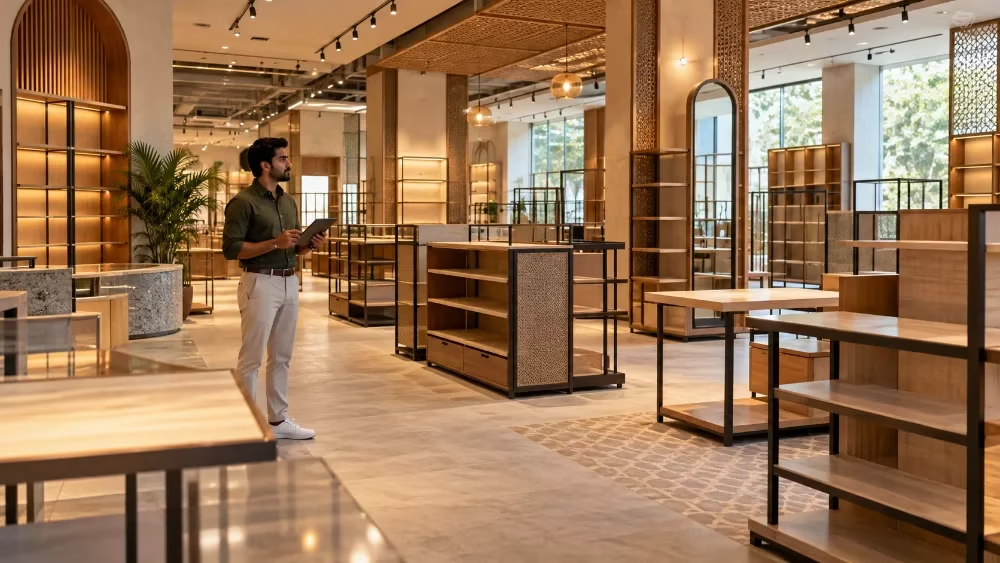
Store design and fixture layout
Retail layouts, fixture configurations and visual themes that guide shoppers from entry to checkout. Designs are drawn from measured store data, so they fit the real space and keep presentation consistent across outlets.
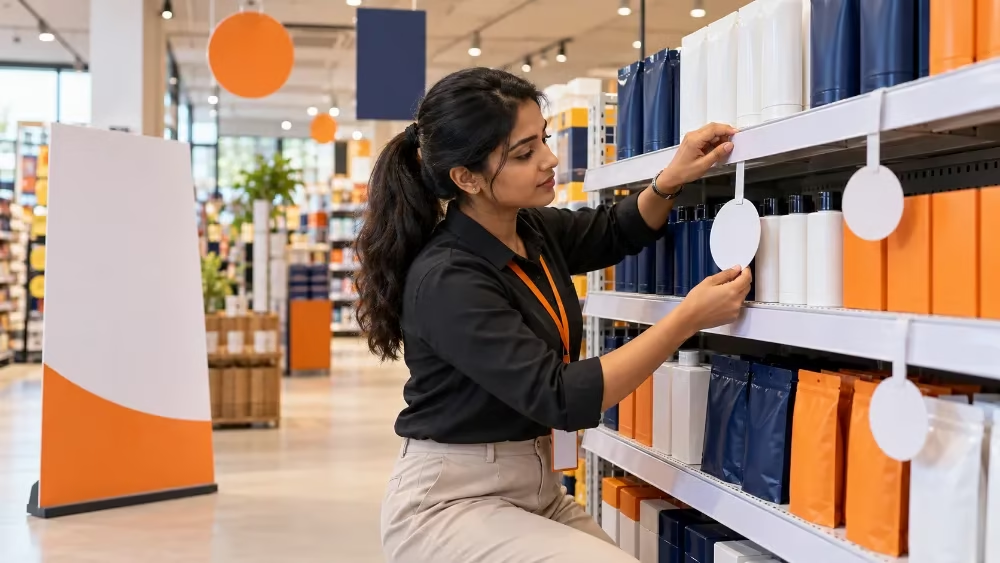
PoSM design and production
Dummy boxes, shelf branding, wobblers, danglers, trans lights, SIS kits, wall panels, window kits and floor-standing units. Production partners build to the approved artwork, and every batch is checked against specification before dispatch.

In-store fixture and SIS maintenance
Planned visits keep shop-in-shop fixtures, wall panels and trans lights presentable. Damage and wear are logged with photos, repaired or replaced, and checked again, so maintenance decisions rest on evidence.
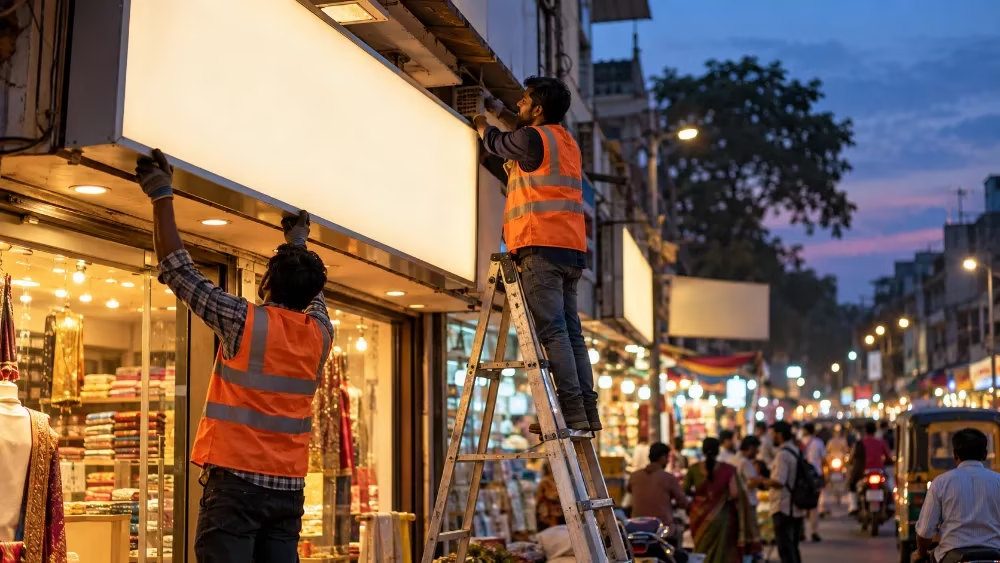
Glow sign board (GSB) installation
Dealer enrolment, space acquisition, measurement, production and installation of GSBs and non-lit boards across dealer networks, followed by signage hygiene audits that keep boards lit, clean and visible.
Service images are illustrative concept visuals, not photographs of client projects.
Which PoSM and fixtures suit each retail format?
Pick materials by store format, available space, campaign length and how often the message changes. Short-life PoSM suits fast-changing offers; fixtures and signage suit long-term brand presence.
| Retail format | Typical materials | What to plan for |
|---|---|---|
| General trade and kirana | Shelf strips, danglers, dispensers, counter-top units, non-lit boards | Small counters, owner permission, high outlet counts and frequent PoSM replacement |
| Modern trade and supermarkets | End-caps, floor-standing units, shelf branding, planogram resets | Chain approval cycles, planogram compliance and FIFO checks on recurring visits |
| Consumer durables and telecom (EBOs and MBOs) | Shop-in-shop fixtures, trans lights, wall panels, illuminated GSBs | Fixture measurement, electrical safety and planned maintenance of high-value assets |
| Pharma, OTC and chemists | Counter-top units, shelf branding, window displays, dealer signage | Limited counter space and store-tier-based visit frequency |
| Dealer and distributor networks | Glow sign boards, non-lit boards, in-shop branding | Dealer enrolment, site permissions and outdoor wear from dust and weather |
| Material | Best for | What to consider |
|---|---|---|
| Shelf strips and wobblers | Prices, offers and product messages at the shelf | Short-life material: plan replacements around campaign and promotion changes |
| Wall panels and back walls | Brand presence and product visibility in larger stores | Accurate site measurements, suitable mounting surfaces and secure installation |
| Standalone display units and SIS | Stores with dedicated floor space for the brand | Footfall, floor area, replenishment access and storage |
| Window displays and trans lights | Street-facing visibility and walk-in traffic | Seasonal refreshes, visibility under different lighting and lamp maintenance |
| Glow sign boards (GSBs) | Outdoor visibility and dealer identity | Site permissions, electrical safety, local rules and maintenance access |
| Branded fixtures and counters | Premium categories and shop-in-shop formats | Higher cost, installation needs, cleaning and ongoing repairs |
How does TopHawks maintain and audit in-store fixtures?
TopHawks runs the full fixture lifecycle: recce and asset database, design, scheduled maintenance and three kinds of fixture audit. Each visit produces before-and-after photos and a condition report.
Recce, asset database and design
- Store-level fixture and asset recce to build or refresh your store database
- Accurate measurements, so replacements and trans lights are made to fit the first time
- Fixture and SIS designs matched to the product, the store and the shopper
- A planned maintenance calendar that protects the life of display assets
On-site maintenance and quality checks
- Repairs for SIS units, wall fixtures, wall panels, trans lights and branding assets
- Before-and-after photographs and a condition report for every store
- Checks on product presentation, brand visibility and share of shelf
- A periodic hygiene recce journey with visual reports after each visit
The three fixture audits we run
- Fixture availability audit
- Confirms that each approved fixture is present at each outlet, as per the planogram.
- SIS status audit
- Checks shop-in-shop branding, lighting, product display and physical condition against the approved specification.
- Fixture hygiene audit
- Reviews cleanliness, damage and maintenance needs of every branded in-store asset.
How does TopHawks deploy glow sign boards across India?
TopHawks selects outlets, enrols dealers, secures the space, installs the board and audits it afterwards. Every installed board is backed by a geo-tagged photo captured on site.
How are GSB locations selected?
Outlets are chosen on storefront visibility, street-facing exposure, outlet classification and the surrounding market, through a structured dealer enrolment process. Competitor visibility and footfall mapping inform which sites get a board.
How long does pan-India GSB installation take?
Turnaround is confirmed per programme, measured from space confirmation to installation. It depends on the number of locations, site readiness, access and production type, and is fixed in the deployment plan before launch.
How is signage maintained after installation?
Dust, pollution and weather wear boards down. Signage hygiene audits check lighting, power supply, material condition and visibility, and log each issue for repair with a field audit trail.
When should a brand use non-lit boards instead?
Where illuminated signage is impractical, or outlet density doesn't justify a GSB, non-lit boards (NLBs) are the cost-effective option. They extend visibility into rural markets and lower-density territories.
See how this works at scale in the Cars24 glow sign board and in-shop branding programme, or read what a glow sign board agency does.
How does a visual merchandising programme run from brief to store?
Seven stages: brief, recce, design approval, production, dispatch, installation, then maintenance and audit. Agree the decisions in the right-hand column before launch, and most delays never happen.
| Stage | What happens | What to agree up front |
|---|---|---|
| 1. Brief and store universe | Objectives, store formats, target store list, brand guidelines and budget are defined. | Store tiers, priority cities, approvers and final sign-off authority |
| 2. Recce and measurement | Stores are surveyed, space and fixtures measured, and site constraints recorded. | Which stores need a survey, which measurements, and how findings are documented |
| 3. Design and approval | Layouts, artwork and fixture specifications are drawn to brand guidelines and real store conditions. | Design rounds, approval turnaround and how specification changes are handled |
| 4. Production and quality check | PoSM and fixtures are produced and checked against the approved design. | Material standards, prototype approval and acceptance criteria before bulk production |
| 5. Dispatch | Campaign kits are picked, packed and routed to the store list on schedule. | Dispatch schedule, store-wise kit allocation and proof of receipt |
| 6. Installation | Field teams install the approved materials and capture geo-tagged, time-stamped photos. | Installation standards, required photo angles and completion criteria per store |
| 7. Maintenance and audit | Recurring visits repair or replace damaged material, re-check compliance and log deviations. | Visit cadence by store tier, escalation owners and audit report format |
What a complete store execution record contains
- Store identity: outlet code, address, format and tier, matched to your store list.
- Evidence: before-and-after photos with GPS location and timestamp.
- Specification: the approved display for that outlet, and any approved deviation with its reason.
- Exceptions: what could not be done, why, who owns the fix, and the closure date.
Timelines depend on store locations, approval cycles and production type. Agree each stage's duration, its dependencies and the event that starts the clock, including how remote locations are handled.

Planning a rollout?
Send your store list and brief. We will come back with a stage-by-stage plan and a costed proposal.
How are planogram compliance and display upkeep maintained after installation?
Installation sets the display up; recurring visits keep it compliant. TopHawks scores planogram adherence with photo evidence, visits stores by tier, and tracks every issue to closure.
Evidence-based planogram scoring
- Shelf position, facings and share of shelf scored against your planogram
- A photo behind every scored item, so disputed visits can be re-scored
Availability at the display
- SKU availability, out-of-stock flags, expiry and FIFO checks
- Display compliance and stock recorded separately, so a good display is never mistaken for stock on shelf
Store-tier visit cadence
- Weekly or fortnightly for high-value stores, monthly for the long tail
- Geo-verified check-ins prove coverage; reps fix issues on the spot where authorised
Repair and replacement
- Damaged, faded or missing material logged with store photos
- Replaced from programme stock where available, with the fix documented
Scheme and season changeovers
- Campaign refreshes run against the same approved store list
- Planned versus completed changeovers tracked, not assumed
Corrective action to closure
- Stock-outs, lost display positions and scheme non-execution escalated to the territory owner
- Deadlines assigned and tracked until each issue is closed
How does TopHawks prove that every display was installed?
Field teams record every visit on TopHawks One, TopHawks' own field app. Photos are taken in the app at the outlet and carry the GPS location and time, so each installation can be checked.
- Geofence lock: the visit can only be logged at the outlet's location.
- Camera-only uploads: photos come from the live camera, not the gallery.
- Offline sync: reps in low-network Tier 3 and rural markets log visits offline and sync later.
- Exception flags: damaged fixtures, missing material and stock-outs are flagged for follow-up.
- Client reporting: store journey plans, report templates and compliance dashboards are scoped to each brief.

Which KPIs show whether visual merchandising is working?
Measure execution first: installation coverage, photo-verified completion, display compliance and issue closure. Treat sales in display stores as directional, because price, stock and promotions move sales too.
| KPI | How to define it | What it helps identify |
|---|---|---|
| Installation coverage | Completed installations ÷ planned installations | Gaps between the rollout plan and actual deployment |
| Photo-verified completion | Installations with the required evidence ÷ reported completions | Missing or weak proof of execution |
| Display compliance | Stores meeting the agreed display checklist ÷ stores inspected | Non-compliant placements and inconsistent execution |
| Fixture condition | Inspected fixtures classed by agreed condition criteria | Repair, replacement and maintenance needs |
| Stock at display | Inspected stores where the featured product is available | Whether the display is backed by product on shelf |
| Issue closure | Issues resolved and verified ÷ issues due | Whether field findings lead to corrective action |
| Repeat non-compliance | Stores failing the same requirement on successive visits | Persistent problems that need escalation or a new plan |
| Sales in display stores | Sales over a defined period for the selected store group | Directional evidence of commercial impact |
Set the reporting rules before the first visit. For every KPI, fix the numerator, denominator, period, eligible stores and required evidence, and decide how closed stores, cancelled visits and incomplete photos are counted. A useful report names the store, the exception, the owner and the next action.
What have TopHawks retail visibility programmes delivered?
Published programmes with named clients.
Cars24: glow sign boards and in-shop branding across India
GSB and in-shop branding rolled out across a nationwide retail network, with a geo-tagged photo proof for every board installed.
Eastman: GSB visibility and quality audits across the dealer network
Positioning, visibility, material quality, lighting and power supply of installed GSBs audited against Eastman's standards.
Google Pixel: in-store visibility audits
Retail visibility audits that measured in-store display execution and drove a documented improvement.
Switching agencies? Read our eight-step plan to transition a visual merchandising programme within a month.
How should you evaluate a visual merchandising agency before signing?
Judge the whole execution chain, not the creative portfolio. Ask each agency for evidence on coverage, measurement, production quality, logistics, installation proof, reporting, maintenance and accountability.
| Area | Question to ask | Evidence to request |
|---|---|---|
| Geographic coverage | Can the agency cover our cities and store locations? | Coverage plan and deployment approach for your store list |
| Design and measurement | How are store conditions checked before specifications are final? | A sample recce record and approved specification |
| Production quality | How is material checked against approved artwork? | Sample materials and a quality acceptance checklist |
| Logistics | How is material stored, packed and sent to the right store? | Dispatch process and delivery confirmation format |
| Field execution | How is each installation verified? | A sample store report with geo-tagged, time-stamped photos |
| Technology and reporting | Can reports follow our store classes and requirements? | A live demonstration of the app and client reporting |
| Maintenance | What happens when a fixture breaks or a display falls out of compliance? | Maintenance schedule and issue-resolution workflow |
| Accountability | Who owns approvals, delays, defects and open issues? | Responsibility matrix and escalation process |
Fix scope and acceptance criteria
The statement of work should list included services, who supplies materials, how store access works and who approves design changes, plus completion criteria, evidence rules and how sub-standard work is rejected.
Test how exceptions are handled
Remote stores, wrong store data, missing material and unsuitable surfaces happen on every rollout. Ask how each is documented, escalated and resolved, and check that sample reports separate completed, incomplete and unresolved work.
Evaluating TopHawks? Measure our stated footprint (246+ cities in 27+ states, 26,500+ field representatives, operating since 2015) against your own store list, scope and reporting needs. Ask us for a sample store report and a live TopHawks One demonstration.
Where can TopHawks execute visual merchandising in India?
Across 246+ cities in 27+ states, covering Tier 1, Tier 2 and Tier 3 markets and rural dealer networks. Programmes run from the Noida head office with regional hubs in Mumbai, Bengaluru and Kolkata.
North
Head office: Noida (Delhi NCR). Teams across Delhi NCR and the northern states.
West
Regional hub: Mumbai. Also Pune, Ahmedabad and the wider western region.
South
Regional hub: Bengaluru. Also Hyderabad, Chennai and the wider southern region.
East
Regional hub: Kolkata. Teams across the eastern states.
Visual merchandising by city
Visual merchandising by industry
Visual merchandising services in India: frequently asked questions
A visual merchandising agency plans, produces, installs and maintains a brand's in-store displays, PoSM, fixtures and signage across its retail outlets. TopHawks covers the whole chain, from store recce and design to production, dispatch, installation, maintenance and photo-verified audits, across 246+ cities in India.
PoSM means Point-of-Sale Materials: branded display items placed where shoppers decide. TopHawks coordinates dummy boxes, shelf branding, danglers, wobblers, trans lights, SIS kits, wall panels, window display kits and floor-standing units, produced by partners to the approved artwork and checked before dispatch.
Each programme is quoted on its scope. The main cost drivers are the number of stores, the materials and fixtures involved, production volumes, the cities and store tiers covered, and how often stores are revisited for maintenance and audits. Send your store list and brief for a costed proposal.
TopHawks confirms GSB turnaround per programme, measured from space confirmation to installation. It depends on the number of locations, site readiness, access and production. Dealer enrolment, measurement, production and installation are planned against that timeline, and every completed site is backed by a geo-tagged photo.
Field teams log every visit on the TopHawks One app. Photos are taken in-app at the outlet, carry GPS location and time, and can only be logged within the store's geofence. You receive store-level reports showing completed work, compliance scores and open issues.
Yes. TopHawks covers artwork and creative design, production coordination, field installation and periodic maintenance under one contract. That removes the hand-offs between separate design, production and field vendors, and gives you one owner for every store.
Three: fixture availability audits, which confirm approved fixtures are present; SIS status audits, which check shop-in-shop branding, lighting, display and condition; and fixture hygiene audits, which review cleanliness, damage and maintenance needs. Each is documented store by store with photos.
246+ cities in 27+ states, including Tier 1, Tier 2 and Tier 3 markets and rural dealer networks. Programmes run from the Noida head office with regional hubs in Mumbai, Bengaluru and Kolkata, backed by a network of 26,500+ field representatives.
List each outlet with its location, format, tier and execution priority, plus fixture details, access rules and a store contact where possible. Flag outlets with missing measurements or unconfirmed conditions for a recce first. A verified list stops production and dispatch being planned on guesses.
The objective, target retail formats, store list, brand guidelines, approved artwork, display requirements and deployment window. Add material needs, fixture dimensions, approvers, installation standards and photo requirements. For recurring programmes, also set visit frequency, reporting format and the escalation route for non-compliance.
Decide which brand elements must stay identical and which can vary by format. Set approved materials, placement rules and fixtures for each format, use store measurements to account for space differences, and record the applicable specification for every outlet so field teams never apply one layout everywhere.
The field team photographs the store and reports the constraint instead of improvising. The brand or programme owner then approves an alternative placement or fixture, or excludes the outlet. Any approved change is recorded against the original specification with its reason, leaving an audit trail.
Record display compliance and product availability as separate measures on the same visit. A store can have a perfect display and no featured stock, or stock with a broken display. Separating them sends each issue to the right owner: field execution, replenishment or the sales team.
Review installation coverage, display compliance, fixture condition, report quality and how open issues were closed. Check that store data is still accurate and that repeat failures were fixed. Judge sales in context of stock, pricing and promotions, then adjust visit frequency, maintenance or reporting for the next term.
TopHawks is ISO 9001:2015 certified and has served 800+ brands since 2015. Enquiries get a response within 4 business hours, Monday to Saturday, 10 AM to 6 PM IST.
Other retail execution services from TopHawks
Plan your visual merchandising programme with TopHawks
From a single-city pilot to a pan-India rollout, tell us the store count, formats, cities and materials. A visual merchandising specialist will come back with an execution plan and a costed proposal.
- Call
- +91 98102 99632
- Chat with the VM team
- vm@tophawks.com
- Response time
- Within 4 business hours · Mon–Sat, 10 AM–6 PM IST
- Coverage
- 246+ cities · 27+ states · Pan-India
- Office
- 6A, Logix Infotech Park, Sector 59, Noida, Uttar Pradesh 201307
Send your visual merchandising brief
Store count, formats and cities are enough to start. We reply within 4 business hours.
🔒 Your details are kept confidential and handled under agreed confidentiality terms.