General Trade, Modern Trade and Online Trade: Understanding India's Three Trade Channels (2026)

Are you all anxious about how trades are going to take place post-Covid? Or are you worried about what trade channel should be opted to fetch maximum results? Trade is the key function of every business in the world. What rudder is to boat, trade is to business! We are here to offer you generalized and comprehensible definitions of the different types of trades, that are:
Quick Answer
India's retail and distribution landscape operates across three primary trade channels. General trade is the traditional network of kirana stores, independent retailers, distributors, and wholesalers — it accounts for approximately 80–85% of FMCG volume in India, operates through an interpersonal buyer-seller relationship, and is the dominant channel in tier-2, tier-3, and rural markets. Modern trade covers organised retail chains — supermarkets, hypermarkets, mini-markets, and cash-and-carry formats — where customers self-select products, distribution is managed directly with the retailer, and multiple promotional mechanics are available. Modern trade is growing fastest in metro and tier-1 cities. Online trade encompasses e-commerce platforms (Amazon, Flipkart), brand-owned D2C websites, and quick commerce apps — offering the widest reach, 24/7 availability, and data-driven personalisation, but with longer fulfilment cycles for non-instant categories. Most Indian FMCG, consumer durables, and consumer electronics brands operate across all three channels simultaneously, with channel mix varying by product category, geography, and target customer segment. TopHawks supports brands across all three trade channels — through field sales and distributor management for general trade, modern trade integration and VM for organised retail, and e-commerce vendor onboarding for online trade.
1. General Trade
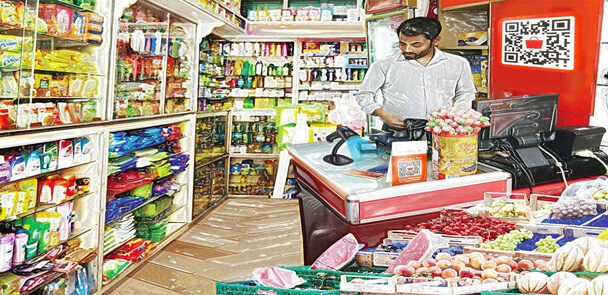
General trade, one of the different types of trades is a network by which direct customers are approached or interpersonal relationships is created between buyer and seller. This trade is executed by retailers, shop owners, distributors, wholesalers, kiosks, corner stores, etc.. They usually deal with small quantities required by the end-user. The majority of people buy their regular foodstuff from these outlets.
The key features of the General Trade are:
They have short lead times.
They have demands of regular orders.
Varying rates are followed.
The choice of brand is either limited to the available inventory or is fulfilled as the shopper demands.
General trade is usually common in developing countries where they take an 80% share in the overall economy.
From the past five decades, not enough changes are experienced in General Trade. With the upcoming of e-commerce, much setback has been faced by dealers, wholesalers, and retailers. The advancements have been focused more on Modern and Online trade rather than General Trade.
But still keeping the fingers crossed, start-ups and large players are putting their attention on the lingering problems of retailers to make General Trade a big success.
Affordable technology needs to be provided to make General Trade Operators equal players in the market. Digitalization needs to be accessible to all. This will empower every market player to play well for the economy.
2. Modern Trade
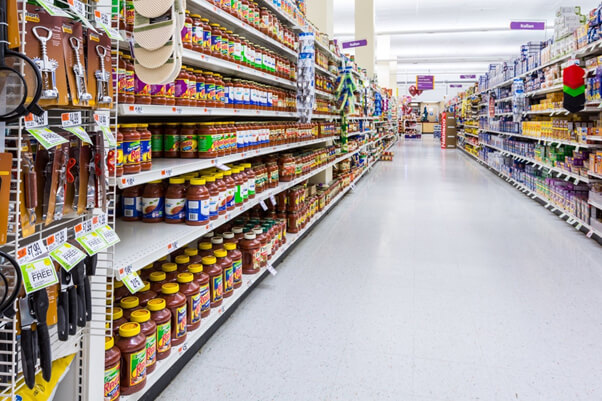
Modern trades are gaining market share. The FMCG products are usually made easily and widely available at these large stores.
Henceforth, modern trade involves organized retail with distribution and logistics management. They are usually supermarket chains, mini-markets, hypermarkets, etc.
The important features of Modern Trade are as follows :
There is no customer interaction. The customer himself picks up the products of his choice and proceeds to checkout.
There are multiple discounts offered on purchases and other promotional activities that gain the buyer’s attention.
The product range is wide and offers multiple choices to choose from.
These retailers contact the manufacturers directly without any middlemen.
New brands can be easily acquainted with the customers via this trade.
The distribution is more organized and creates trust in the minds of buyers.
Modern trade, one of the different types of trades has come up to gain popularity and credibility among the end-users. The wide range, the flexibility to choose from varieties, and get exciting offers have tremendously gathered the popularity. These retail stores are luring with their infrastructure, facilities, eye-catching interior, and organized range of products in the stores.
Moreover, they are more accountable for the products offered since every action is systematically organized. They possess good records of their sales and purchases. Hence, their prevalence becomes obvious.
3. Online Trade
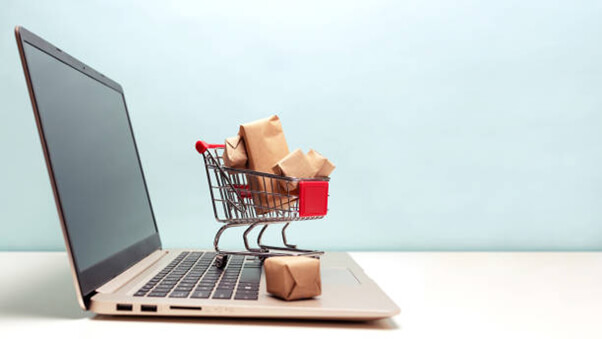
The target to approach customers through online mode comes under Online Trade, which is one of the different types of trades . With the advent of COVID’19, personal interaction has been aimed to reduce due to social distancing. Getting household stuff via online sites seems to be the optimal choice. Even the pre-COVID time was not ignorant of this easily accessible platform. A single click can get you a wide variety of products at your doorstep. Also, what is not available at one site can be ordered from another.
The characteristics of Online Trade are:
Not only household items, but everything from a needle to giant furniture can be obtained at just one online platform.
Every brand with lucrative offers prevails.
No traveling and visiting multiple stores to buy stuff.
Non-satisfactory items can be replaced within definite days.
Different offers are available on different credit cards and mode of payments.
Execution of sale takes around a week because of delivery that might take place from a supplier to the consumer who is distant.
Examples of online modes are Amazon, Flipkart, Jabong, Myntra, etc.
They are playing a great role in mobilizing the economy towards the better side. Because it’s time-consuming at times of immediate requirement, the Traditional and Modern Trade do not fail to fill this gap.
Retail Stores would never lose their pertinence in any time to come. The quickest way to fulfill demand is through Retail Business, be it General Trade or Modern.
Therefore, if you are still worried about where to market your brand and products,
Tophawks- Sales Outsourcing Organization
Tophawks as a sales outsourcing organization provides you the end-to-end service of modern trade integration. We have tie-ups with almost all the big hyperlocal chains and can get your products placed nationwide in a jiffy.
And guess what?
We will get you the best exclusive deal for your product placement on the shelf. Yes, better than what you will get even through direct contact!
Tophawks provides you integrated perks of Modern and Online Trade so that you are at your best position in business!
General Trade vs Modern Trade vs Online Trade: Key Differences
Understanding the structural differences between the three channels is essential for building a distribution and sales strategy that matches your product, geography, and target customer. Here is a direct comparison across the dimensions that matter most for Indian brands:
| Parameter | General Trade | Modern Trade | Online Trade |
|---|---|---|---|
| Definition | Kirana stores, independent retailers, distributors, wholesalers | Supermarkets, hypermarkets, chain retail, cash-and-carry | E-commerce platforms, D2C websites, quick commerce apps |
| India Market Share (FMCG) | ~80–85% of volume | ~10–12% and growing | ~5–8% and growing fastest |
| Customer Interaction | High — direct interpersonal relationship between buyer and seller | Low — self-service; no staff involvement in selection | None in-person — digital interface only |
| Geographic Reach | Strongest in tier-2, tier-3, rural India | Concentrated in metro and tier-1 cities | Pan-India; deepest in urban and semi-urban areas |
| Pricing Control | Variable — rates negotiated at distributor/retailer level | Structured — margin agreed with chain buyer | Dynamic — platform algorithms influence visibility and pricing |
| Distribution Complexity | High — requires dense distributor and field sales network | Moderate — centralised buying and distribution per chain | Moderate — requires fulfilment infrastructure and platform management |
| Brand Building | Driven by retailer relationships and in-store push | Driven by visual merchandising, promotions, and shelf placement | Driven by reviews, ratings, sponsored ads, and SEO |
| Best Suited For | Mass-market FMCG, regional brands, staples, tier-2+ geography | Premium FMCG, packaged foods, personal care, consumer durables | Electronics, apparel, books, niche/D2C brands, high-margin SKUs |
Advantages and Disadvantages of Each Trade Channel
General Trade — Advantages and Disadvantages
Advantages: Unmatched geographic reach — the only channel that penetrates rural India and small-town markets at scale. Strong retailer loyalty means established brands are recommended by name. Low cost-per-outlet for high-volume mass-market SKUs. Faster stockout recovery through distributor redistribution. Immediate availability — customers can buy within minutes of need.
Disadvantages: High operational complexity — managing thousands of distributors, sub-distributors, and retailers requires a large field sales force and frequent market visits. Pricing inconsistency across markets is difficult to control. Low brand visibility — general trade shelf space is constrained and POP material compliance decays rapidly without active auditing. Data visibility is limited; secondary and tertiary sales tracking requires dedicated technology investment.
Modern Trade — Advantages and Disadvantages
Advantages: Centralised buying simplifies distributor management — one agreement with a chain buyer covers hundreds of outlets. Structured promotional mechanics (end-cap displays, gondola ends, co-branded offers) provide premium visibility. Organised data: chains share sales-out data that enables accurate demand planning. Modern trade consumers are typically higher-spending and more open to new product trial. Strong brand association — presence in premium retail chains enhances brand perception.
Disadvantages: High listing fees and trade margins compress brand profitability relative to general trade. Limited to metro and tier-1 cities — no penetration in tier-2 or rural markets. Dependence on chain decisions: a delisting or planogram change by one buyer affects all outlets in that chain simultaneously. VM compliance requires dedicated field teams to maintain display standards across chain outlets.
Online Trade — Advantages and Disadvantages
Advantages: Zero geographic constraint — a single listing reaches customers across India simultaneously. Rich customer data: purchase history, reviews, and browsing behaviour enable precise targeting and personalisation. 24/7 availability with no dependency on store hours or retailer relationships. Lower physical infrastructure cost compared to building a field distribution network. Quick commerce (Blinkit, Zepto, Swiggy Instamart) is closing the fulfilment-time gap for impulse and daily-need categories.
Disadvantages: Platform dependency — algorithm changes by Amazon or Flipkart can dramatically affect visibility overnight. Intense pricing pressure: platform-driven discounting and competitor price wars erode margins, particularly in electronics and FMCG. Fulfilment complexity for non-instant categories. High return rates in apparel and electronics. Brand building is harder — most online discovery is search-driven, requiring ongoing investment in sponsored listings and keyword management.
Which Trade Channel Should Indian Brands Prioritise?
The right trade channel mix depends on three variables: product category, target geography, and brand stage. Most established Indian FMCG brands operate across all three channels simultaneously — with general trade providing volume, modern trade providing premiumisation and brand visibility, and online trade providing reach and data. The split varies significantly by brand:
- Mass-market FMCG brands (staples, basic personal care, food commodities) — prioritise general trade (70–80% of sales effort), supplement with modern trade for urban premium positioning. Online trade is secondary.
- Premium packaged food and personal care brands — prioritise modern trade for brand building, general trade for volume in tier-2 markets, and online trade for D2C and gifting occasions.
- Consumer electronics and durables brands — modern trade and online trade are primary; general trade provides distributor-managed reach in smaller markets where chain retail is absent.
- New or D2C-first brands — begin with online trade to build consumer data and unit economics before investing in the field sales infrastructure required for general or modern trade.
- Regional and tier-2 focused brands — general trade is the only channel with sufficient reach; modern trade and online trade are supplementary as the brand scales.
How TopHawks Supports Brands Across All Three Trade Channels
TopHawks operates across all three Indian trade channels — not just modern trade — with dedicated services and execution infrastructure for each:
General Trade: TopHawks deploys field sales teams for distributor management, retail coverage, and secondary sales push across general trade networks in Delhi, Mumbai, Chennai, Hyderabad, Bangalore, Kolkata, and 15+ Indian cities. Services include distributor onboarding, retailer relationship management, in-store visibility audits, and POP material compliance monitoring across thousands of general trade outlets.
Modern Trade: TopHawks provides full modern trade integration — including negotiated shelf placement and planogram management, visual merchandising across supermarket and hypermarket chains, promotional staffing for in-store activations and product demonstrations, and mystery shopping audits to verify compliance. TopHawks has tie-ups with leading modern trade chains and can secure shelf placement and promotional mechanics faster than direct brand approaches.
Online Trade: TopHawks has executed e-commerce vendor onboarding programmes for both Flipkart and Amazon — helping brands recruit, train, and manage sellers on marketplace platforms at scale. These programmes have been delivered for major e-commerce clients and are documented in TopHawks's case study portfolio.
TopHawks is trusted by 500+ brands including Reliance Jio, Airtel, KFC, Swiggy, Deloitte, Daikin, AO Smith, Unicorn Denmart, E-Chargerup, CUMI, Whitehat Jr., Boehringer Ingelheim, Byju's, D&H Secheron, Merino, Diamond Foods, Bajaj Electronics, Sunanda Global, Jmitra, and Murugappa Group — across general trade, modern trade, and online trade channels.
Frequently Asked Questions: General Trade, Modern Trade and Online Trade
Trusted by 500+ Clients












Get in Touch
We are here for you, and we are wearing our thinking caps