How to Stay Motivated in the Gig Economy: 6 Tips That Work

Quick Answer
Staying motivated in the gig economy requires six core strategies: set realistic, measurable goals so you always know what you are working toward; create a daily routine that structures your time and prevents the drift that comes with unscheduled independence; take regular, deliberate breaks to avoid the burnout that replaces motivation when rest is neglected; network actively with other gig workers to counter isolation and discover opportunities; stay organized with digital tools (task managers, calendars, invoicing software) so administrative friction does not drain the energy you need for your work; and embrace continuous learning because gig workers who keep building their skills command higher rates and more consistent work. The gig economy's core challenges — income insecurity, lack of benefits, isolation, and the demand for self-discipline — are all manageable with these strategies, but they require consistent, deliberate practice rather than occasional effort. In India, the gig economy is growing rapidly, with platforms including Uber, Zomato, Urban Company, and TopHawks deploying hundreds of thousands of gig and contract workers across field sales, mystery shopping, brand activation, and BTL campaign roles nationwide.
In today’s fast-paced world, the gig economy has become a popular way to earn a living. With the rise of gig platforms like Uber, Airbnb, and Upwork, more and more people are choosing to work as independent contractors. While the gig economy provides a lot of flexibility and freedom, it can be challenging to stay motivated when working independently. In this article, we will explore some tips on how to stay motivated when working in the gig economy.
Table of Contents |
1. Introduction
The gig economy refers to a labor market in which companies hire independent contractors for short-term assignments. Gig workers are self-employed and can work for multiple clients simultaneously. The gig economy has transformed the way people work, making it easier for them to be their own boss and enjoy more flexibility and control over their work schedule.
2. Understanding the Gig Economy

The gig economy is a rapidly growing sector of the labor market. It provides a platform for workers to connect with clients and offer their services. Gig work can range from driving for Uber or Lyft, renting out a room on Airbnb, or offering freelance services on platforms like Upwork or Fiverr. The gig economy has become an attractive option for many workers who want to earn extra income or work on their own terms.
3. Benefits of Working in the Gig Economy

Working in the gig economy has many benefits, including:
Flexibility:
Gig work allows workers to set their own schedule and work from anywhere.
Variety:
Gig workers can choose from a variety of jobs, which can keep their work interesting and engaging.
Autonomy:
Gig workers are their own boss and have more control over their work.
Extra Income:
Gig work can provide a source of additional income for workers who want to supplement their primary income.
4. Challenges of Working in the Gig Economy
While the gig economy offers many benefits, it also presents several challenges, including:
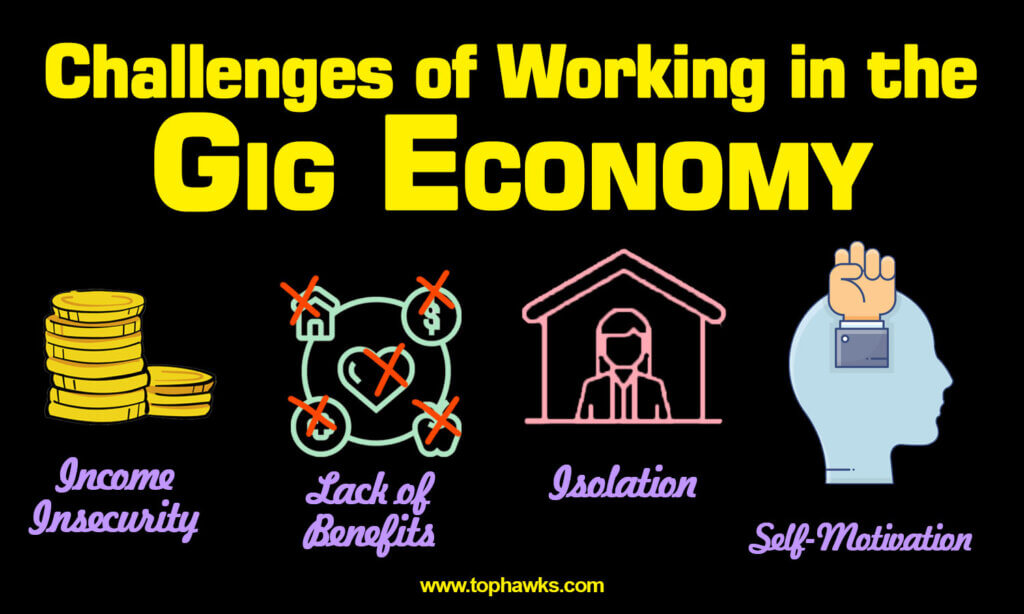
Income Insecurity:
Gig work is often unpredictable, and workers may struggle to earn a steady income.
Lack of Benefits:
Gig workers do not receive benefits such as health insurance, paid time off, or retirement benefits.
Isolation:
Gig work can be lonely, and workers may miss the social interaction that comes with traditional employment.
Self-Motivation:
Gig workers need to be self-motivated and self-disciplined to be successful.
Gig Economy: 4 Benefits vs 4 Challenges — At a Glance
| # | Benefit | What It Means for the Gig Worker | Corresponding Challenge | How the Challenge Undermines Motivation |
|---|---|---|---|---|
| 1 | Flexibility | You set your own schedule and can work from any location — giving you control over when and where you work | Income Insecurity | When work is unpredictable and income fluctuates, financial anxiety directly suppresses motivation — making it hard to stay focused on long-term goals |
| 2 | Variety | You can choose from different types of work, keeping your day interesting and preventing the monotony that erodes engagement in traditional employment | Lack of Benefits | No paid leave, health insurance, or retirement contributions means gig workers cannot take restorative breaks without financial cost — directly increasing burnout risk |
| 3 | Autonomy | You are your own boss — no manager directing your daily activity, giving you full ownership of your work outcomes | Isolation | The absence of colleagues, team culture, and social accountability creates loneliness that is one of the most commonly cited motivation killers among gig workers |
| 4 | Extra Income | Gig work can supplement primary income, providing financial flexibility that traditional employment does not offer | Self-Motivation Requirement | Without external structure, deadlines, or managers, the full responsibility for self-direction falls on the gig worker — which is sustainable with the right strategies but exhausting without them |
6 Strategies to Stay Motivated in the Gig Economy — Quick Reference
| # | Strategy | How to Apply It | The Motivation Mechanism | India-Specific Tip |
|---|---|---|---|---|
| 1 | Set Realistic Goals | Define daily, weekly, and monthly targets — income goals, number of gigs completed, new skills acquired. Write them down and review progress weekly | Clear goals replace vague ambition with measurable progress — each milestone completed triggers the reward response that sustains motivation | In India's gig platforms (Urban Company, Dunzo, Swiggy), weekly earnings targets are visible in-app — use these as your baseline and set a personal target 15–20% above the platform average to stay driven |
| 2 | Create a Routine | Set a fixed start time, define your working hours, block time for client work vs admin vs learning, and end your workday at a consistent time | Routine reduces the cognitive load of daily decision-making — when your structure is preset, mental energy is available for the actual work rather than deciding when and how to start | Many Indian gig workers manage domestic responsibilities alongside work — scheduling work hours around family commitments (early morning, school hours, evening) and protecting those blocks reduces interruption-driven motivation loss |
| 3 | Take Breaks | Use a structured break system — work for 90-minute focused blocks, take 15-minute breaks, and take one longer midday break. Protect your breaks as actively as your work time | Deliberate rest prevents the accumulation of mental fatigue that turns into burnout — gig workers who skip breaks to maximize short-term output typically experience motivation collapse within weeks | For field-based gig workers (delivery, sales, mystery shopping), physical rest between assignments is as important as mental rest — use break time to log completed work, update apps, and eat properly rather than immediately taking the next gig |
| 4 | Network with Other Gig Workers | Join online communities and attend local meetups — share experiences, ask questions, and collaborate on opportunities. Treat networking as a regular scheduled activity, not an occasional one | Social connection among peers who understand the gig experience directly reduces isolation — and peer accountability (sharing goals with others who will ask about progress) is one of the most powerful external motivation sources available to solo workers | In India, WhatsApp groups for gig workers in the same city or platform are widely active — Zomato, Swiggy, and Urban Company workers often have city-level informal communities. LinkedIn India also has active freelancer and gig economy groups worth joining for professional-tier gig networking |
| 5 | Stay Organized | Use a task manager (Trello, Asana, Notion, or even a simple notebook) for tasks, a calendar for deadlines, and a separate system for tracking income and invoices | Disorganization creates low-level chronic stress — missed deadlines, lost invoices, and forgotten commitments all erode the confidence and clarity that motivation requires. Organization removes this friction | Indian freelancers and gig workers should also track TDS (Tax Deducted at Source) deductions by clients — maintaining an income log that records gross payment and TDS deducted per client prevents tax-season panic and gives a clearer picture of actual take-home income throughout the year |
| 6 | Embrace Learning Opportunities | Dedicate 30–60 minutes per week to skill development — free courses (Coursera, NPTEL, YouTube), webinars, industry articles, or certifications relevant to your gig work type | Learning creates a growth mindset that reframes stagnant periods as development time rather than failure — gig workers who are visibly growing their skills maintain motivation through slow work periods because they are investing in future earning potential | India's National Skill Development Corporation (NSDC) and Skill India platform offer free and subsidized skill development programmes specifically for gig and informal sector workers — including sales, customer service, and digital literacy courses that are directly applicable to field-based gig work |
5. How to Stay Motivated in the Gig Economy

Working in the gig economy requires a lot of self-motivation and discipline. Here are some tips to help you stay motivated when working independently:
Set Realistic Goals
Setting realistic goals is essential for staying motivated. It’s essential to have a clear understanding of what you want to achieve and how you will achieve it. Setting achievable goals can help you stay focused and motivated, and help you measure your progress.
Create a Routine
Creating a routine can help you stay organized and focused. When you work from home or work independently, it can be easy to get distracted and lose focus. Having a routine can help you stay on track and ensure that you are using your time effectively.
Take Breaks
Taking regular breaks is essential for maintaining motivation and focus. It’s important to take breaks throughout the day to recharge and avoid burnout. Taking breaks can help you stay energized and focused, and help you maintain your productivity levels.
Network with Other Gig Workers
Networking with other gig workers can be a great way to stay motivated and connected. Joining online communities or attending local meetups can provide opportunities to network with other gig workers and share experiences. Networking can also lead to new job opportunities and collaborations.
Stay Organized
Staying organized is essential for staying motivated and productive. Keep track of your tasks and deadlines using a planner or a digital tool like Trello or Asana. Staying organized can help you avoid missed deadlines and reduce stress.
Embrace Learning Opportunities
The gig economy is constantly evolving, and it’s essential to stay up to date with new skills and technology. Take advantage of learning opportunities, whether it’s attending a webinar or taking an online course. Learning new skills can help you stay competitive and motivated.
6. Conclusion
Working in the gig economy can be a challenging but rewarding experience. It requires self-motivation, discipline, and flexibility. Setting realistic goals, creating a routine, taking breaks, networking, staying organized, and embracing learning opportunities are essential for staying motivated in the gig economy.
7. FAQs
What are the benefits of working in the gig economy?
Flexibility, variety, autonomy, and extra income are some of the benefits of working in the gig economy.
What are the challenges of working in the gig economy?
Income insecurity, lack of benefits, isolation, and self-motivation are some of the challenges of working in the gig economy.
How can I stay motivated when working in the gig economy?
Setting realistic goals, creating a routine, taking breaks, networking, staying organized, and embracing learning opportunities can help you stay motivated when working in the gig economy.
How can I avoid burnout when working in the gig economy?
Taking breaks, setting boundaries, and prioritizing self-care can help you avoid burnout when working in the gig economy.
How can I find gig work opportunities?
Online platforms like Uber, Airbnb, Upwork, and Fiverr are great places to find gig work opportunities. Joining online communities or attending local meetups can also provide opportunities to network and find job opportunities.
Trusted by 500+ Clients







Get in Touch
We are here for you, and we are wearing our thinking caps